
HCMC – Vietnam’s exports of agricultural, forestry and fishery products surged nearly 30% year-on-year in January 2026, driven by strong growth across major commodity groups and key export markets, according to the Ministry of Agriculture and Environment.
Export turnover for the sector in January is estimated at nearly US$6.51 billion, up 29.5% from the same period last year, the ministry said at a regular press briefing on February 5.
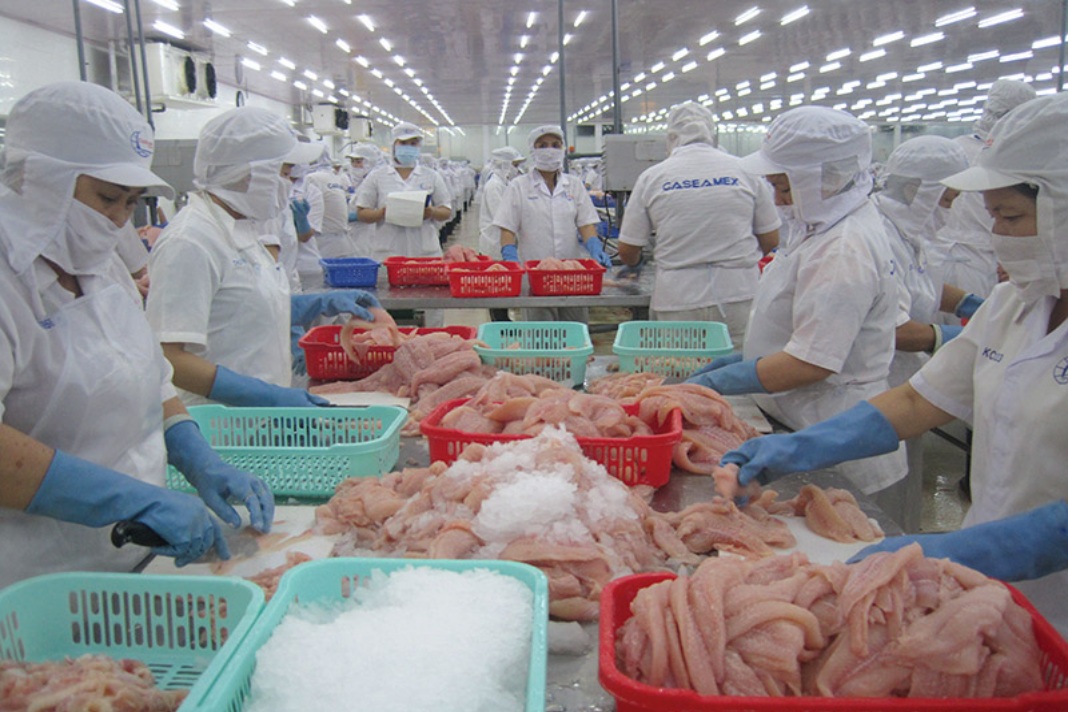
Agricultural products accounted for the largest share, with export value reaching US$3.6 billion, an increase of 41.8%. Forestry products brought in US$1.72 billion, up 13%, while seafood exports totaled US$940 million, rising 21.5%. Livestock products generated US$47.5 million, up 20.2%. Salt exports, though small in value, rose sharply to US$1.1 million, up 49%.
Asia remained Vietnam’s largest export market, accounting for 45.3% of total agro-forestry-fishery exports. The Americas and Europe followed with 22.7% and 13.4%, respectively. Africa and Oceania accounted for smaller proportions at 2.6% and 1.4%.
Compared with a year earlier, exports to Asia rose 41.1%, while shipments to the Americas increased 22.4%. Exports to Europe grew 11.2%, Africa 21.6%, and Oceania 32.3%.
China continued to be Vietnam’s largest single market, absorbing 22.6% of total exports. The U.S. ranked second with a 20.4% share, followed by Japan at 7%. Exports to China surged 66.1% year-on-year in January, while shipments to the U.S. and Japan rose 21.6% and 19.6%, respectively.
Several key commodities recorded strong growth in both volume and value, including coffee, rubber, tea, rice, fruits and vegetables, cashew nuts and pepper. Coffee and rubber remained the leading export earners.
Coffee exports reached about 180,000 tons, valued at US$981 million, while rubber exports totaled roughly 220,000 tons, worth US$416 million. Export prices for both commodities remained stable, with Europe and Asia as the main markets.
Tea and rice exports also posted solid gains. Tea shipments amounted to around 14,000 tons, valued at US$23 million, while rice exports reached about 600,000 tons, generating US$370 million. Although tea export prices edged lower, higher volumes supported revenue growth. Rice export prices rose about 4% to an average of US$616.6 per ton.
Exports of fruits and vegetables stood out, with turnover estimated at US$750 million in January, doubling from a year earlier. China remained the largest market, followed by the U.S. and South Korea.
Cashew nuts and pepper continued to show strong momentum. Cashew exports reached about 65,000 tons, valued at US$434 million, while pepper exports totaled around 20,000 tons, worth US$133 million. Both commodities recorded growth of more than 50% year-on-year, despite slightly lower average export prices.
Looking ahead, the Ministry of Agriculture and Environment said market development and consumption promotion would remain key priorities. The ministry plans to strengthen links between production and markets, boost trade promotion and support businesses and cooperatives in expanding both domestic and overseas markets.
At the same time, the sector will step up resource management, environmental protection and climate change adaptation, with a focus on water security and disaster risk reduction. The ministry also aims to improve production and business models, develop modern agricultural cooperatives, and enhance disease prevention for crops, livestock and aquaculture to safeguard production and stabilize markets.