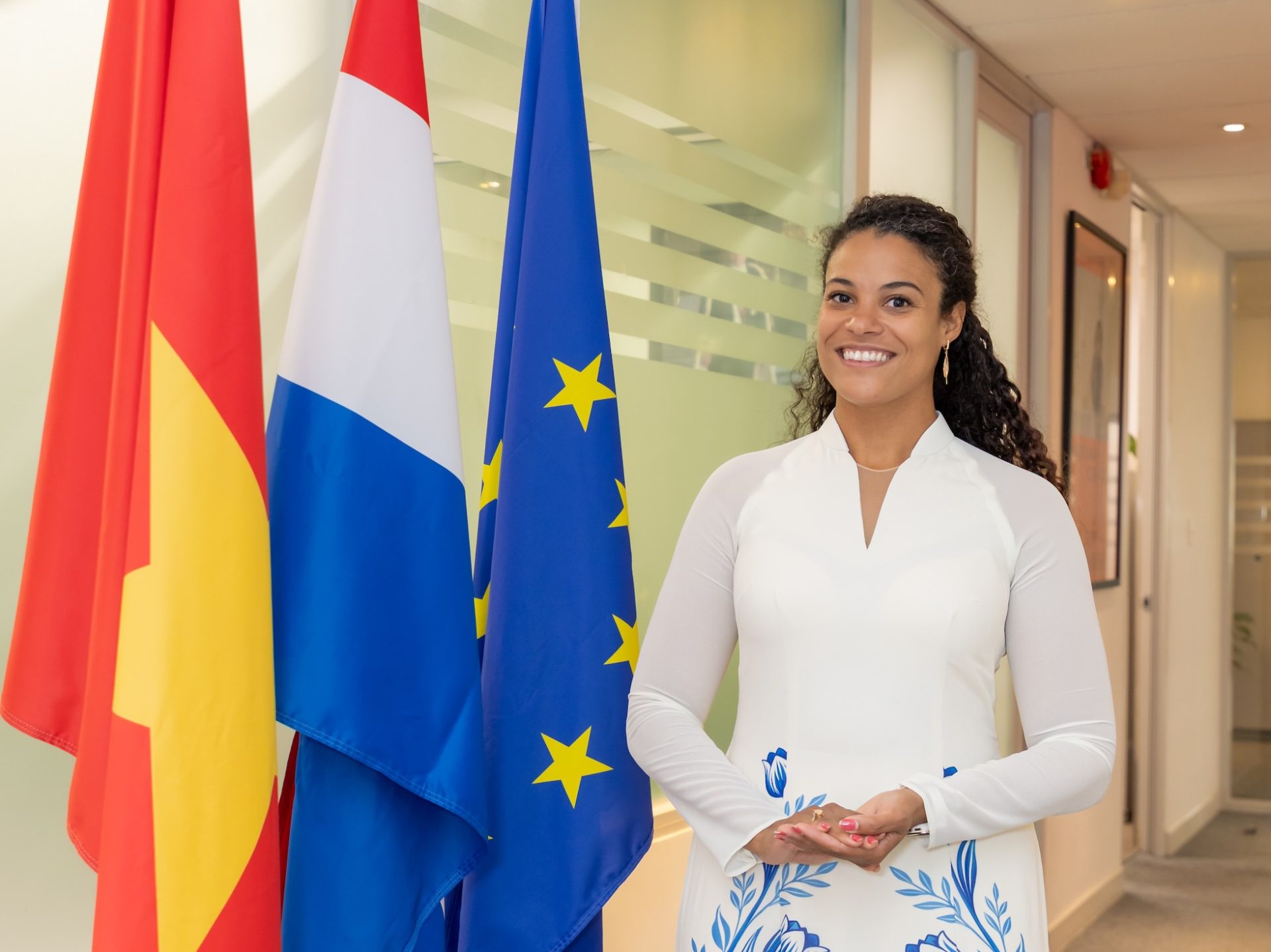
With total cumulative investment reaching US$15 billion by the end of 2025, the Netherlands continues to hold its position as the European Union’s leading investor in Vietnam. In an exclusive interview with The Saigon Times, Consul General Raïssa Marteaux explains why the convergence of Talent, Trade, and Transformation makes Vietnam a top choice for Dutch multinationals.
The Saigon Times: The Netherlands remains the largest EU investor in Vietnam, with nearly US$15 billion in registered capital. In the current global economic climate of 2026, what makes Vietnam a priority destination for Dutch multinationals compared to other regional competitors?
Consul General Raïssa Marteaux: Vietnam is the country where talent, trade and transformation converge. That is why Vietnam is such an attractive destination for both Dutch multinationals and Dutch SMEs, compared to other countries in the region.
If we look at talent, Vietnam has a young, skilled and tech-savvy workforce with a strong learning mindset. This makes it very attractive for Dutch companies because they are able to recruit people to grow with their businesses.
When it comes to trade, Vietnam performs very strongly. Companies choose where to invest based on whether they can sell and export their products efficiently. Thanks to Vietnam’s extensive network of free trade agreements, the costs of importing and exporting are relatively low. Vietnam also offers good access to key markets, including Europe, making it a very competitive location for international companies.
From a geopolitical perspective, many Dutch companies are currently diversifying their production locations. In this context, Vietnam is seen as an attractive destination for building a more resilient supply chain.
Finally, the point of transformation. Since I arrived in Vietnam, I have noticed a strong “can-do” mentality from the Government. There is an ambitious economic agenda, combined with pragmatic regulation and a clear willingness to create a business-friendly environment. EuroCham measures satisfaction among our businesses on a quarterly basis, and the confidence among companies operating in Vietnam is increasing. That is a positive signal.
All in all, talent, trade and transformation make Vietnam a very attractive choice for Dutch investors.
Beyond the traditional pillars of water management and agriculture, which emerging industries are attracting the most interest from Dutch investors this year?
HCMC is the economic engine of Vietnam. It is vibrant, entrepreneurial and always moving forward, which makes it an ideal place to deepen innovative and sustainable cooperation between our two countries.
Agriculture and water management will remain important, but we are clearly seeing interest expand into new areas.
One example is urban flood management. While there has been long-standing cooperation in water management, HCMC is now investing heavily in addressing urban flooding. Dutch expertise can support these efforts with smart and future-proof solutions.
Another key area is logistics, particularly airport and seaport development. Dutch expertise is strongly focused on efficiency, sustainability and innovative logistics systems, which aligns well with Vietnam’s ambition to become a leading regional logistics hub.
Finally, there are significant opportunities in the semiconductor industry. Vietnam is positioning itself as a hub for talent development and production, while the Netherlands is home to some of the world’s most advanced semiconductor technologies. This creates strong potential for cooperation where both sides can reinforce each other.
With Dutch companies such as Besi operating in the Saigon Hi-Tech Park and the global leadership of ASML, how can the Netherlands support Vietnam in moving beyond assembly to become a key link in the global semiconductor value chain?
This is indeed the big question. The Netherlands is at the forefront of the global semiconductor industry. In fact, around 85% of all chips used globally rely on Dutch semiconductor equipment in their design, development or manufacturing. At the same time, we see significant potential in Vietnam. Recent investments by Dutch and international companies show that real progress is being made here.
The Netherlands and Vietnam already enjoy a strong track record in high-tech cooperation: This includes initiatives such as the Eindhoven Semiconductor Summer School, the Netherlands–Southeast Asia semiconductor short talent program, and the
SEMIEXPO Vietnam, which will take place again this year. There are also supplier training programs and direct investments from Dutch companies.
Beyond Besi, other Dutch companies active or investing in Vietnam include VDL-ETG, Tecnotion and Lucassen, and we expect more to follow.
The Dutch companies investing in Vietnam tend to prioritize long-term, scalable growth. The Netherlands is ready to act as a strategic enabler of Vietnam’s semiconductor ambitions and a long-term partner in building its role in the global value chain.
From your perspective, what are the key missing pieces Vietnam needs to address to attract a stronger Dutch high-tech ecosystem?
I would highlight three main areas.
First, there is a need for a one-stop shop for investors. Companies need a single point of contact where they can arrange all administrative procedures to set up their business, ideally in a globally spoken language such as English. At the moment, investors often have to deal with multiple government agencies, which makes the process complex.
Second, talent development remains crucial. The Government is investing in this area, but more will be needed. High-tech investors require people who can communicate in English and who have the innovative capabilities needed to move from production to higher-value activities.
Third, Vietnam needs to continue upgrading critical infrastructure, particularly energy supply and digital connectivity. A factory simply cannot operate without reliable electricity, and digital infrastructure is essential for high-tech industries.
Regarding the Innovation Mission on “Salinization in Horticulture in the Mekong Delta” held from January 19 to 23, how can technical exchanges be translated into large-scale, profitable business models?
The Mekong Delta is a region of extraordinary importance. It is central to Vietnam’s food security and employs millions of people, particularly farmers. At the same time, both Vietnam and the Netherlands are facing growing challenges related to climate change, including salt intrusion, floods, droughts and shifting environmental conditions.
Salinity cannot be addressed with a single solution. It requires an integrated approach that combines water management, soil health, technology, crop selection and farming practices.
That is exactly what this mission was designed to support. We brought together 23 Dutch companies with expertise ranging from advanced water technologies and seeds to digital tools and smart cultivation. The aim was to move beyond the exchange of technical knowledge and work toward structured, inclusive and long-term cooperation.
One concrete outcome will be the creation of a consortium, with financial support from the Dutch Government, to translate research and technical solutions into practical, integrated and sustainable business models for the Mekong Delta.
With CBAM and the EU Deforestation Regulation now in effect, how is the Consulate supporting Vietnamese exporters to remain competitive in the Dutch market?
The European regulatory landscape is evolving very rapidly, and this is not easy to navigate. CBAM and EUDR are now entering the enforcement phase, and additional regulations on corporate sustainability and forced labor are also taking effect. These rules affect not only European companies, but everyone exporting to the EU.
The Netherlands has a special role here. We are Vietnam’s number-one EU trading partner and its largest EU investor. About 60% of Vietnam’s exports to Europe pass through the Port of Rotterdam, so we feel a strong sense of responsibility to support Vietnamese exporters.
We have implemented several initiatives. One example is in EUDR compliant coffee production, with two pilot projects in the Central Highlands that created a shared traceability database and contributed to Vietnam’s national database for forests and coffee-growing areas.
Another initiative focuses on human rights and sustainability in the garment sector. Around 200 companies have already received training and coaching on due diligence, risk-based approaches and grievance mechanisms, helping them move beyond compliance toward more sustainable practices.
Finally, the Ready to Export program supports Vietnamese exporters in meeting EU sustainability standards. Under this program, more than 3,700 participants have been trained, and 108 Vietnamese enterprises have received mentoring to improve their access to the EU market.
As HCMC is developing the Can Gio International Transshipment Port, how can Dutch expertise in smart and green logistics help reduce costs and enhance export competitiveness?
This is an area where our two countries naturally complement each other. Rotterdam and HCMC effectively serve as each other’s gateways. Rotterdam is Vietnam’s strategic access point to Europe, while HCMC is our bridge to Southeast Asia.
In November 2025, we hosted a major economic mission focused on airport and seaport development. The mission involved 27 companies and 42 participants, and it was led by our Minister for Foreign Trade.
As HCMC continues to expand and aims to become a leading regional hub, Dutch experience in efficient, green and innovative logistics systems can help accelerate progress. The Port of Rotterdam is known as one of the most efficient ports in the world, and there is much we can learn from each other.
Dutch companies offer expertise across the entire logistics chain, from dredging and port design to operational systems, sustainability, training and education. What makes the Dutch approach distinctive is our ecosystem perspective. Rather than focusing on fragmented interventions, we look at the entire chain—from factory to terminal and beyond—to ensure everything is interconnected and functions optimally.
Reported by The Ky