
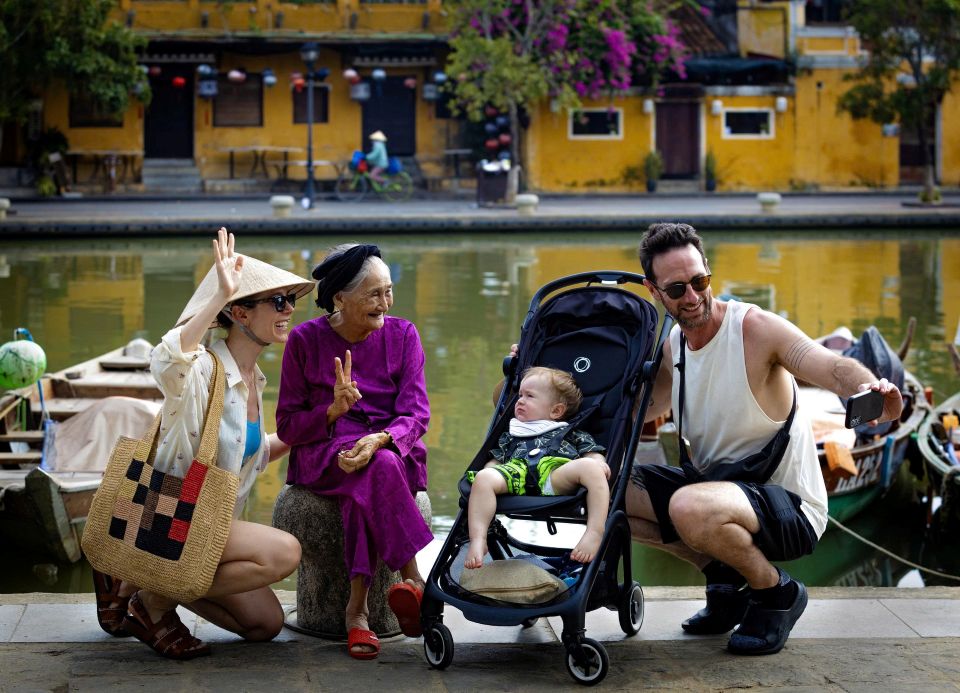
DANANG — It began on a quiet afternoon in 2011. On the Hoai River, which winds through the ancient town of Hoi An, a chance encounter on a small wooden boat sparked a journey that neither passenger could have ever envisioned.
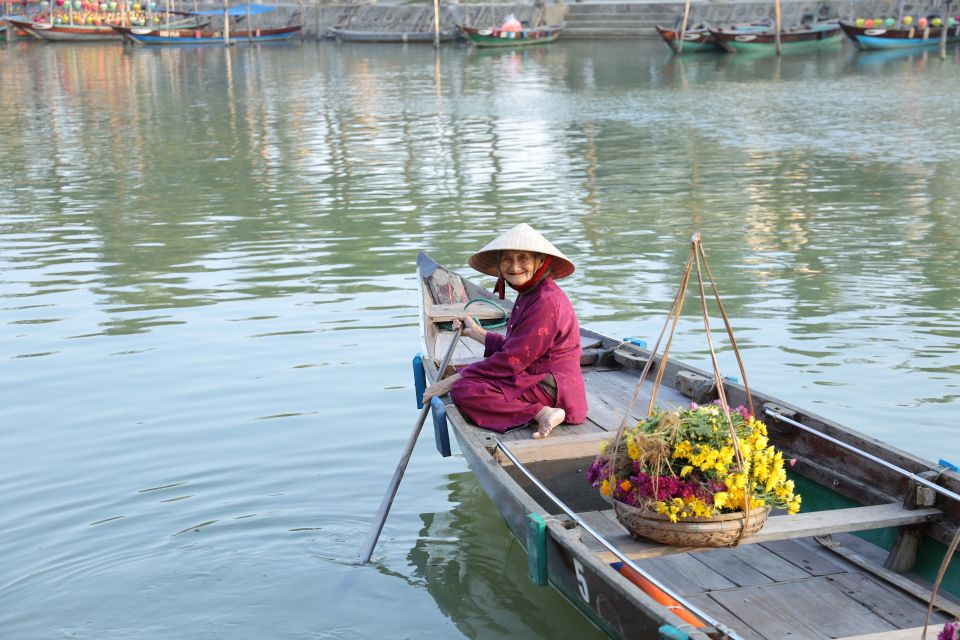
The passenger was a foreign photographer; the rower was Madam Bui Thi Xong – a woman whose humble livelihood had always been tied to these waters. Their connection started with nothing more than a smile and a wave, the quintessential greeting of the Hoi An people.
That day, Réhahn, a French photographer, was strolling along the riverbanks like any other tourist. Amidst the crowds, he noticed a petite elderly woman rowing a boat, constantly smiling and waving at passersby. There was no aggressive sales pitch, only a gentle, radiant warmth. This simple moment compelled Réhahn to stop and step onto Madam Xong’s modest vessel.
Communicating through a handful of Vietnamese words like “đẹp” (beautiful) and “cười” (smile), Réhahn’s clumsy pronunciation made Madam Xong burst into laughter. In a reflex common among elderly Vietnamese women when feeling shy or amused, she instinctively raised her hand to cover her mouth.
That fleeting, natural gesture was captured perfectly by Réhahn’s lens. He later titled the portrait “Hidden Smile.”
Réhahn was captivated by the striking contrast: deep wrinkles etched by time and hands weathered by decades of labor, juxtaposed with a soul as pure and bright as a child’s. The smile was not posed; it was the distilled essence of a life lived sincerely on the river.
To Madam Xong, that boat trip was just another day of earning a living. For over ten years, she had navigated the ebbs and flows of the Hoai River between dawn and dusk. “I rowed every day,” she recalls simply. “Tourists love looking at the river and the ancient town.”
While most tourists took photos and left, that particular portrait traveled across the globe. It graced the pages of the Los Angeles Times, Daily Mail, and National Geographic, earning acclaim for its depiction of inner beauty and the joy of living – shattering conventional standards of glamour.
When the image went viral, Madam Xong was stunned to find herself world-famous, with some outlets dubbing her the “woman with the world’s most beautiful smile.”
“I’m so happy,” she says with her characteristic humility. “I’m old and I’ve worked hard all my life, yet now people know my name.” Her greatest joy came when local children recognized her on television, shouting, “That’s our grandma on TV! She’s the most beautiful in the world!”
Today, age has finally forced Madam Xong to set down her oars. Her life has returned to a quiet rhythm of betel nut, headscarves and neighborhood chatter. Yet, the “Hidden Smile” remains a permanent fixture at the Precious Heritage Museum in the ancient town of Hoi An, Danang City.
According to Ha My, a representative of the museum, Madam Xong was a pivotal catalyst in Réhahn’s 15-year journey in Vietnam. Her portrait helped shift the international perception of the country. Many visitors noted that while they once associated Vietnam only with black-and-white war photography, Réhahn’s work revealed a different reality: vibrant, friendly and full of life.
Ultimately, Madam Xong became an accidental diplomat. From a simple wave on the Hoai River, she evolved into a cultural messenger, introducing the world to the heart of Hoi An through the sheer power of a sincere smile.