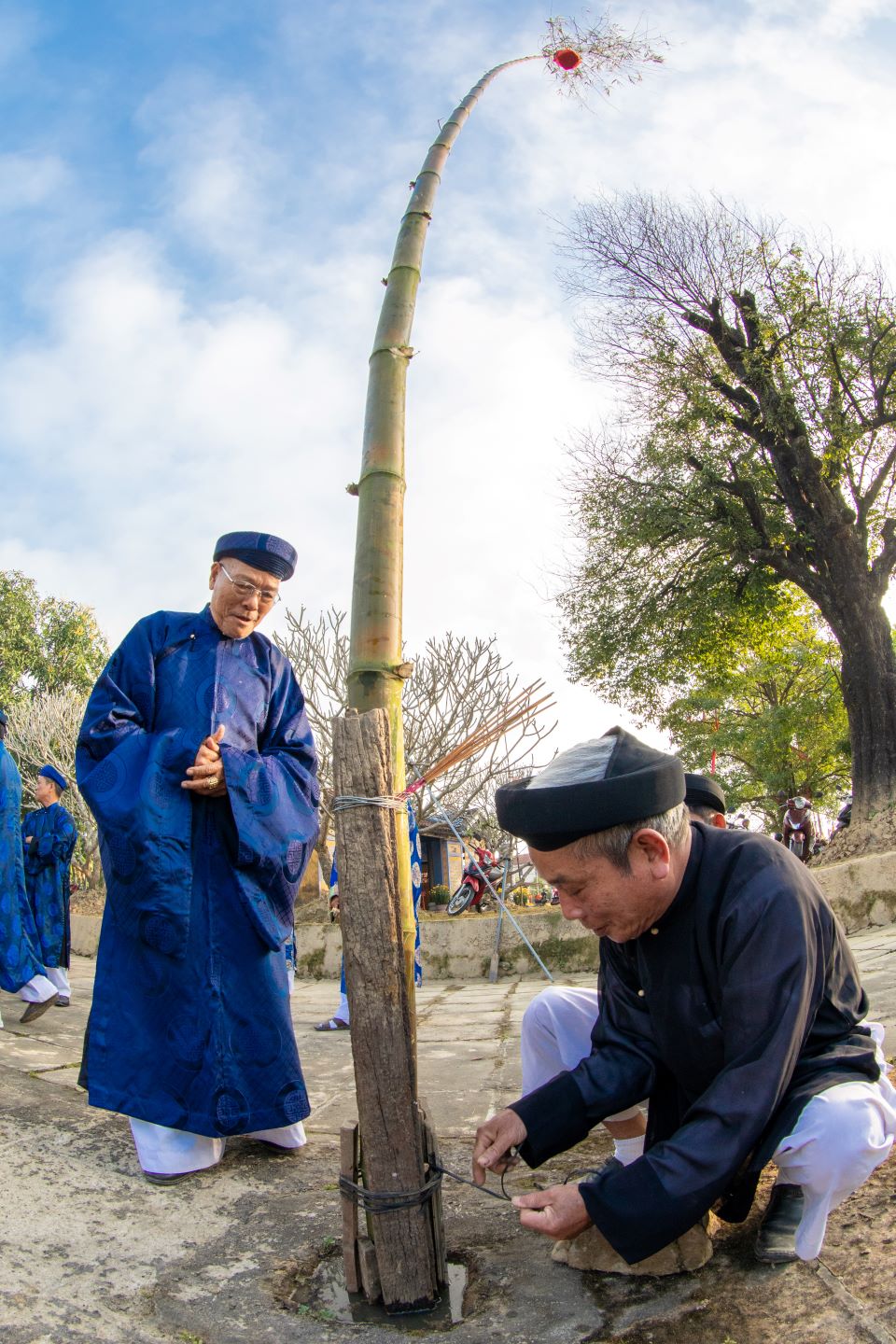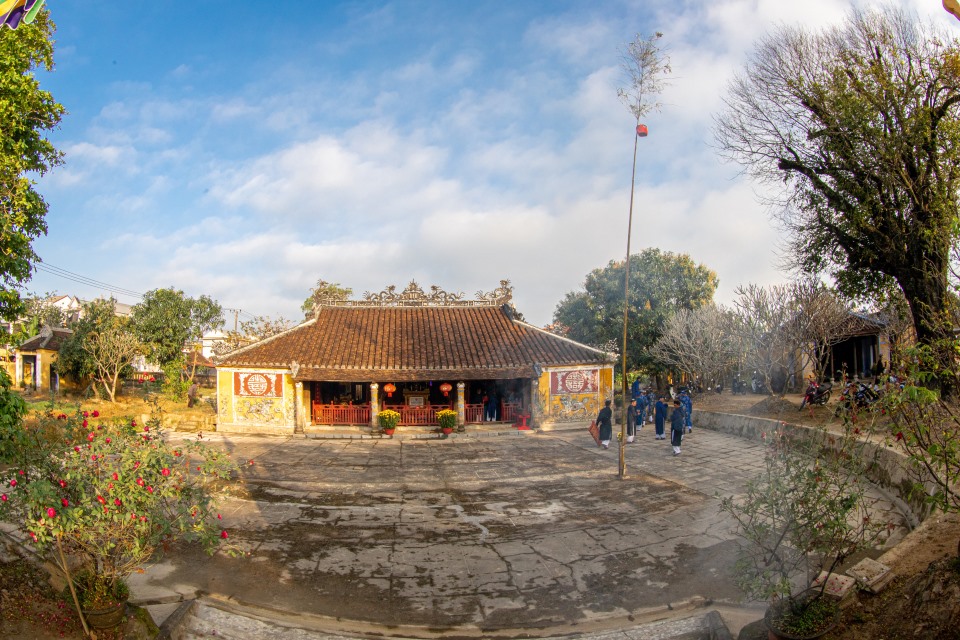
HUE – On the final morning of the old lunar year, the ancient Duong No Village in Hue City – a site with over 550 years of history – awakens to the rhythmic bustling of the “Tet Pole Raising” ceremony. This age-old tradition, meticulously preserved by the village elders, serves as a spiritual beacon signaling the arrival of spring.

The pole called “neu” is a carefully selected bamboo tree: matured, straight-bodied, and roughly six meters tall with its lush green crown intact. In Vietnamese belief, the wholeness of the bamboo symbolizes abundance and prosperity. Before being raised, the entire trunk is purified with fragrant agarwood smoke. At its peak, a red cloth bag containing symbolic offerings like spiritual garments, votive paper and salt is hung to ward off evil spirits and invite protection for the community.

Steeped in history, Duong No Village’s communal house was originally established in 1471 under King Le Thanh Tong. It was later expanded to its grand scale during the reign of King Gia Long by General Nguyen Duc Xuyen, a native son of the village.

Today, the sight of the Tet pole raising against the Hue sky – with its tip pointed toward the East to symbolize new beginnings – is a poignant reminder of cultural roots. It is a moment where faith, hope, and community spirit intertwine, ensuring that the essence of a traditional Vietnamese Tet remains vibrant amidst modern life.