
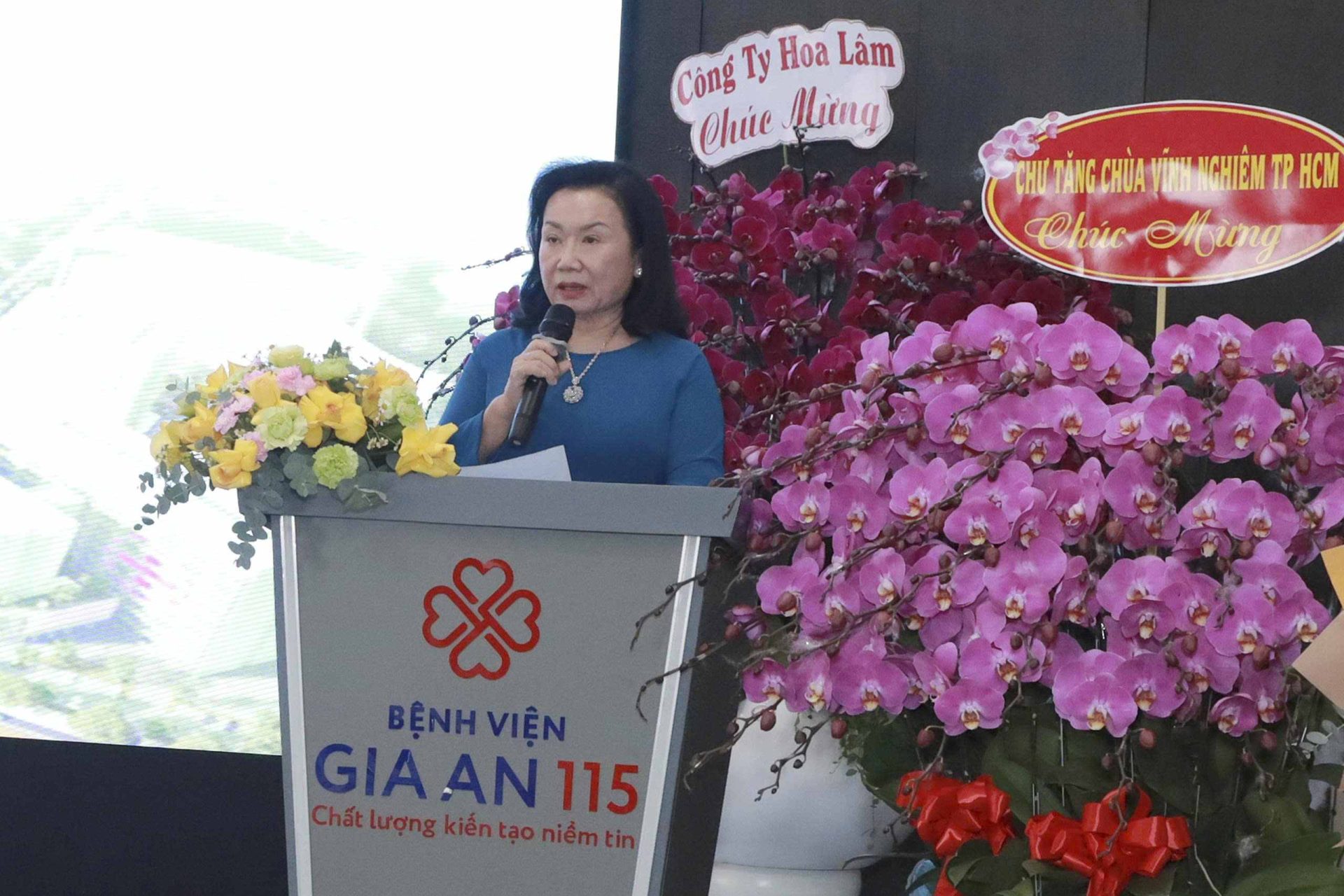
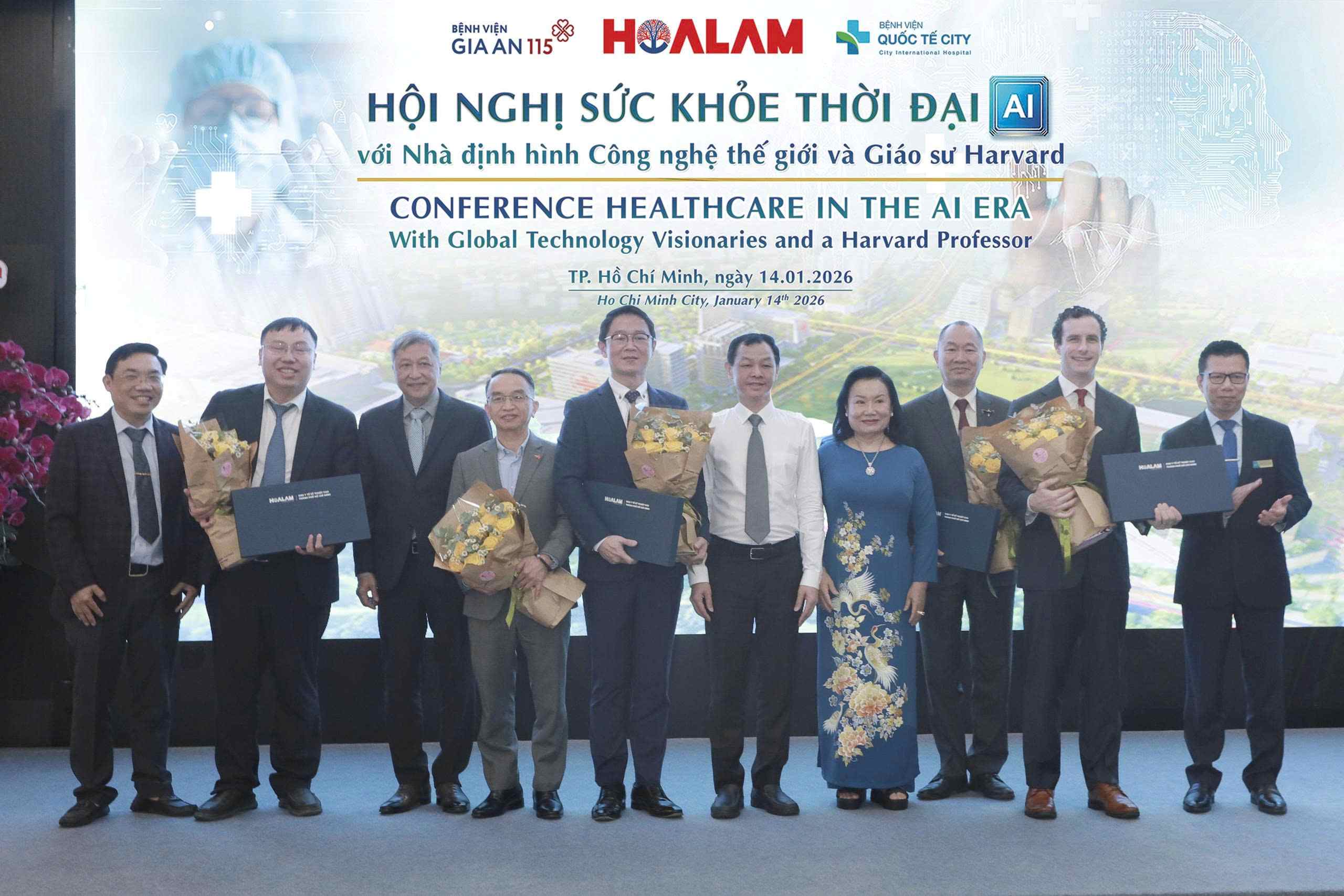
HCMC – Gia An 115 Hospital, part of the HCMC High-Tech Healthcare Park, on January 14 hosted a scientific conference titled “Applying AI Technology in Physical and Mental Healthcare.” The event drew more than 300 participants, including healthcare professionals, scientists, and technology experts.
Among the attendees were Assoc. Prof., MD, PhD Nguyen Tri Thuc, deputy minister of Health, and representatives from several Ministry of Health units, including the Department of Infrastructure and Medical Equipment, the Department of Science, Technology and Training, and the Department of Legal Affairs.
Addressing the conference, Thuc said the topic was particularly timely as Vietnam prepares to enter what he described as a new “era of national advancement.” He noted that the Politburo, the Government, the National Assembly, and ministries and agencies are mobilizing resources to promote innovation. In this broader push, artificial intelligence plays an increasingly important role across all sectors, especially healthcare, which is directly connected to patients and social well-being.
He pointed to a fundamental difference between AI and humans: the heart. “AI does not have a heart, while humans—especially doctors—must place the heart first,” he said. He stressed that values such as conscience, responsibility, and empathy are irreplaceable and can never be substituted by AI, regardless of how advanced technology becomes.
Sharing this perspective, Tran Thi Lam, founder of Hoa Lam Group and head of the Strategic Committee of the HCMC High-Tech Healthcare Park, said AI is already embedded in healthcare decisions, systems, and care delivery models. “The most important question,” she emphasized, “is how technology can serve people, rather than allowing people to be dominated by technology.” Guided by that principle, Hoa Lam aims to develop a modern yet humane healthcare ecosystem, where advanced technology goes hand in hand with medical ethics, trust, and empathy.
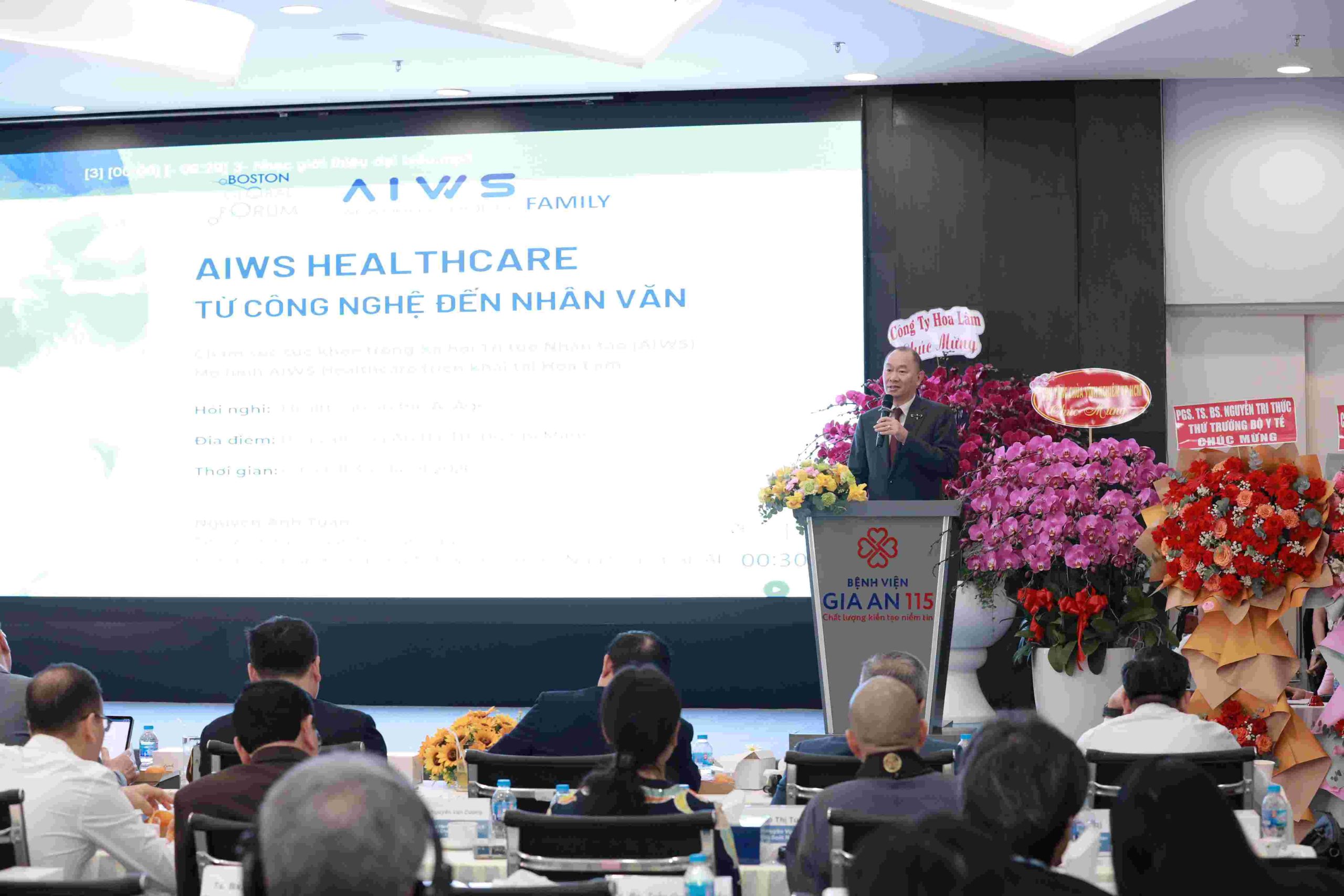
Nguyen Anh Tuan, co-founder and CEO of the Boston Global Forum and founder of the AI World Society, said AI is powerful, but only humans can make it humane. He noted that AI is driving a shift in medicine from passive treatment to proactive, preventive, and personalized care. However, he stressed that AI must be implemented alongside ethical standards and strong safeguards for personal data protection.
From a sociological perspective, Professor E. Glen Weyl, an economist and social political innovator, said the effectiveness of AI in healthcare depends not only on algorithms, but also on patient trust and willingness to participate. He proposed viewing AI systems as part of “social infrastructure,” where transparency, accountability, and community participation are essential to protecting human dignity and strengthening relationships between patients and the healthcare system.
In the field of oncology, Professor Jan-Mou Lee, general director of FullHope Biomedical, presented AI-powered platforms for precision diagnostics and personalized medicine in cancer and autoimmune disease treatment. These include immune cell therapies and circulating tumor cell (CTC) testing.
From domestic clinical practice, PhD, MD Pham Tuan Anh, head of Treatment Department A at Vietnam National Cancer Hospital, outlined the increasingly clear role of AI across the entire cancer care pathway. This ranges from risk assessment and early screening to imaging diagnostics, pathology, treatment planning, and monitoring treatment response. He said AI helps doctors manage rapidly growing volumes of medical data, reduce professional errors, and improve the quality of clinical decision-making. At the same time, he cautioned that AI must be deployed carefully, with strong protections for data security and fairness in access to technology.
From the perspective of medical technology companies, MD Trinh Hoang Ha, senior director, head of External Affairs at Siemens Healthineers, said AI-based solutions enhance diagnostic capabilities for most life-threatening diseases, including cancer, neurological disorders, and cardiovascular conditions. These tools also help physicians make faster and more accurate clinical decisions.
With a series of high-quality presentations offering substantial insights, the conference created a platform for dialogue and knowledge-sharing among experts, helping to shape the future direction of healthcare in the AI era. In this broader landscape, the HCMC High-Tech Healthcare Park, invested in and developed by Hoa Lam Group, was recognized as a pioneering model that combines advanced medical technology with a human-centered approach. The zone is seen as playing an important role in building a smart, safe, and patient-centered healthcare ecosystem.