
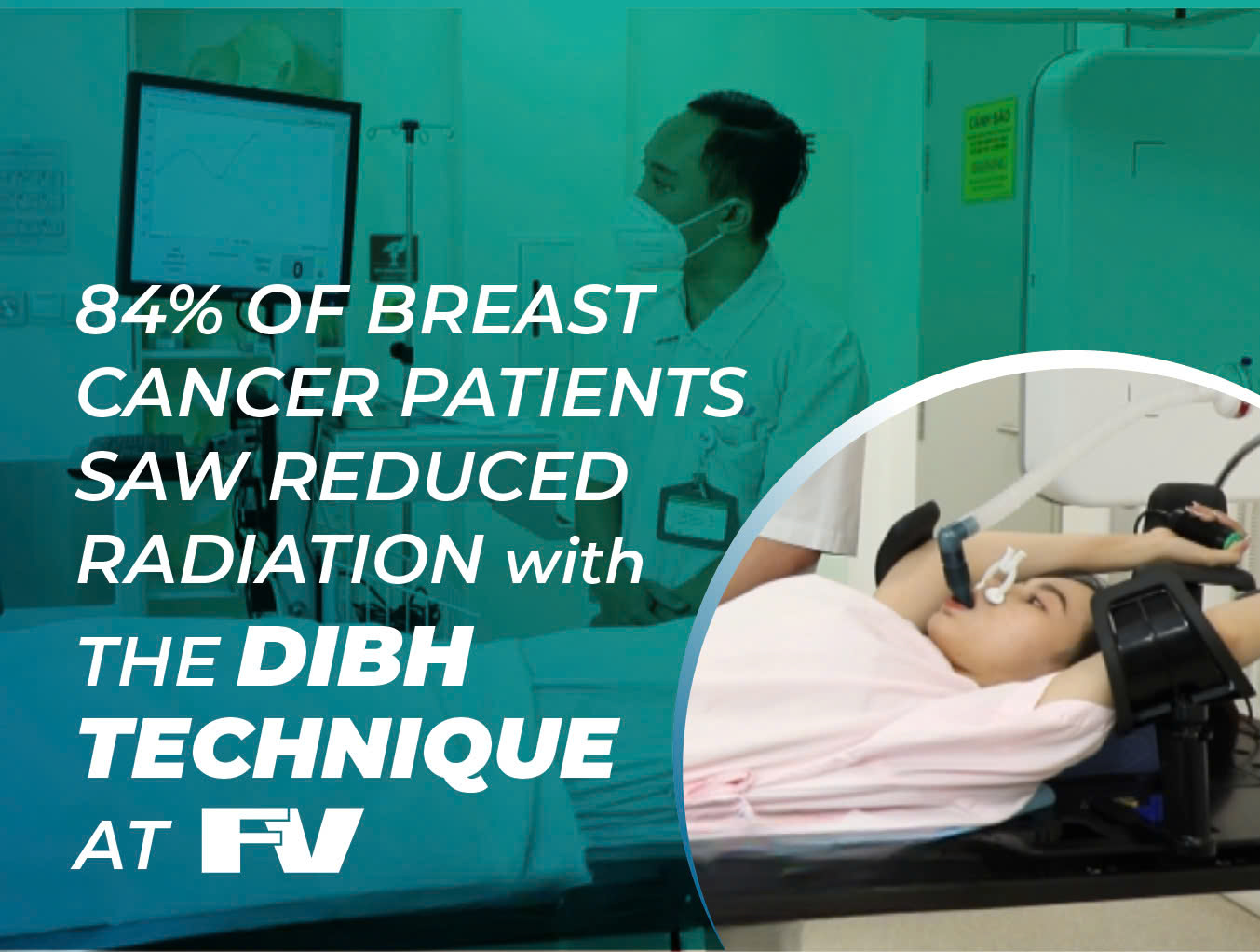
Radiation therapy is a crucial “weapon” in cancer treatment; however, while it effectively destroys tumors, a major concern for many patients, especially breast cancer patients, lies in the risk of affecting the heart and surrounding healthy organs. At FV Hospital, the ‘deep breath-holding’ technique (DIBH) has shown significant effectiveness, helping over 84% of breast cancer patients reduce their risk of cardiovascular complications.
Reduce radiation dose to the heart through deep breathing and breath-holding
In radiation therapy for breast cancer, especially left breast cancer, the heart is located very close to the area to be irradiated. This forces doctors to constantly weigh the effectiveness of treatment against the risk of heart and coronary artery damage – dangerous complications for the patient’s health.
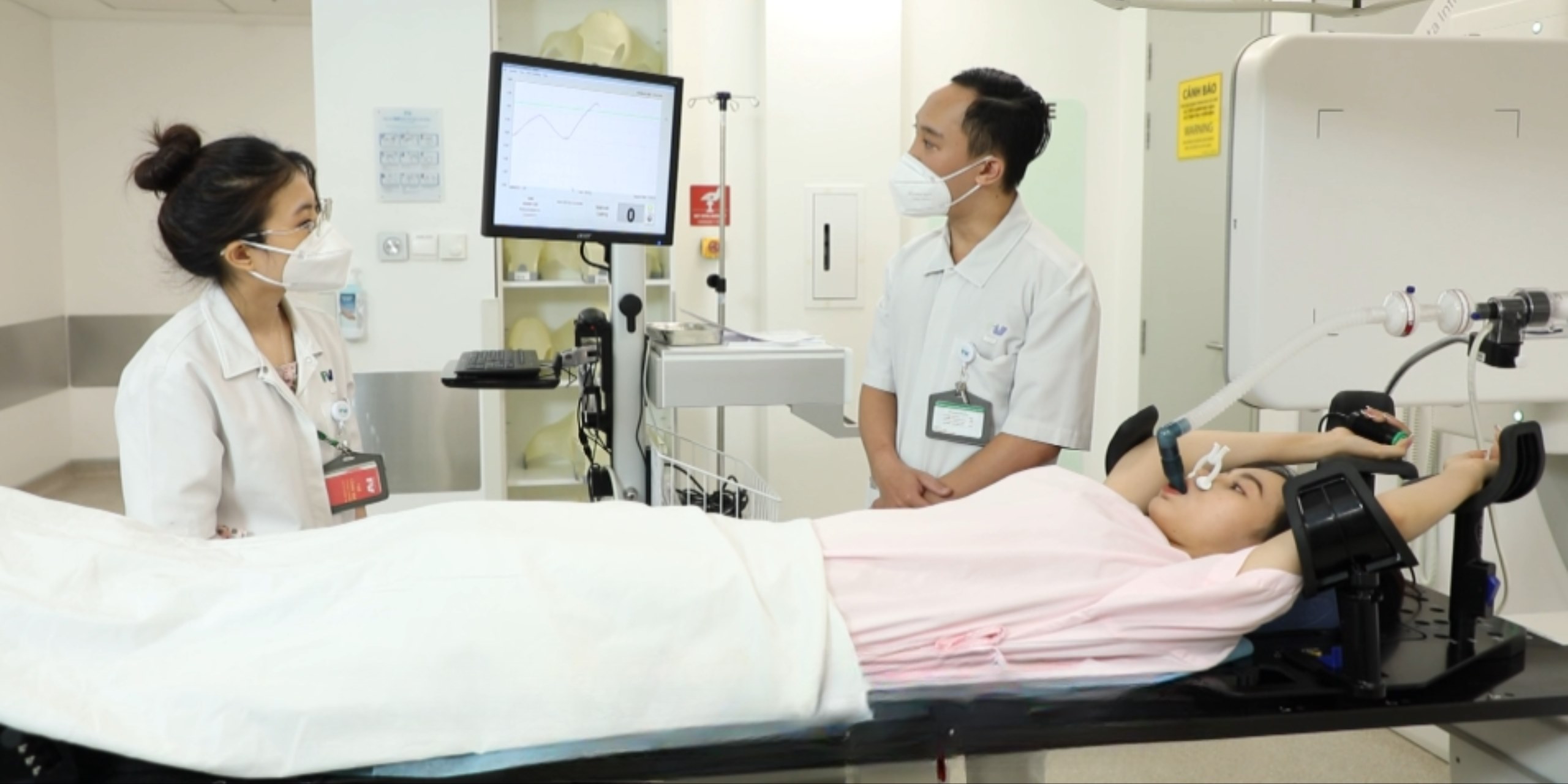
Since 2019, the Hy Vong Cancer Centre (FV Hospital) has pioneered the application of the Deep Inspiration Breath Hold (DIBH) technique, combined with the Active Breathing Control (ABC) system, to control movement during radiation therapy.
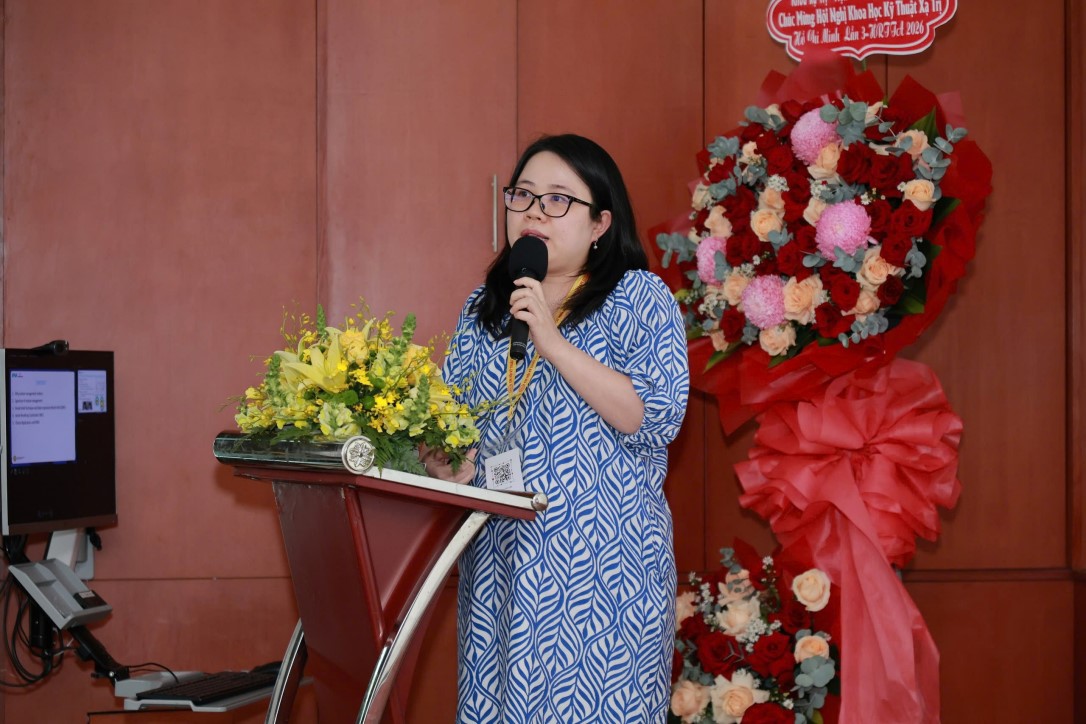
At the 3rd Annual Scientific Conference of Ho Chi Minh City Radiation Technologists Association, themed “A Multidisciplinary Approach to Radiotherapy and Motion Management in Thoracic and Abdominal Radiotherapy” held in March 2026 at FV Hospital, Dr. Nguyen Huynh Ha Thu, Hope Cancer Centre, shared: “At FV, The DIBH technique and the ABC system are routinely applied in radiotherapy for left breast cancer and areas of tumor mobility that move with breathing, providing high efficacy and increased patient safety throughout the radiotherapy process”.
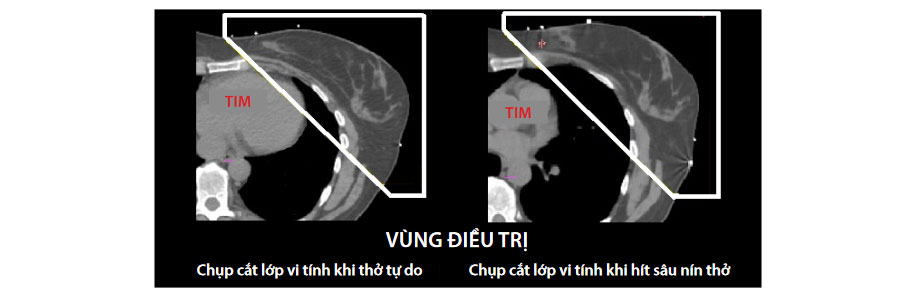
During irradiation, patients perform a cycle of “deep inhalation – breath-holding – irradiation” for approximately 20-30 seconds at a time with the assistance of the ABC system to ensure a stable and tightly controlled breathing rhythm. In principle, when inhaled deeply, the lungs expand and push the heart away from the chest wall, creating a “safe distance”, allowing radiation to focus on the tumor while significantly reducing the dose to the heart.
The effectiveness of this method has been demonstrated in clinical practice. A 2023 study at FV on 51 left breast cancer patients showed that reducing the radiation dose to the heart in over 84% of cases resulted in a reduced risk of coronary complications, a reduction of at least 7.4%, and over 50% of patients experienced a reduction of 14–30% in these complications.
Application of DIBH in radiotherapy for various types of cancer
According to Dr. Ha Thu, the DIBH technique is suitable for radiotherapy of mobile masses that move with the rhythm of breathing or near vital organs such as left breast cancer, some cases of right breast cancer, lung cancer, liver cancer, and esophageal cancer Radiation therapy for adrenal tumors or patients at high risk of coronary artery damage or with cardiovascular disease.
The effectiveness of DIBH depends heavily on the collaboration between the patient and the team, including oncologists, radiation therapists, and medical physical engineers, throughout the treatment process. After nearly 7 years of implementing DIBH, FV Hospital has developed a systematic and personalized technical implementation process. Before radiation therapy, patients are instructed on the operating principles of the ABC system, familiarize themselves with the equipment, and practice breathing control under the close supervision of a professional team. Indicators such as inspiratory volume and breath-holding time are measured and adjusted individually for each person. The bilingual documentation system and visual instructional videos help patients, including foreigners, easily perform the correct procedure.
From 2019 to the present, FV has successfully applied DIBH technique and ABC active respiratory rhythm coordination device to treat 269 radiotherapy cases. Dr. Basma M’Barek – Head of the Hy Vong Cancer Centre shared: “I am very happy that radiation therapy techniques now not only increase treatment effectiveness, but are also much safer for patients”.
Limited invasiveness: a trend in modern cancer treatment
The popularity of techniques such as DIBH highlights a crucial trend in cancer treatment: focusing not only on destroying the tumor but also on minimizing the impact on healthy organs and quality of life after treatment.
At FV, this trend is clearly demonstrated by the hospital’s continuous updating and application of advanced radiotherapy and surgical technologies. This includes the CyberKnife® S7™ System with its precise positioning capability of less than 1 mm, allowing for tumor destruction even while in motion. Simultaneously, the da Vinci Xi robotic surgical system was also deployed, supporting the performance of many complex cancer surgeries in a minimally invasive manner.
According to Dr. Vu Truong Son, Medical Director of FV Hospital, investing in technology always goes hand in hand with developing the professional team: “We not only invest in equipment but also build a team capable of mastering technology, bringing optimal treatment effectiveness and greater safety for patients”.
In the context of the increasing number of cancers, a multimodal approach – combining technology, expertise, and personalized treatment – is seen as an essential direction for improving the quality of patient care.
FV successfully organized the Annual Radiation Conference
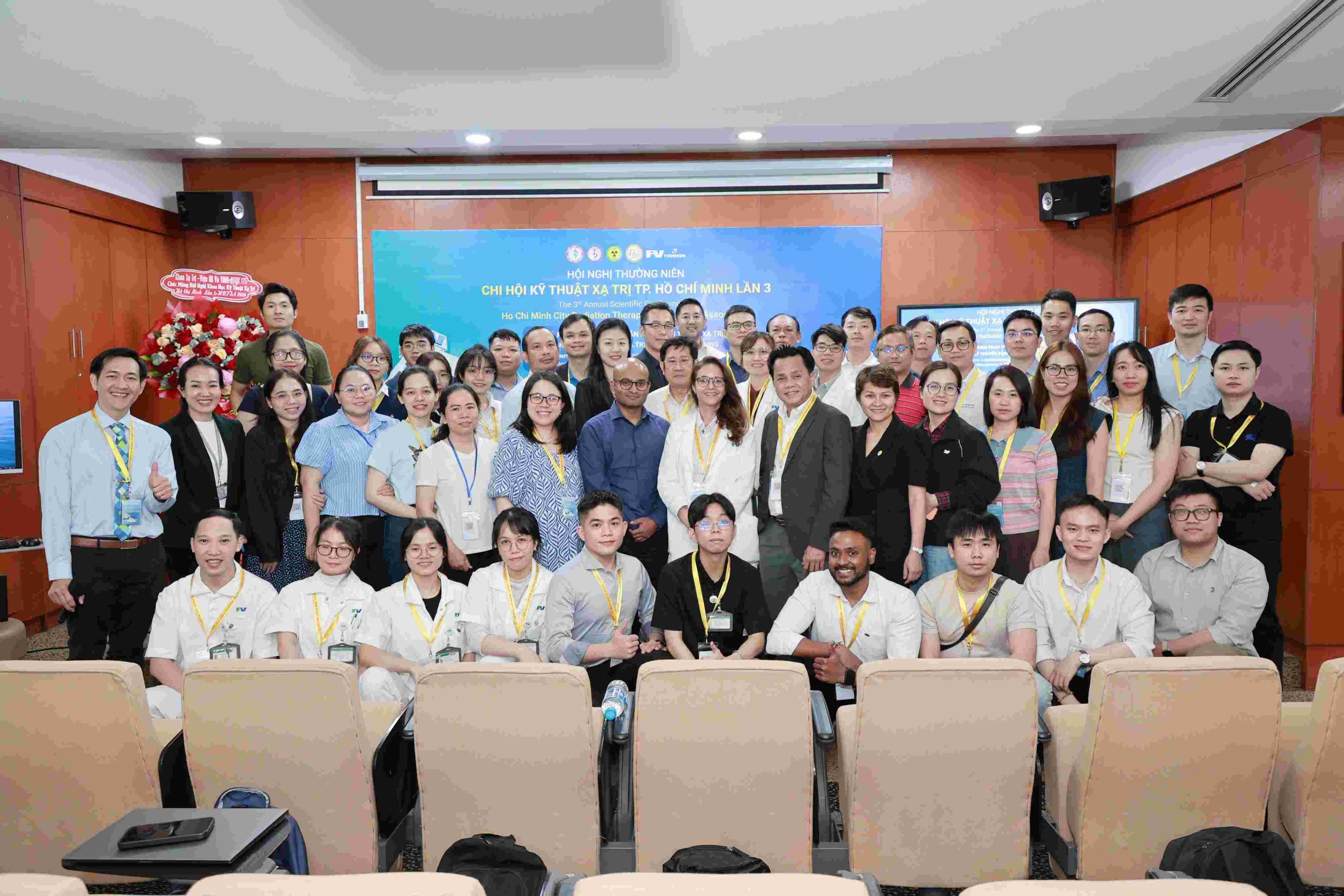
FV Hospital successfully organized the 3rd Annual Scientific Conference of Ho Chi Minh City Radiation Technologists Association with the theme “A Multidisciplinary Approach to Radiotherapy and Motion Management in Thoracic and Abdominal Radiotherapy” (photo). The event brought together a large number of doctors and technicians specializing in radiotherapy, focusing on sharing practical experiences in motion control – a key factor determining the accuracy and safety of treatment.
For more information about cancer treatment at FV, readers can go directly to 06 Nguyen Luong Bang, Tan My Ward (formerly District 7), Ho Chi Minh City or contact via phone number (028) 3511 3333.