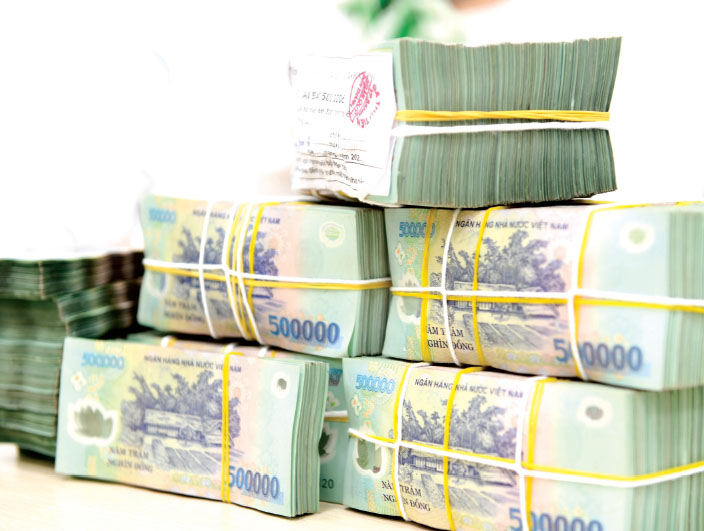
HCMC – Having stayed at record low levels for a long period, lending rates are rising and thus piling pressure on individual and corporate borrowers.
The interest rate spike, coupled with rising logistics and input costs driven by the ongoing Middle East conflict, is squeezing profit margins and forcing many businesses into a defensive survival mode.
The shift is palpable in the retail banking segment, where many home loans have transitioned from preferential fixed rates to floating mechanisms.
For instance, some borrowers in HCMC reported their rates jumping from 6.9% to nearly 13% within months. This is equally severe for manufacturers. A business noted that while the export sector is already struggling with supply chain disruptions, it now faces borrowing rates climbing from 6% to 8% or higher. In the wood processing industry, lending rates for production have reached 11-12%, while real estate loans can soar up to 15%.
According to representatives from banks like UOB and ACB, the current rate hike reflects high credit demand rather than the liquidity crunch as seen in 2022. Vietnam’s robust GDP growth of over 8% in 2025 has fueled this demand. However, liquidity has also been impacted by sustained net selling by foreign investors and a slower-than-expected disbursement of public investment.
They suggest that the era of cheap money is ending as authorities balance growth with inflation and exchange rate stability. While the current volatility is partly seasonal, stability in the latter half of 2026 will depend heavily on the acceleration of public investment and the central bank’s flexible liquidity management.
For now, the focus remains on ensuring credit flows into productive sectors rather than speculative activities to stabilize the interest rate environment.