

HCMC – Haiphong has recently met with foreign investors to present policies designed to attract investment into its newly established free trade zone (FTZ). DEEP C, a major foreign-invested industrial park developer, has long played a key role in drawing investors to its industrial parks in the northern port city. At the meeting, the company put forward a series of proposals aimed at helping Haiphong make the FTZ attractive to international investors.
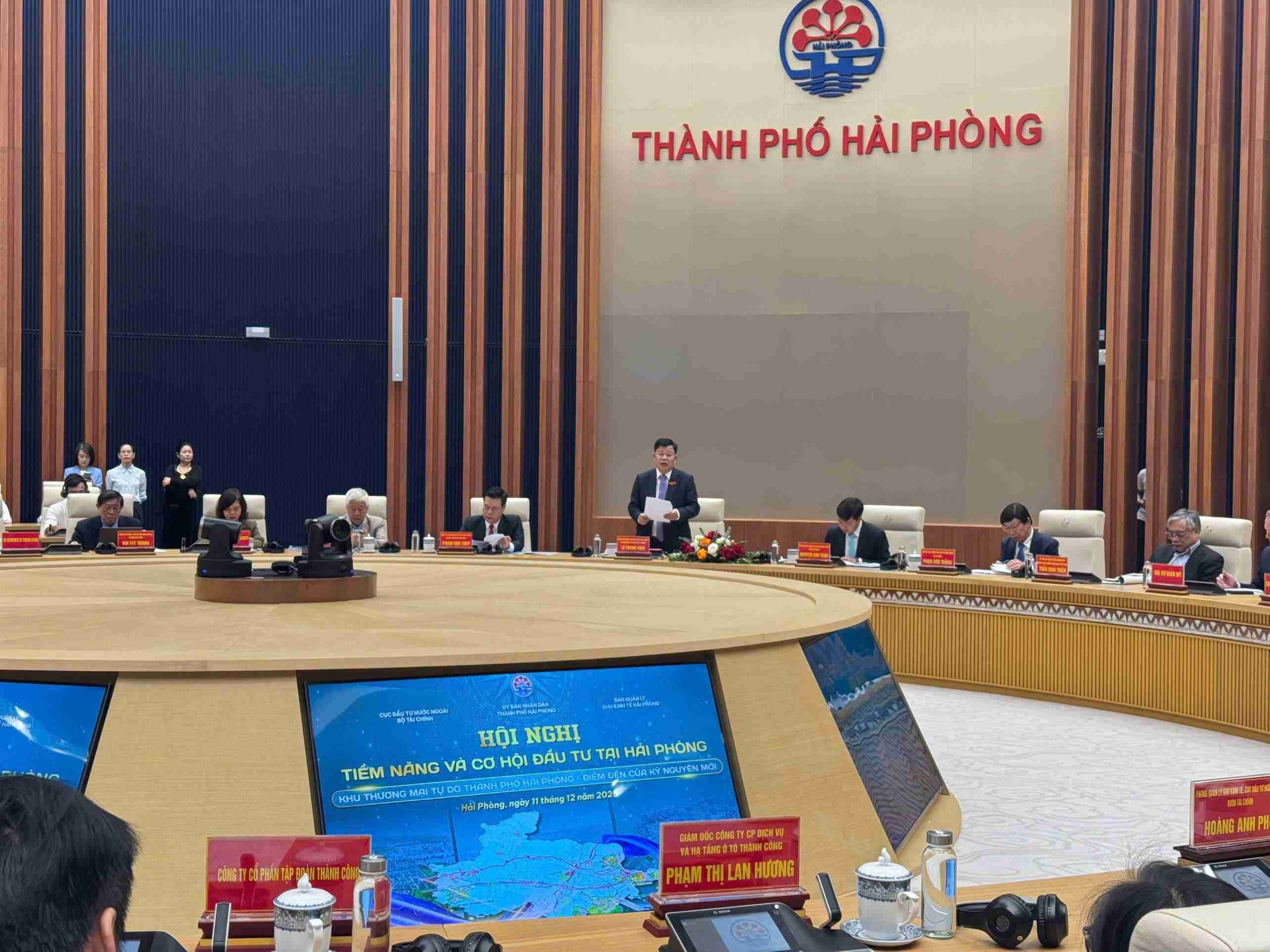
Earlier, the Haiphong Economic Zone Authority, together with the Foreign Investment Agency under the Ministry of Finance, held a conference titled “Haiphong Free Trade Zone – A Destination for a New Era.”
The event introduced special mechanisms and policies for Haiphong under the National Assembly’s Resolution No. 226/2025/QH15, with a focus on incentives for investment in the newly created FTZ.
Speaking at the conference, Koen Soenens, General Sales, Marketing & Customer Service Director at DEEP C Industrial Zones, said the launch of the FTZ marked a new phase in Haiphong’s investment drive.
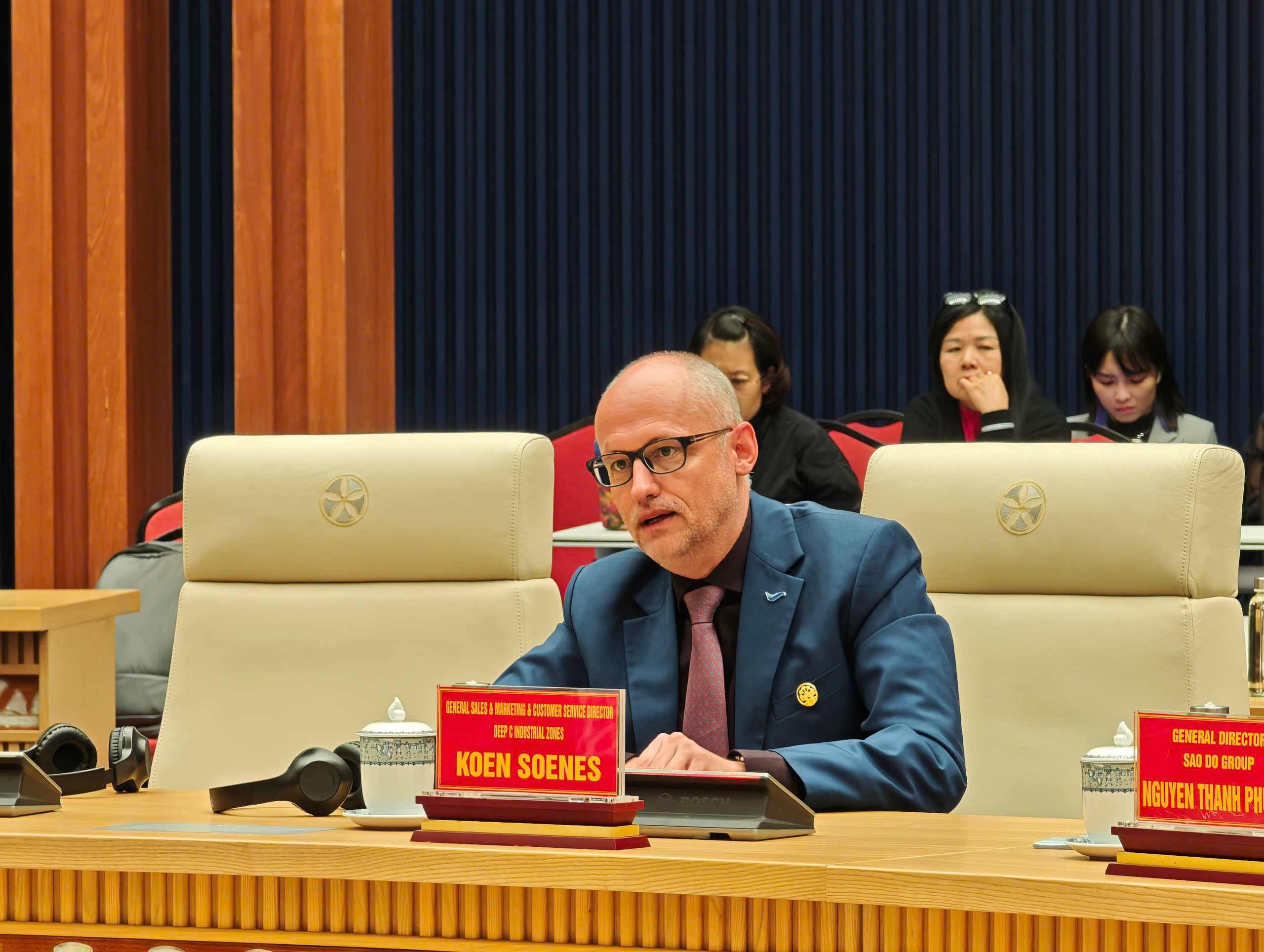
He said global supply chains are being reshaped, with companies seeking greener operations and better access to strategic logistics hubs. Northern Vietnam is moving quickly up investors’ priority lists, and Haiphong, thanks to its strong connectivity, is often among the top choices.
According to Soenens, potential investors visiting DEEP C consistently highlight the need for stability, simpler customs procedures and reliable infrastructure. They are also looking for multimodal logistics options—seaports, road transport and inland waterways—along with early adoption of green, modern and digital logistics solutions.
“An FTZ can meet these expectations, but implementation is what really matters,” Soenens said. “An FTZ may offer generous incentives on paper, but investors only commit when systems work smoothly in practice. DEEP C can promote Haiphong internationally as a seamless FTZ ecosystem where manufacturing, logistics and exports operate with minimal friction.”
“So-called free trade zones lose their meaning if procedures inside are no different from those outside,” he added.
DEEP C noted that its industrial zones lie within the FTZ boundaries, placing a responsibility on the company to help develop the core infrastructure needed for the zone to function effectively.
However, Soenens said Haiphong must meet several basic conditions if it wants to attract the right investors in priority sectors. These include a single, clear and written FTZ guideline, one official set of rules and one streamlined process.
“Investors are not afraid of complexity. They are afraid of inconsistency,” he said. “Simple forms and a shared understanding across all authorities are critical. If the FTZ offers clarity and transparent competitiveness, investment decisions become much easier.”
He added that DEEP C is ready to actively promote the FTZ to investors in Europe, the United States, Japan and South Korea. Close coordination among the city, ports, customs authorities and industrial parks is essential, he emphasized, warning that differing interpretations would leave investors confused. A dedicated hotline is also needed.
“If these elements are in place, DEEP C commits to bringing investors to Haiphong,” Soenens went on. “We are ready to help build the FTZ operating ecosystem and act as its operational arm.”
With clear rules, strong coordination and consistent implementation, Haiphong would not only be competitive but could become a must-visit destination for global investors, he stressed.
At the event, Le Trung Kien, vice chairman of the Haiphong People’s Committee, said the Politburo’s Resolution 45 and Conclusion No. 96 task Haiphong with serving as a growth engine for northern Vietnam.
“If the city continues to rely mainly on industrial parks, it will soon hit a growth ceiling,” Kien said. “Haiphong needs a new push and a broader development space to create new growth drivers and more advanced economic models.”
He said the National Assembly’s Resolution No. 226/2025/QH15, issued on June 27, 2025, which allows the pilot establishment of an FTZ, provides the framework Haiphong needs to move into a new stage of development. Under the FTZ’s special policies, investors and businesses will benefit from simplified administrative procedures covering investment licensing, business operations, import-export activities, immigration, temporary residence and work permits.
Foreign investors setting up shop in the FTZ will not be required to submit an investment project or obtain an investment registration certificate before establishment.
Companies operating in the FTZ will also be eligible for priority treatment under customs regulations for import and export activities, provided they meet relevant legal requirements, except for minimum trade volume thresholds.
Certain goods will be exempt from specialized inspections if they have already been certified as meeting technical standards or have adopted internationally recognized management systems.
In addition, foreign experts, scientists, managers and highly skilled workers employed by companies headquartered in the FTZ, along with their family members, will be granted visa exemptions and 10-year temporary residence cards.
Investment projects in the zone will be exempt from land and water surface rental fees for the entire lease period, except for housing and commercial projects. Eligible professionals working in the FTZ will also receive a 50% personal income tax reduction for 10 years on income earned from work performed in the zone.