
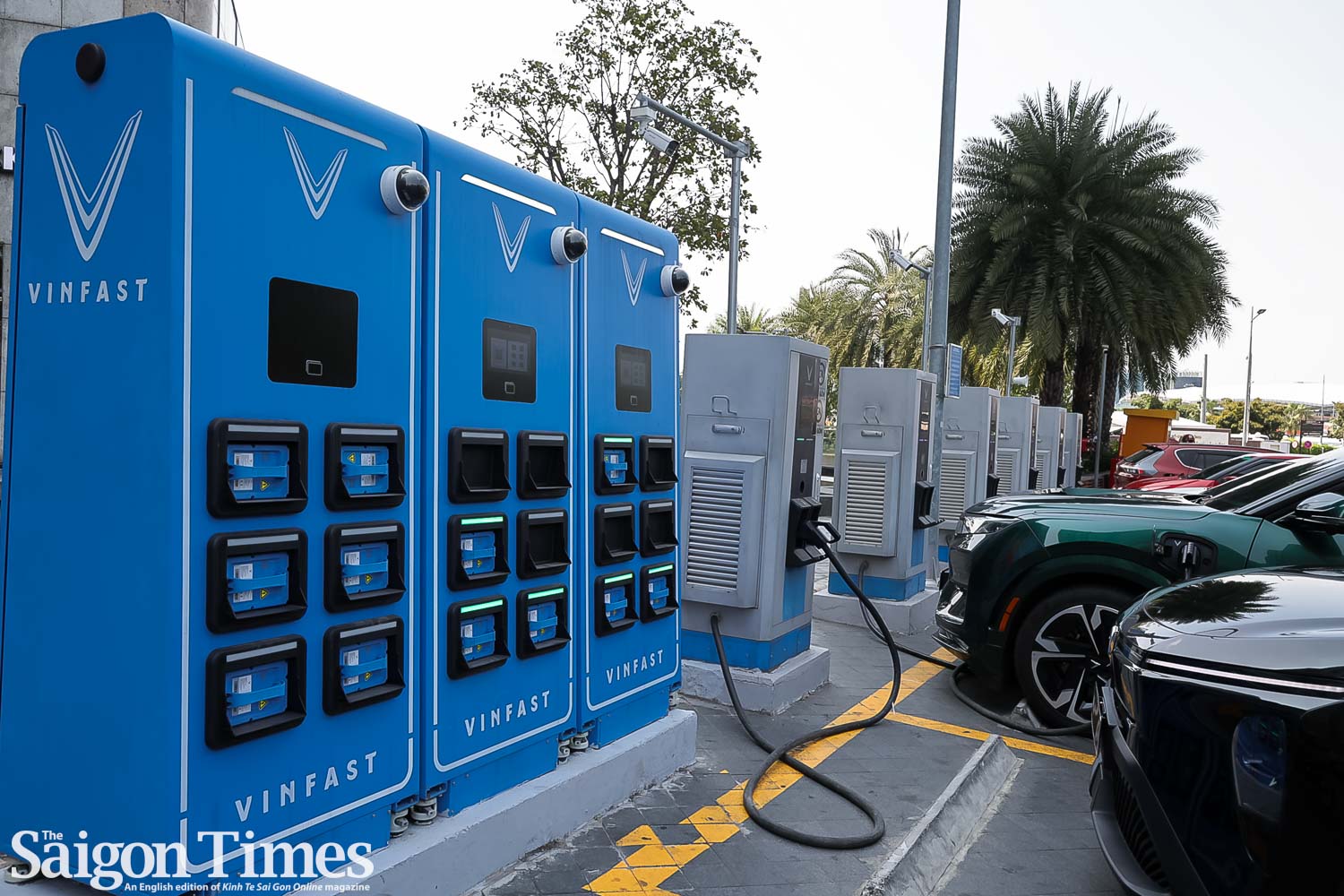
HCMC – Electric vehicles (EV) account for a mere 0.2%–0.3% of Vietnam’s total electricity demand, so they are not placing significant pressure on the national grid, the Ministry of Industry and Trade said.
The assessment was presented at the ministry’s first-quarter press briefing on April 9, where officials outlined supply and demand conditions for electricity, reported the Vietnam News Agency.
Nguyen The Huu, deputy head of the Electricity Authority of Vietnam at the Ministry of Industry and Trade, said electricity use for transport reached about 652 million kWh by the end of 2025, citing data from the Vietnam Association of Motorcycle Manufacturers.
Even by 2030, with an estimated 1–1.6 million electric cars and 8–13 million electric motorcycles in use, the demand is projected at 3.1–5.6 billion kWh per year, or 0.68%–1.1% of nationwide consumption.
Huu noted that concerns over EVs overloading the system are unfounded at present based on total output.
However, he pointed to risks from peak load. If 100,000 electric cars are charged simultaneously using fast chargers rated at 60–120 kW, the demand could rise to 6–12 GW, equivalent to one-eighth to one-quarter of the current peak load. This could lead to localized grid overloads in densely populated areas or locations with a high concentration of charging stations.
The ministry is reviewing power planning and prioritizing upgrades to distribution networks in areas with rapid electrification. It is also studying pricing mechanisms to encourage off-peak charging and promoting smart charging systems linked with distributed energy sources.
On supply, the ministry said it has prepared fuel reserves, including coal, gas, and water, to ensure electricity generation during the 2026 dry season.
Huu said fuel stockpiling is a routine task to maintain readiness and ensure supply during periods of extreme heat.
Nguyen Sinh Nhat Tan, deputy minister of Industry and Trade, said efficient electricity use will be key to balancing supply and demand, especially during peak periods.
He added that coordinated efforts between supply measures and energy-saving practices would help ensure stable electricity provision for the economy and households in 2026.