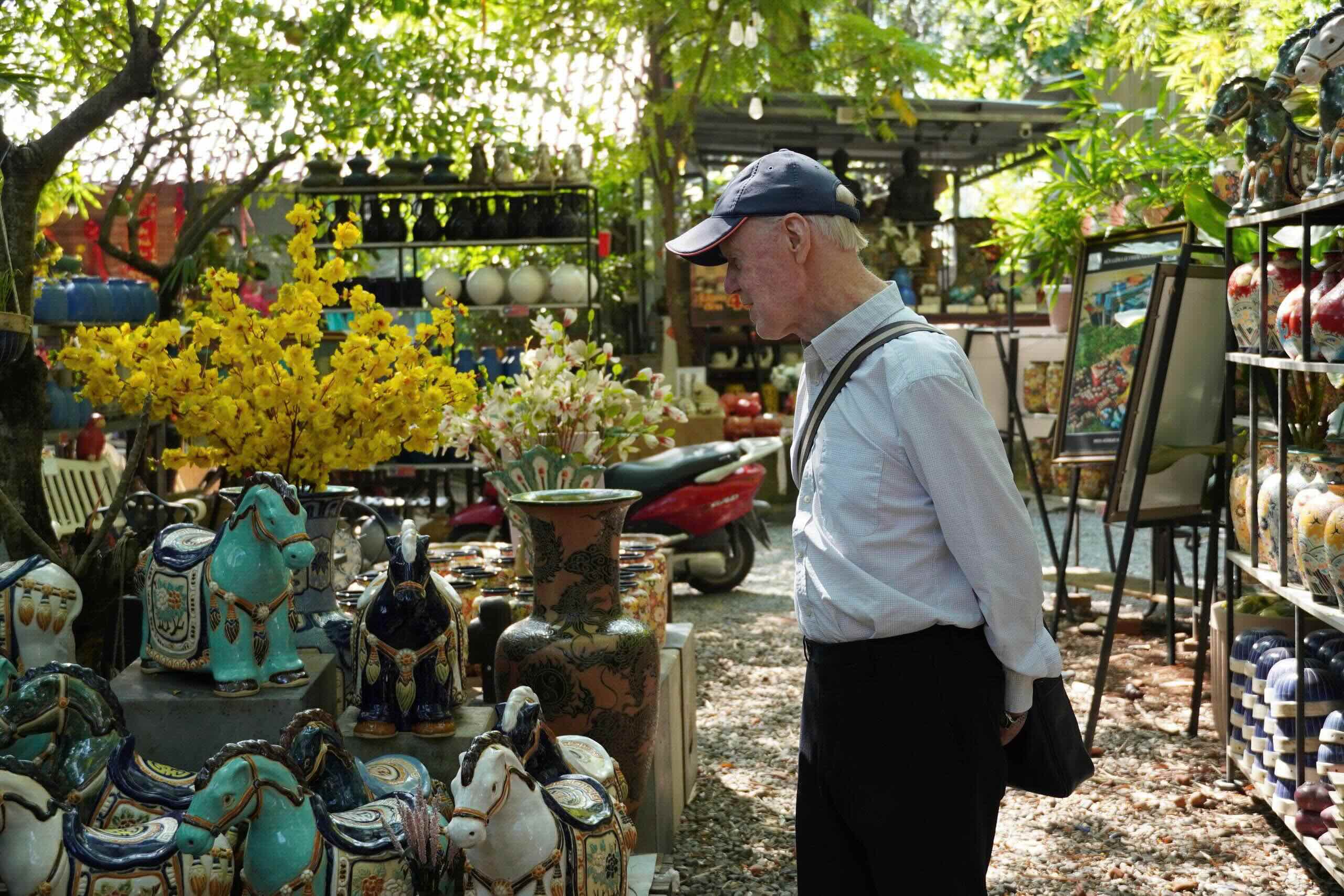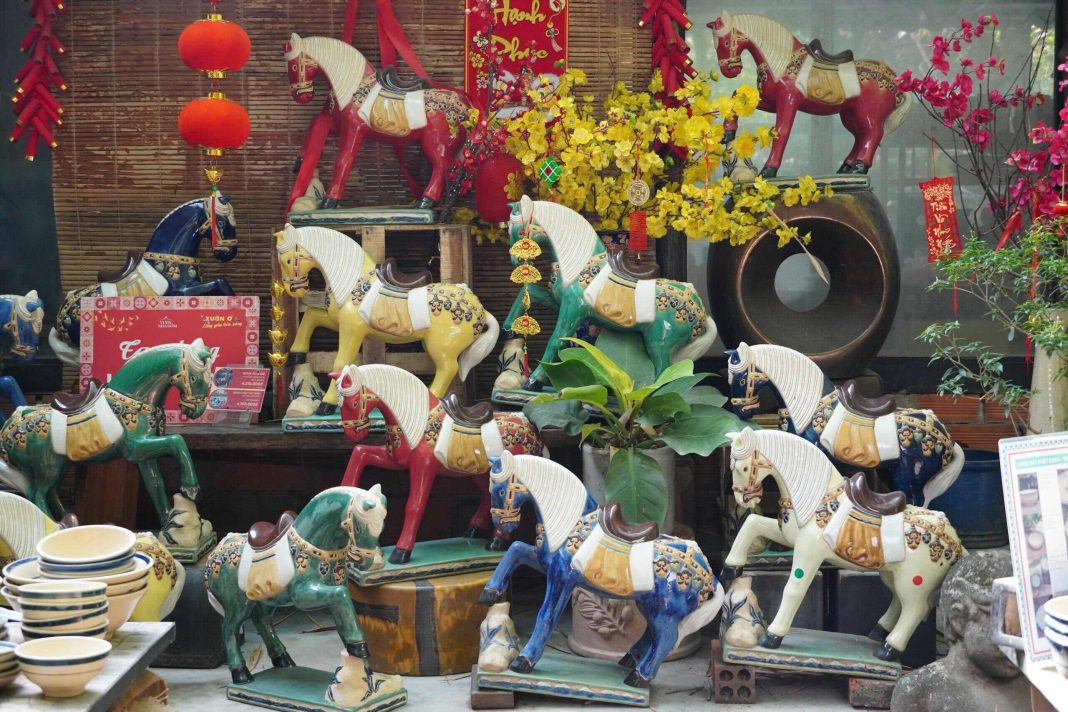

HCMC – Beyond admiring ceramic horse mascots created for the Lunar New Year 2026, visitors to a pottery space in Lai Thieu Ward, HCMC, can explore traditional ceramics through close observation and hands-on activities, while learning about the more than century-old Lai Thieu pottery tradition, one of southern Vietnam’s distinctive craft villages.
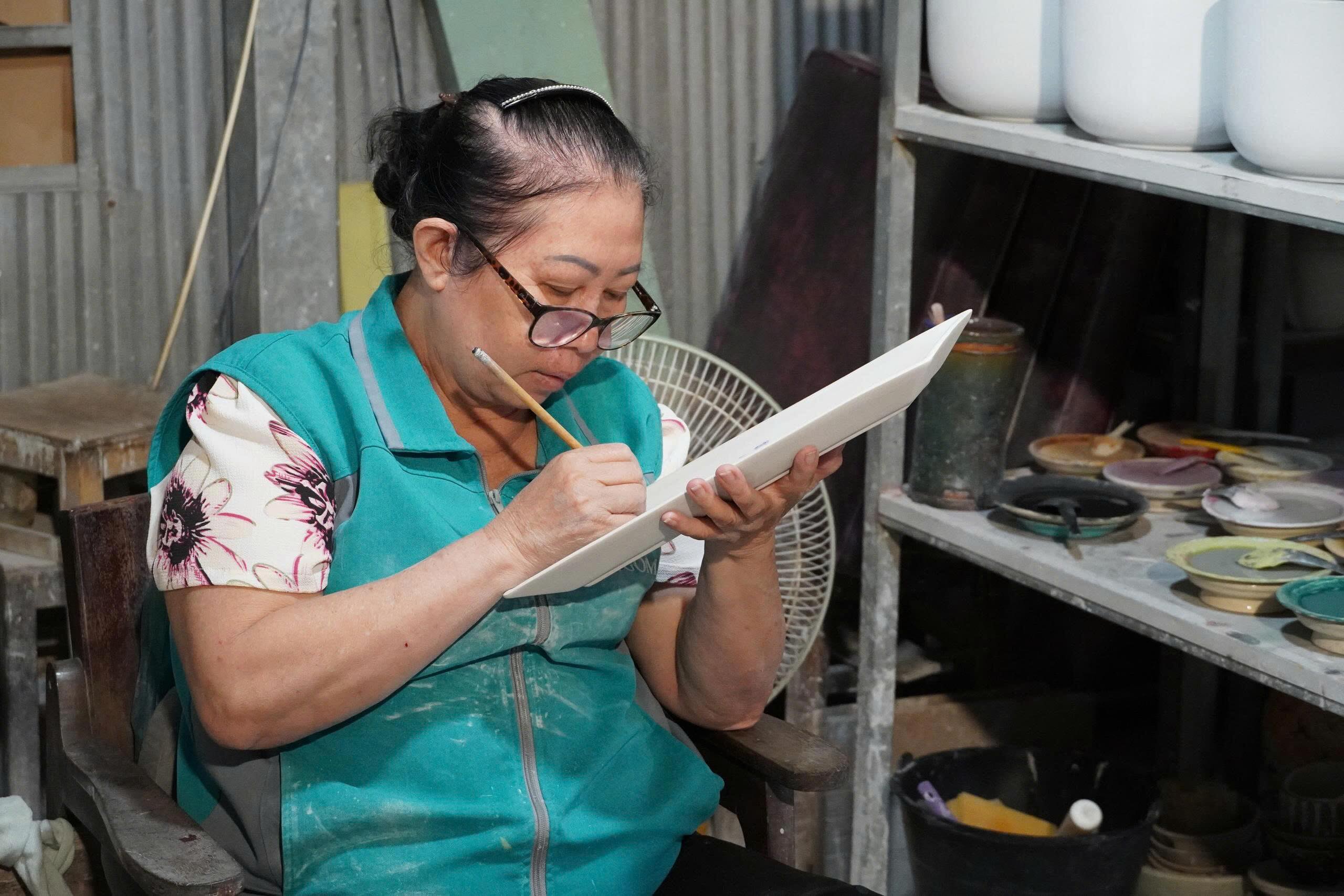
Within the open workshop and outdoor display areas, artisans work through each stage of production, from shaping and forming to surface decoration. At each worktable, clay is gradually transformed into finished forms, reflecting the rhythm and discipline of manual craftsmanship.
Unlike many zodiac mascots that emphasize strength and dynamic poses, this year’s horse collection follows a softer visual approach. Many figures are designed with gentle stances, slightly lowered heads and calm expressions, finished in warm and bright tones. The designs convey a sense of balance and calm, reflecting aspirations for peace and renewed energy in the Year of the Horse.
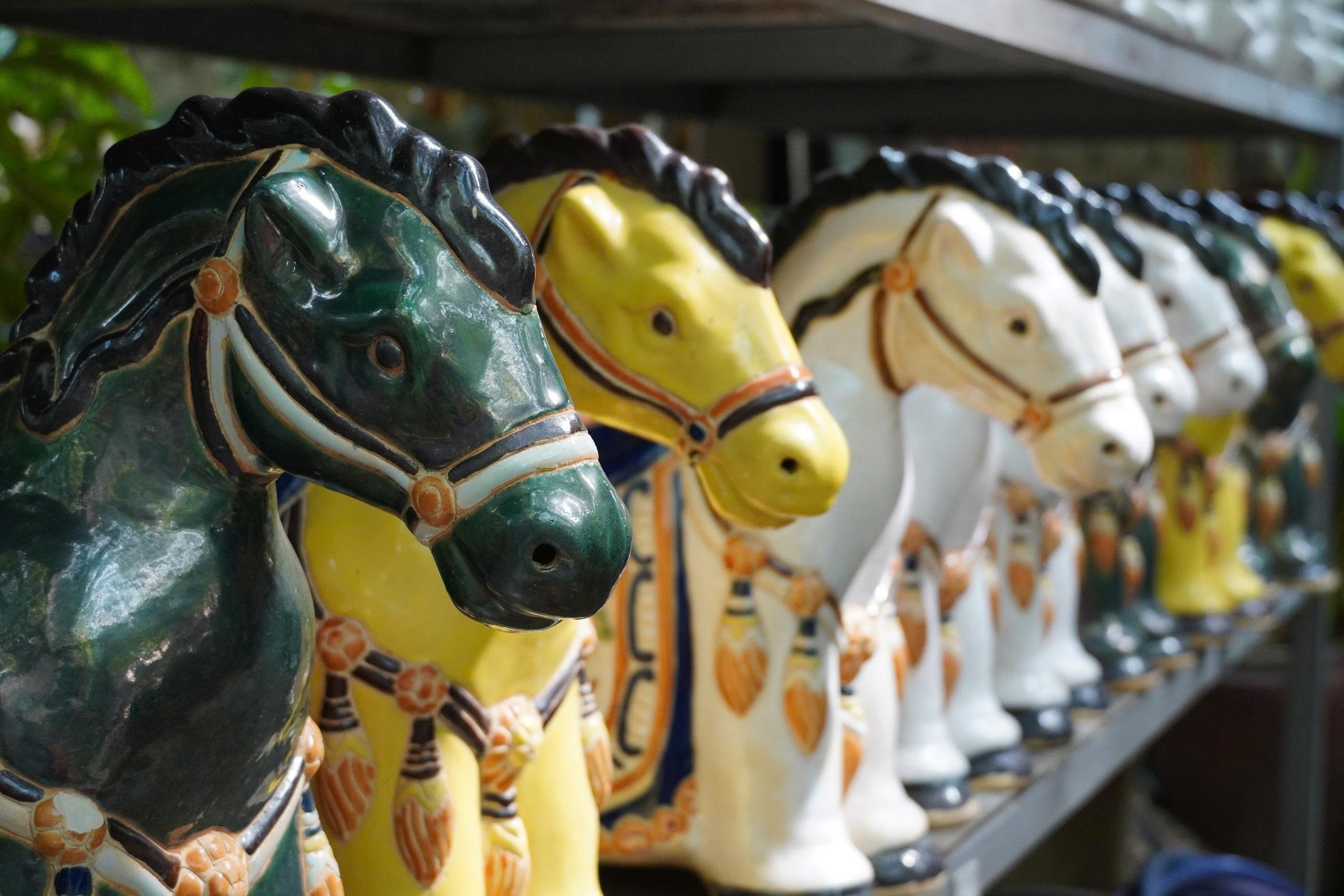
Production in Lai Thieu continues to rely largely on traditional hand-crafted techniques. Clay is processed, divided and shaped, then molded and smoothed by hand or with simple tools. Artisans constantly adjust proportions, refine details and polish surfaces before moving on to decorative stages.
Among the village’s traditional product lines, the bach hoa vase is considered a signature item. Its surface is densely layered with floral and bird motifs rendered in multiple interwoven colors, requiring meticulous painting skills and careful color coordination. Elephant-shaped pedestals, animal stands, ornamental planters and ceramic garden sculptures are also among Lai Thieu pottery’s strengths, commonly found in southern Vietnamese homes due to their sturdy forms and durable glazes.
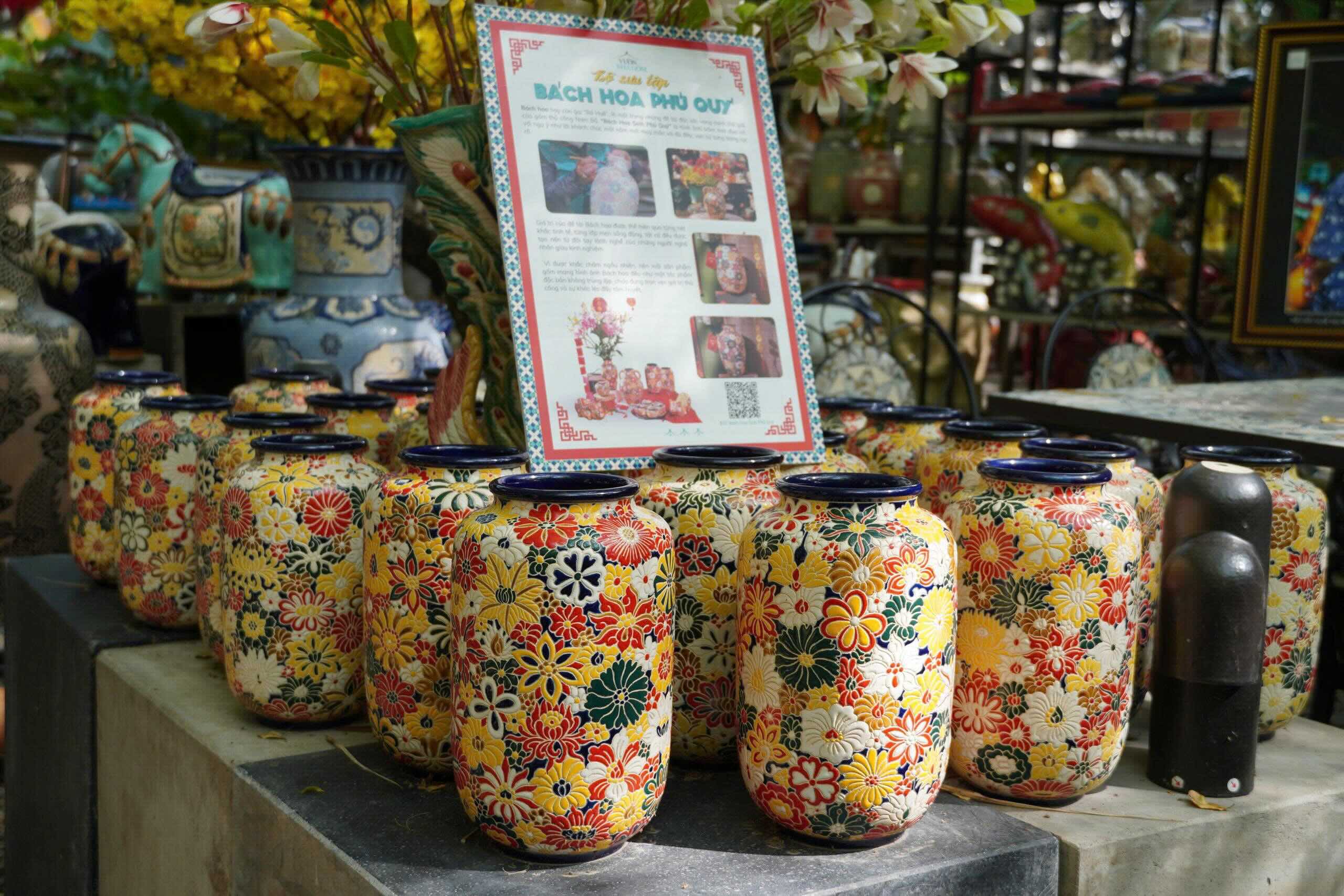
In the lead-up to the Lunar New Year, the pottery space is arranged with spring-themed settings inspired by traditional Tet scenes, including tea tables, calligraphic couplets, flower baskets, kitchen corners and ceramic-filled courtyards. These arrangements combine pottery with familiar household objects, creating visually engaging environments for visitors.
The site attracts hundreds of domestic and international visitors each day, with many tour groups choosing it as a cultural and craft stop while exploring areas on the outskirts of HCMC.
Experiential activities are a central feature. Visitors can observe the full pottery-making process, from clay preparation and shaping to surface decoration, and can also take part in workshops to mold and complete basic ceramic products themselves.
According to representatives of the site, this experiential approach helps strengthen local tourism, generate additional income and contribute to the preservation of traditional crafts. By directly engaging with the material and bringing home self-made products, visitors gain a tangible understanding of the craft village’s story.
-
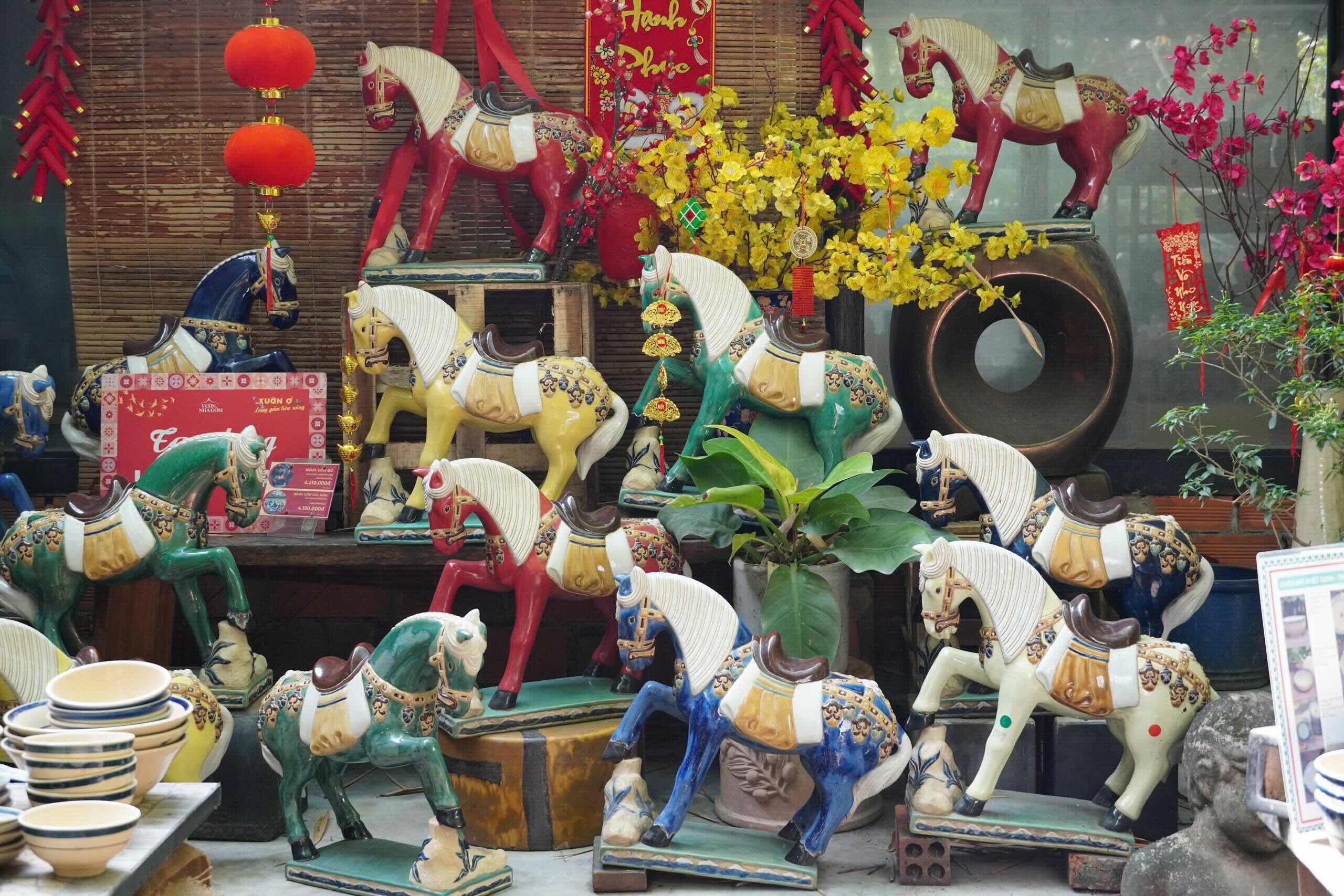
Decorated ceramic horse figures displayed to mark the Year of the Horse 2026, a zodiac symbol associated with vitality and forward movement in Vietnamese culture
-
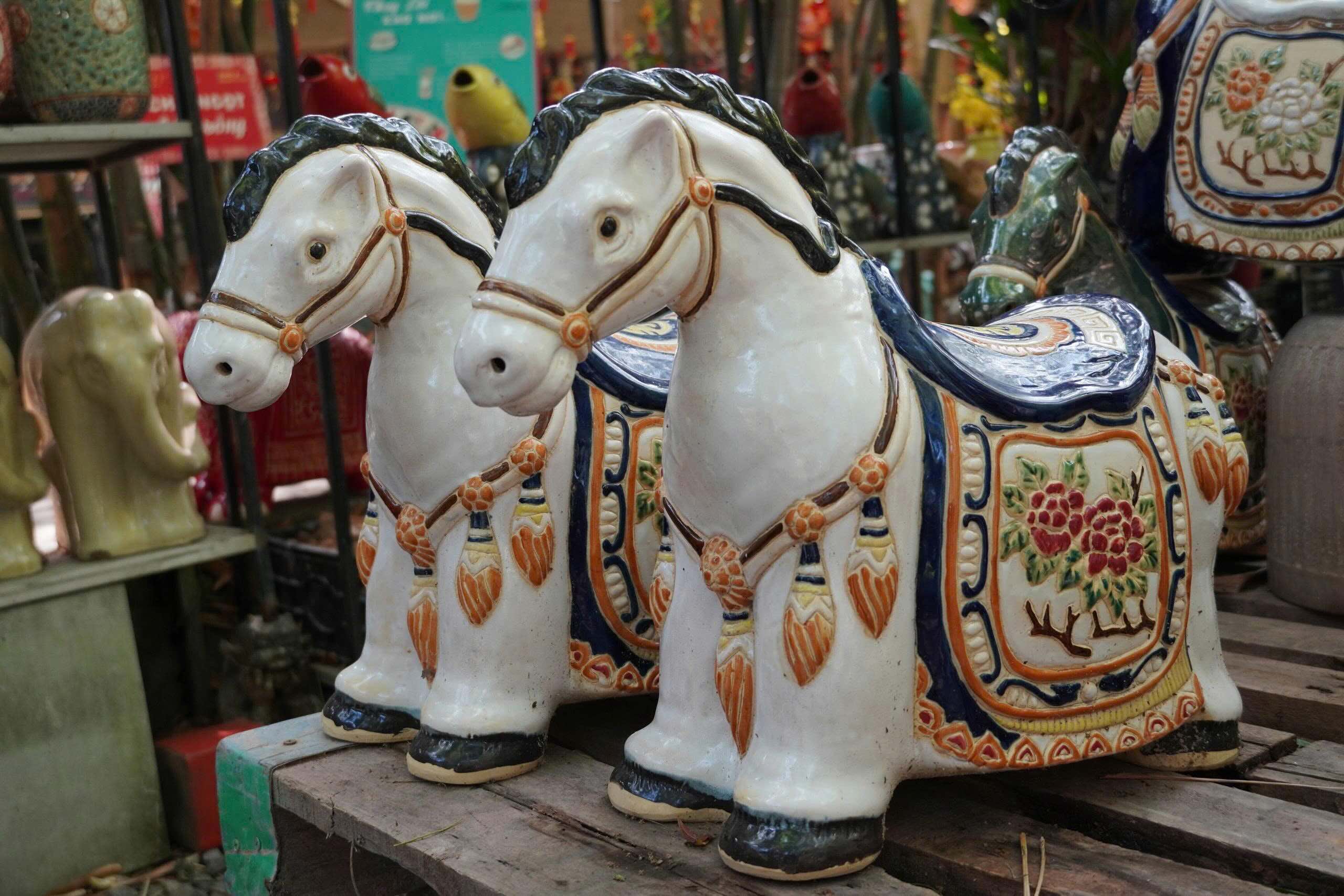
A pair of white ceramic horse mascots adorned with traditional Vietnamese motifs
-
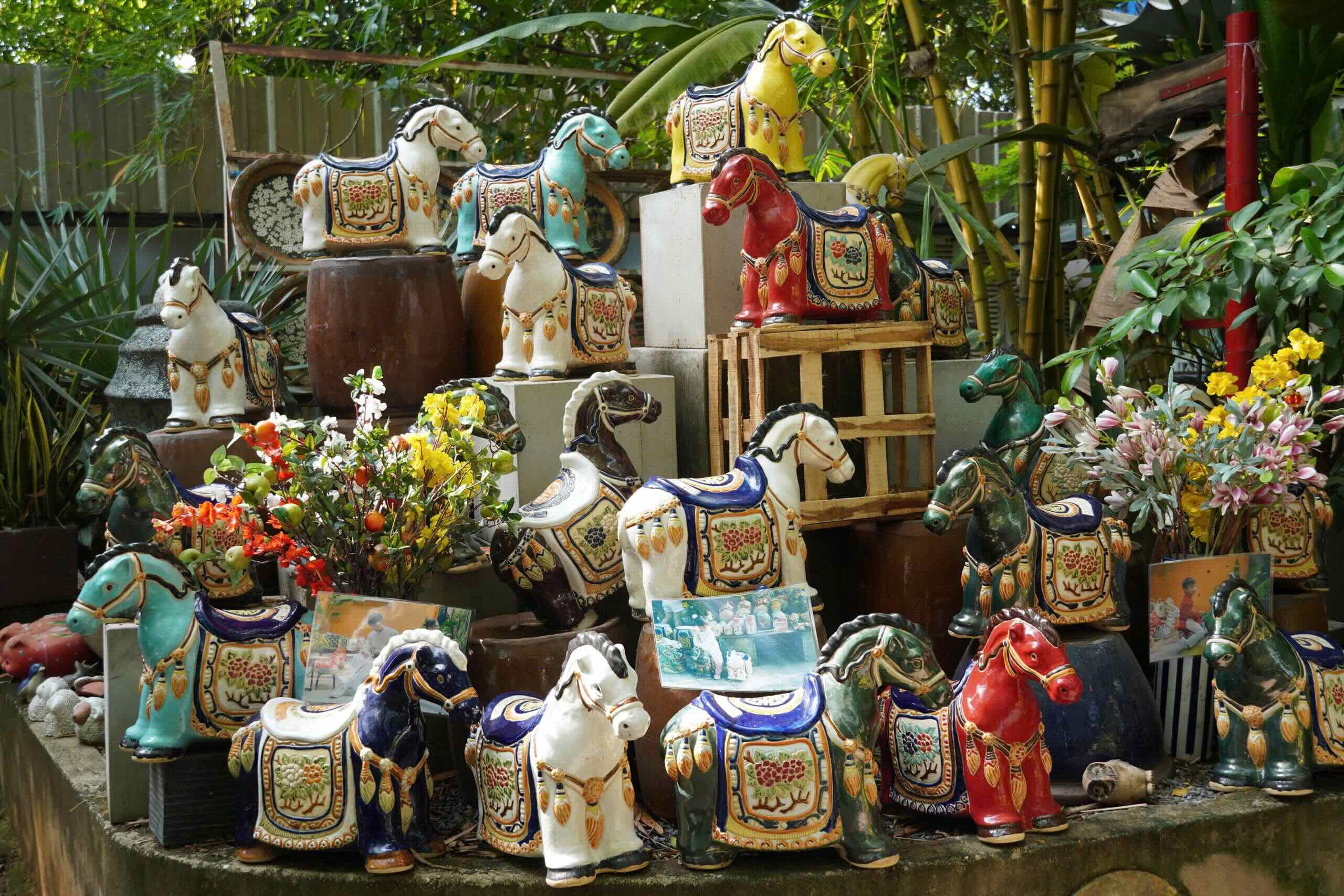
Another display area featuring ceramic horse figures in diverse colors and forms, arranged to create a lively visual highlight
-
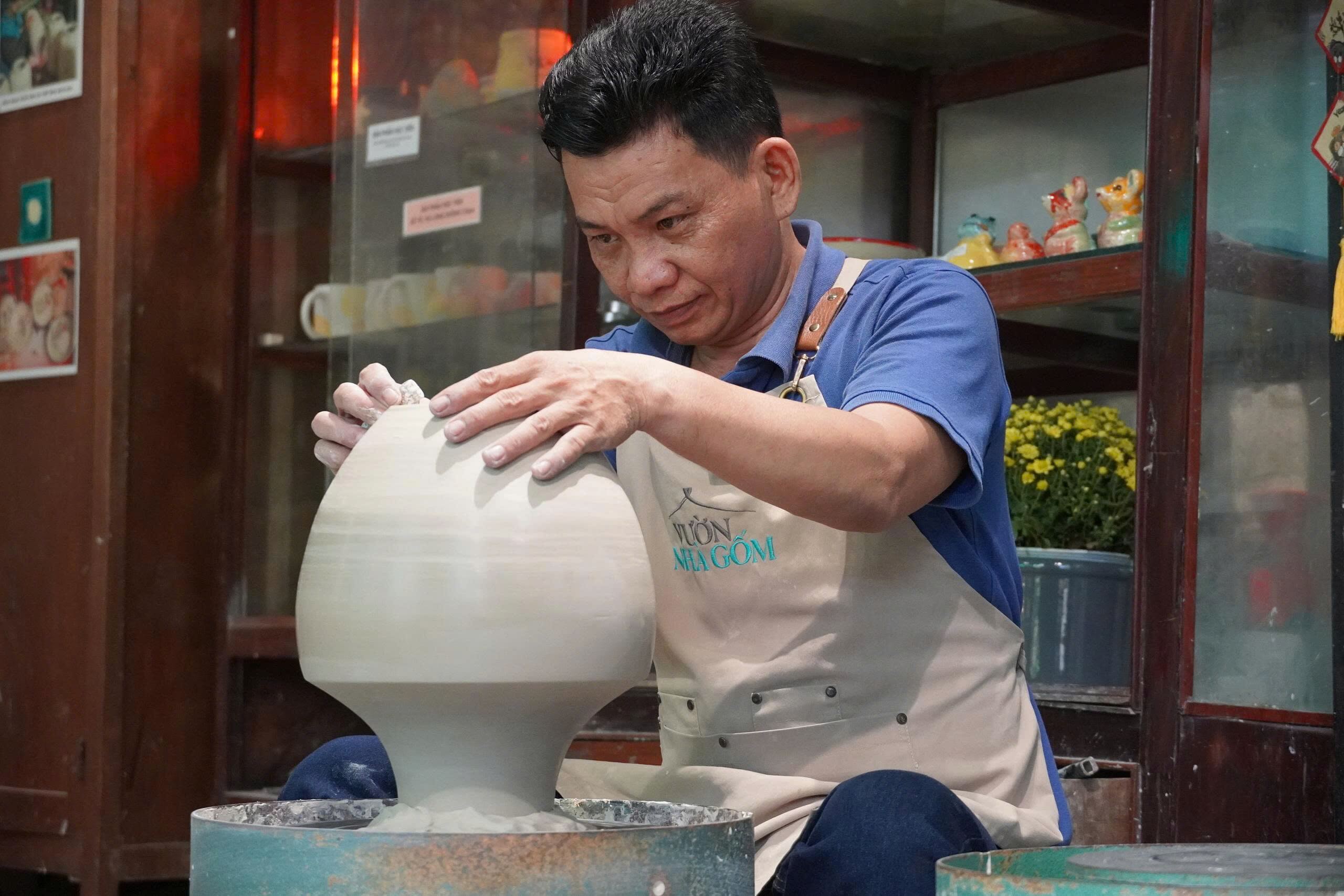
An artisan shapes an traditional ceramic product live in the open workshop area, offering visitors a close-up view of Lai Thieu’s hand-crafted pottery process
-
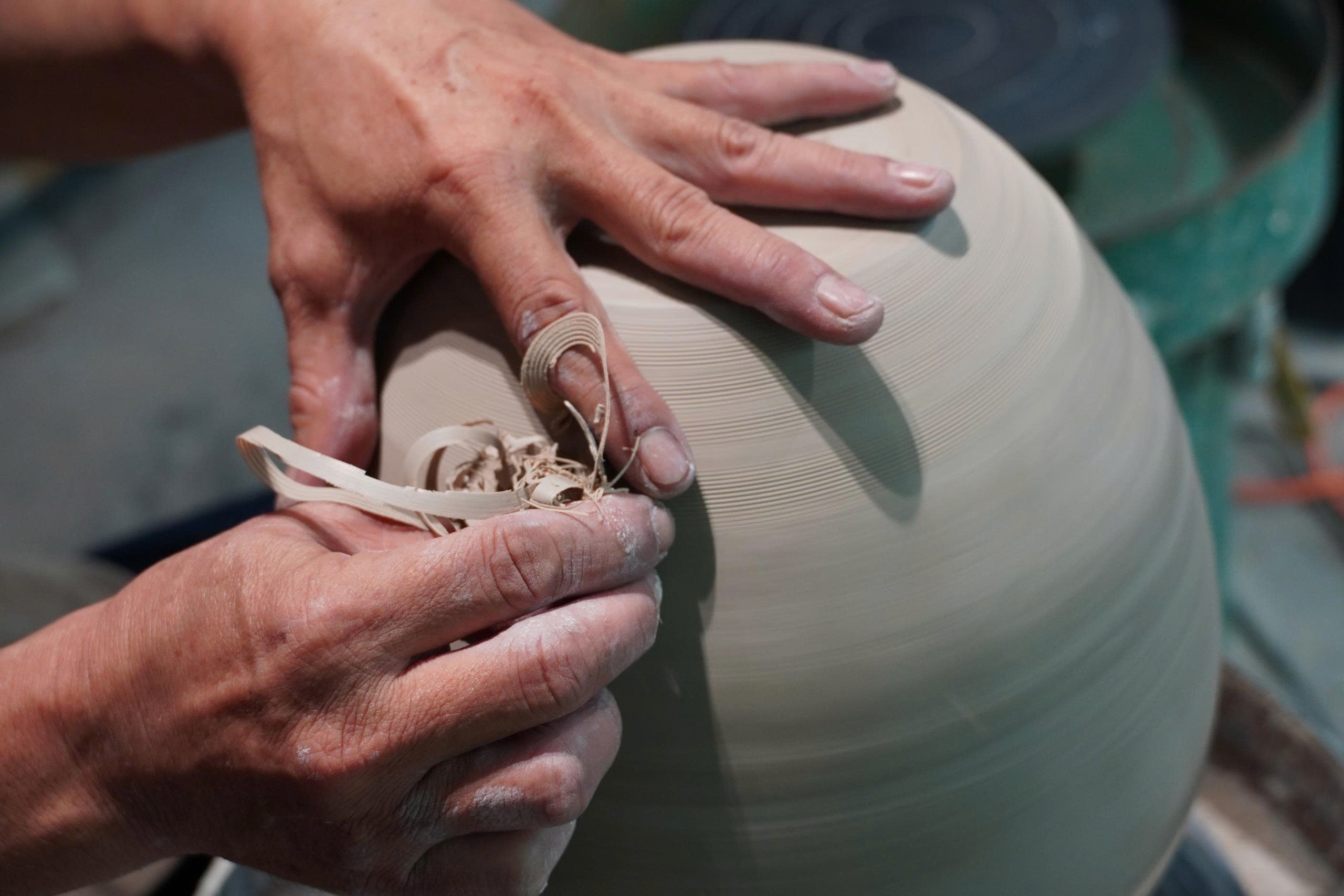
Decorative patterns carved onto fresh clay surfaces before the pieces are placed into the kiln
-
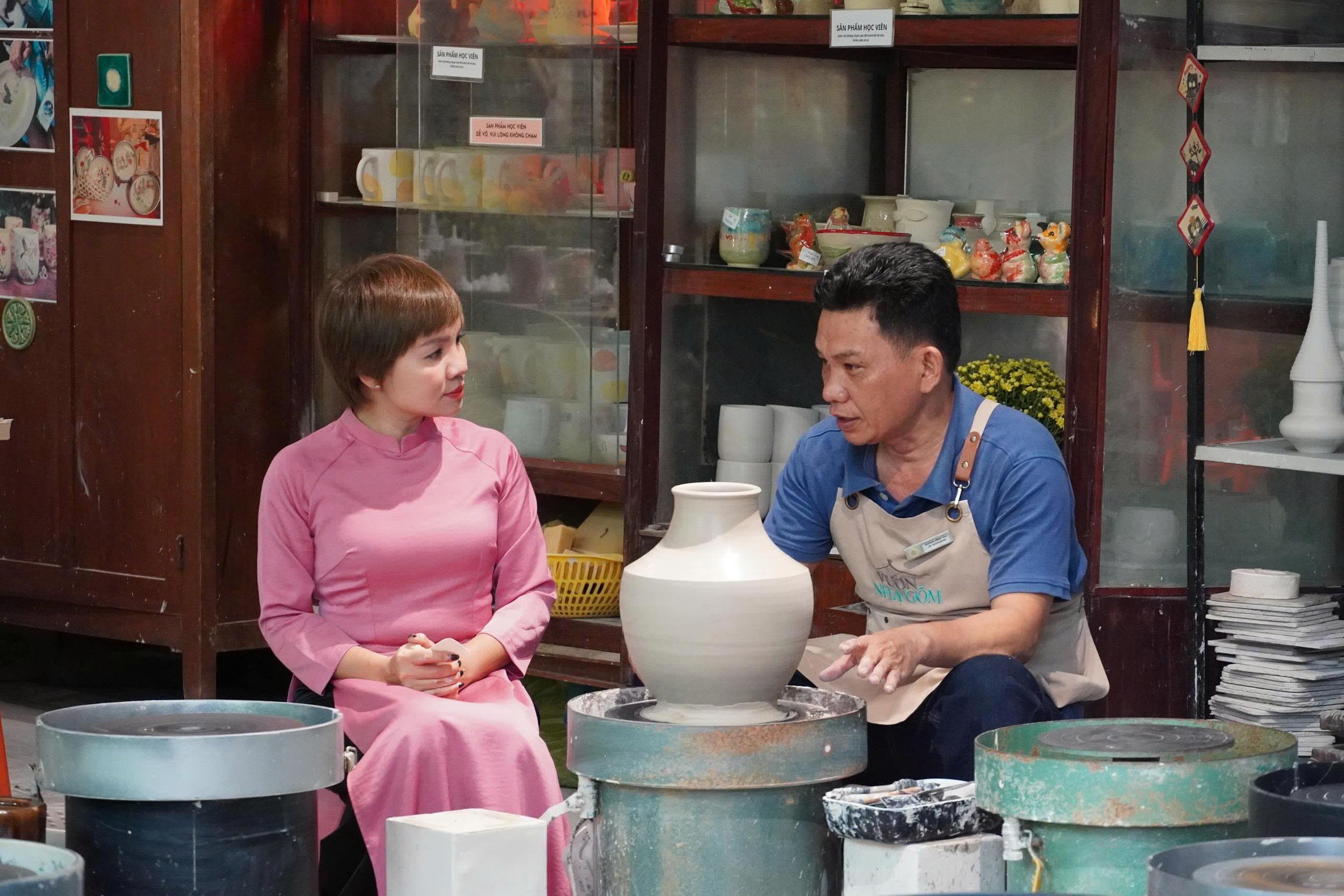
A visitor learns about pottery techniques, materials and production methods through direct exchange with an artisan
-
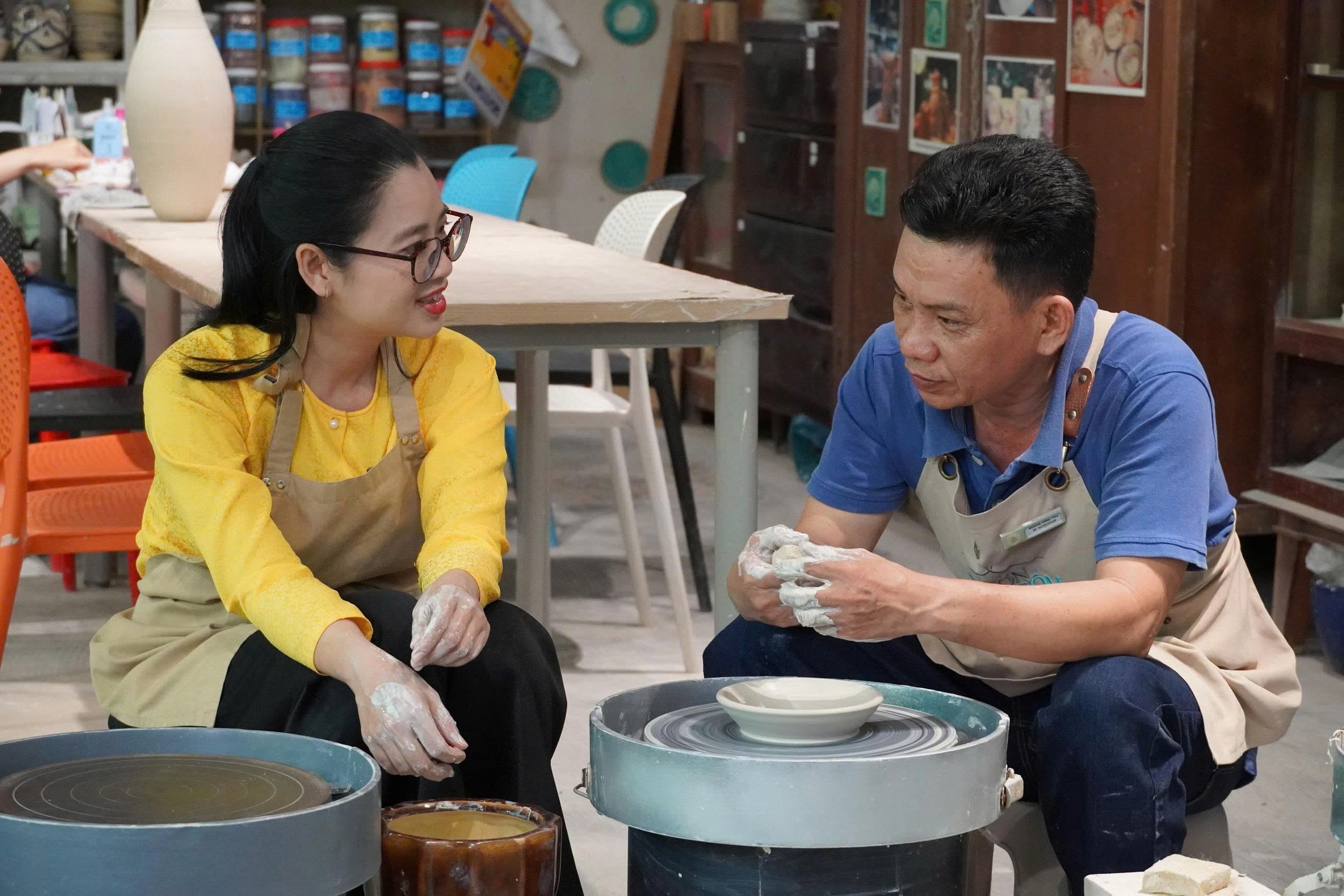
An artisan shares with a visitor the story of Lai Thieu pottery and how the craft has been passed down across generations
-
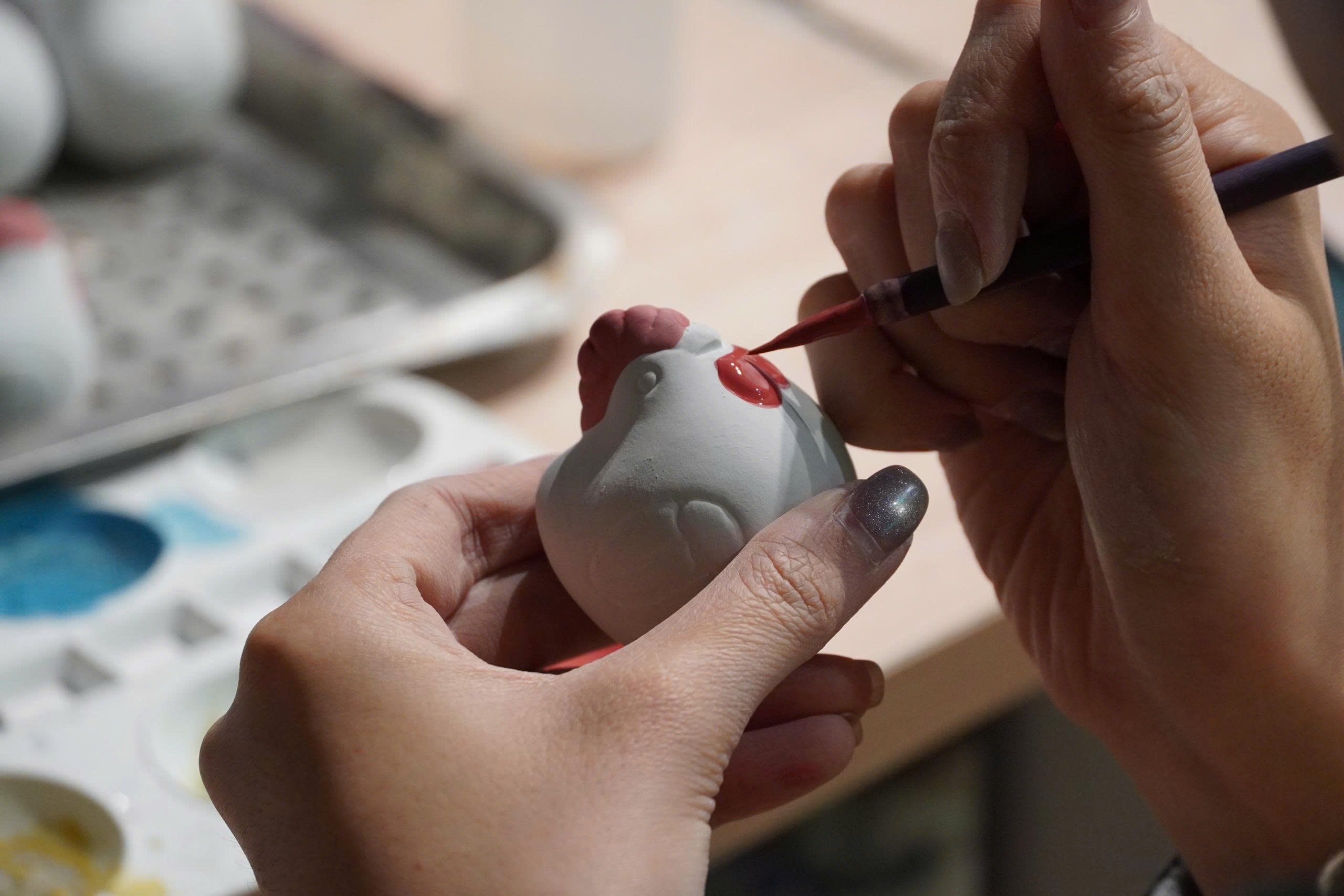
Carefully painting details on a small ceramic rooster, a familiar motif in southern Vietnamese folk pottery