
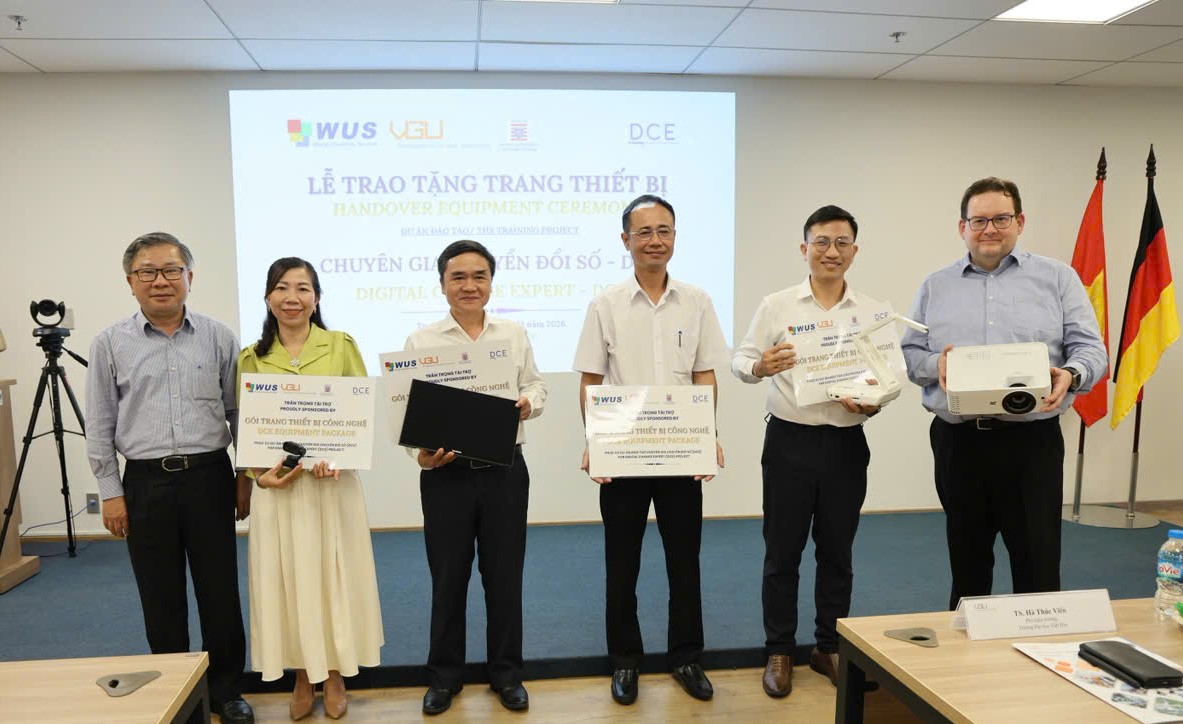
HCMC – More than VND800 million worth of digital education equipment was handed over to 12 vocational education institutions in HCMC on January 22 to support the rollout of a “Digital Classroom” model.
The equipment is intended to help vocational schools apply digital transformation in school management, teaching and learning, according to the program’s organizers.
The handover was organized by Vietnam-Germany University in coordination with World University Service (WUS) and the Hessen Continuous Education Institute (HLFT).
WUS President Kambiz Ghawami noted that Vietnam is among Southeast Asian countries advancing a legal framework for artificial intelligence, with a law expected to take effect in March 2026. He added that vocational education has recorded positive changes as digital transformation accelerates, with digital transformation specialist training playing a key role.
The Digital Classroom model is built on five pillars based on German standards. These include digitalizing school management, developing a core group of lecturers proficient in technology, building interactive digital learning resources, applying modern technical infrastructure in teaching, and strengthening links between vocational institutions and businesses. The model will be adapted to local conditions in HCMC.
Project partners expect the 12 recipient institutions to develop into model practice centers. They are tasked with refining digital manuals and implementing training under a “train-the-trainer” approach to expand the model across Vietnam’s vocational education system.
The Digital Classroom initiative is part of the Digital Change Expert (DCE) project, launched in 2023 under cooperation between Vietnam and the German state of Hessen. After completing its first phase, which trained nearly 30 senior managers, the project has entered phase two, focusing on practical application and technology transfer for 34 staff members from 12 vocational secondary schools and colleges in HCMC.