
As sharing moves into the digital world, a key challenge arises: how to keep the act of giving and receiving honest and free from hidden motives.
Within Asia’s rapidly growing digital economy, platforms that enable sharing of goods, time, and support are becoming more integrated into daily life. Rising living costs, high urban density, and an increasing awareness of waste have driven the development and growth of these models.
However, alongside this growth, a key question emerges: how is kindness implemented in the digital space, who is genuinely being protected, and what occurs when the act of giving becomes a form of self-promotional “flexing”?
The paradox of surplus resources and unequal access
Global statistics reveal a sobering paradox. According to reports from the United Nations Environment Program, the world wasted more than one billion meals per day in 2022, while hundreds of millions of people still faced food insecurity. Additionally, the World Bank predicts that global solid waste could reach 3.4 billion tons by 2050, with the East Asia-Pacific region identified as one of the fastest-growing areas.
This reality underscores that the core issue is not a scarcity of resources, but rather their distribution and accessibility. Sharing platforms emerged to bridge this gap; however, as they scale, new systemic challenges have begun to surface.
The dark side of digital altruism
Technology has streamlined the act of sharing: with just a few taps, a pre-owned item can quickly reach someone in need. Yet, as participation grows, so do the complications. On many online platforms, recipients often face invisible pressure to narrate their hardships to “prove” their worthiness.
Conversely, donors are encouraged to document and broadcast their altruism through highly produced images and emotionally charged videos. Consequently, giving and receiving are no longer a pure exchange of kindness; it becomes a source of unspoken pressure for both parties.
Research into “altruism in the digital age” warns that such dynamics can erode community trust. When receiving support is tethered to a feeling of being scrutinized and judged, vulnerable groups become more hesitant and guarded.
Furthermore, when giving is utilized as a tool for personal validation, the focus shifts from the support itself to self-expression. In these instances, kindness is transformed into a mechanism for personal branding, and the essence of sharing is eclipsed by the need for ego affirmation. Kindness, then, becomes conditional.
These concerns have prompted several new platforms in Asia to reconsider not just “what is shared”, but more importantly, “how it is shared”.
Establishing ethical boundaries in sharing
Rather than pursuing growth at any cost, a new wave of “give-and-receive” applications is choosing to establish ethical principles as their operational foundation. The goal is not to restrict users, but to protect participants – particularly vulnerable individuals – within the digital space.
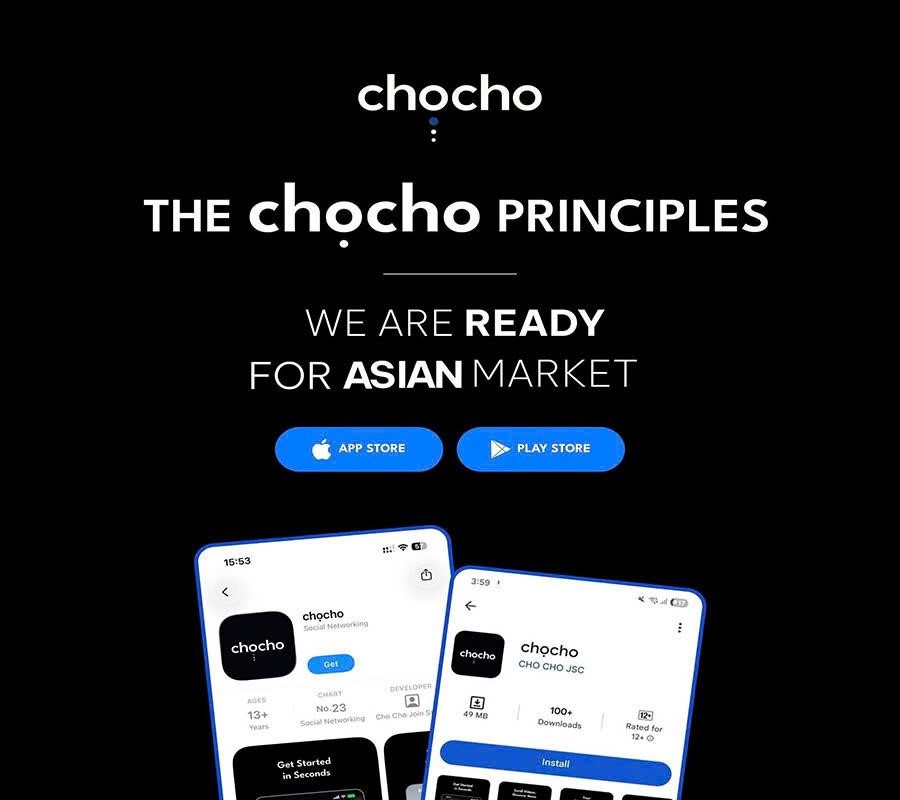
chọcho, a platform for sharing pre-owned items, exemplifies this approach: “chọcho – The world’s first video platform for free giving and receiving.” This free platform does not position itself as a “second-hand marketplace”—there are no commercial transactions, nor does it seek to replace the role of charitable organizations. Instead, chọcho acts as a bridge between surplus and actual need, grounded in the consistent principles of honesty, voluntarism, and mutual respect.
Putting humanity at the center: The chọcho philosophy
The operational philosophy of chọcho is built upon a simple starting point: absolute voluntarism. There are no rankings, scores, or competitive metrics. Every act of giving and receiving retains its original meaning, free from pressure or the gears of invisible competition.
Most importantly, the platform adopts a non-judgmental principle. Recipients are not required to recount their circumstances or prove their hardship. In this space, giving and receiving are viewed as an equal exchange; no one is placed in a subordinate position, and no one adopts the role of a “benefactor.”
Privacy and dignity are treated as inviolable boundaries. Content that exploits personal lives or utilizes vulnerability as a tool for engagement is strictly limited. Stories and images shared must stem from authenticity – unscripted and free from emotional manipulation. Simultaneously, the platform actively prevents profiteering, such as disguised commercial sales, hidden advertising, or the use of sharing to polish a personal image. These terms protect chọcho from the risks of commercialization that have caused many online sharing communities to lose their original essence.
chọcho also upholds the spirit of equality, irrespective of social status, gender, or religious beliefs. Instead of chasing grandiose commitments or hyper-growth, the platform focuses on a pragmatic goal: connecting small-scale exchanges so that surplus can accurately meet demand.
Crucially, these principles stem from a shared realization: giving and receiving are not fixed roles. A person who gives today may be the one who requires support tomorrow. Therefore, in any situation involving risk, the highest priority is always the human being. Systems can be modified, but the damage to human dignity and spirit is often irreparable.
Can these principles scale in digital communities?
As digital ecosystems in Asia mature, the core question is no longer whether people are willing to share online, but under what conditions that sharing can remain sustainable. While specific rules may not guarantee absolute trust, their absence almost certainly guarantees its erosion.
Whether platforms governed by such strict principles can achieve massive scale without losing their original “identity” remains an open question. However, it is increasingly clear that in a region where surplus and scarcity coexist, the “rules” governing kindness are as vital as the act of giving itself. For this reason, chọcho chooses to lead with clear “rules” – not to control kindness, but to protect it. Learn more about how chọcho builds operational principles for sustainable sharing here:
Discover Choho’s social media channels now!
- Link Facebook: https://www.facebook.com/1C73i7sQjS/?mibextid=wwXIfr
- Link Website: https://chocho.global/#home