
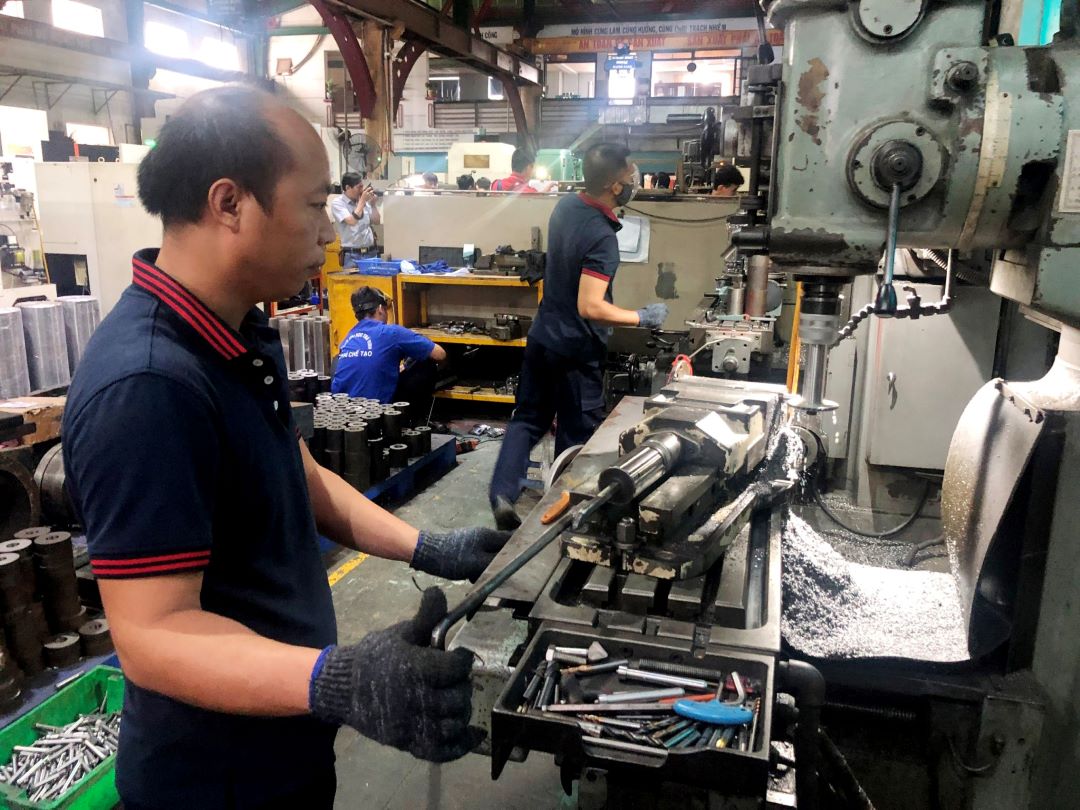
HCMC – Vietnam’s manufacturing sector expanded at a faster pace in February, with the Purchasing Managers’ Index (PMI) rising to 54.3 from 52.5 in January, marking the strongest improvement in four months, according to S&P Global.
The reading remained well above the 50-point threshold that separates expansion from contraction. It also extended the sector’s current growth streak to eight consecutive months, reflecting improving business conditions.
Manufacturing output increased at the fastest pace in 19 months, supported by stronger customer demand and firms preparing goods for delivery.
New orders rose for the sixth straight month and at the quickest rate since October 2025. The improvement in domestic demand helped offset weak export performance, as new export orders remained unchanged from the previous month amid ongoing uncertainty in global markets.
The increase in new business encouraged manufacturers to expand operations. Employment rose for the fifth consecutive month, with the pace of hiring reaching its fastest level since September 2022, although some firms relied on temporary workers.
Purchasing activity also increased sharply, and firms raised input inventories slightly after a decline in January.
Stronger demand for materials enabled suppliers to increase prices, pushing input cost inflation to its steepest level since June 2022. Higher shipping costs also contributed to rising expenses.
In response, manufacturers raised selling prices, maintaining inflation at the elevated level seen in January, which had been the highest in 45 months.
Supplier delivery times lengthened modestly, partly due to customs delays affecting imported goods.
Manufacturers’ outlook improved significantly, with business confidence rising to its highest level since September 2022. Firms expect production to continue growing over the next year, supported by stronger demand and new orders.
Andrew Harker, economics director at S&P Global Market Intelligence, said the sector had started 2026 on a positive note, with stronger output, employment, and purchasing activity. However, he noted that export demand remained subdued and rising costs could pose risks if price increases begin to affect demand.
The PMI survey, compiled from responses by around 400 manufacturers, is used as an indicator of economic trends. A reading above 50 signals expansion, while a reading below that level indicates contraction.







