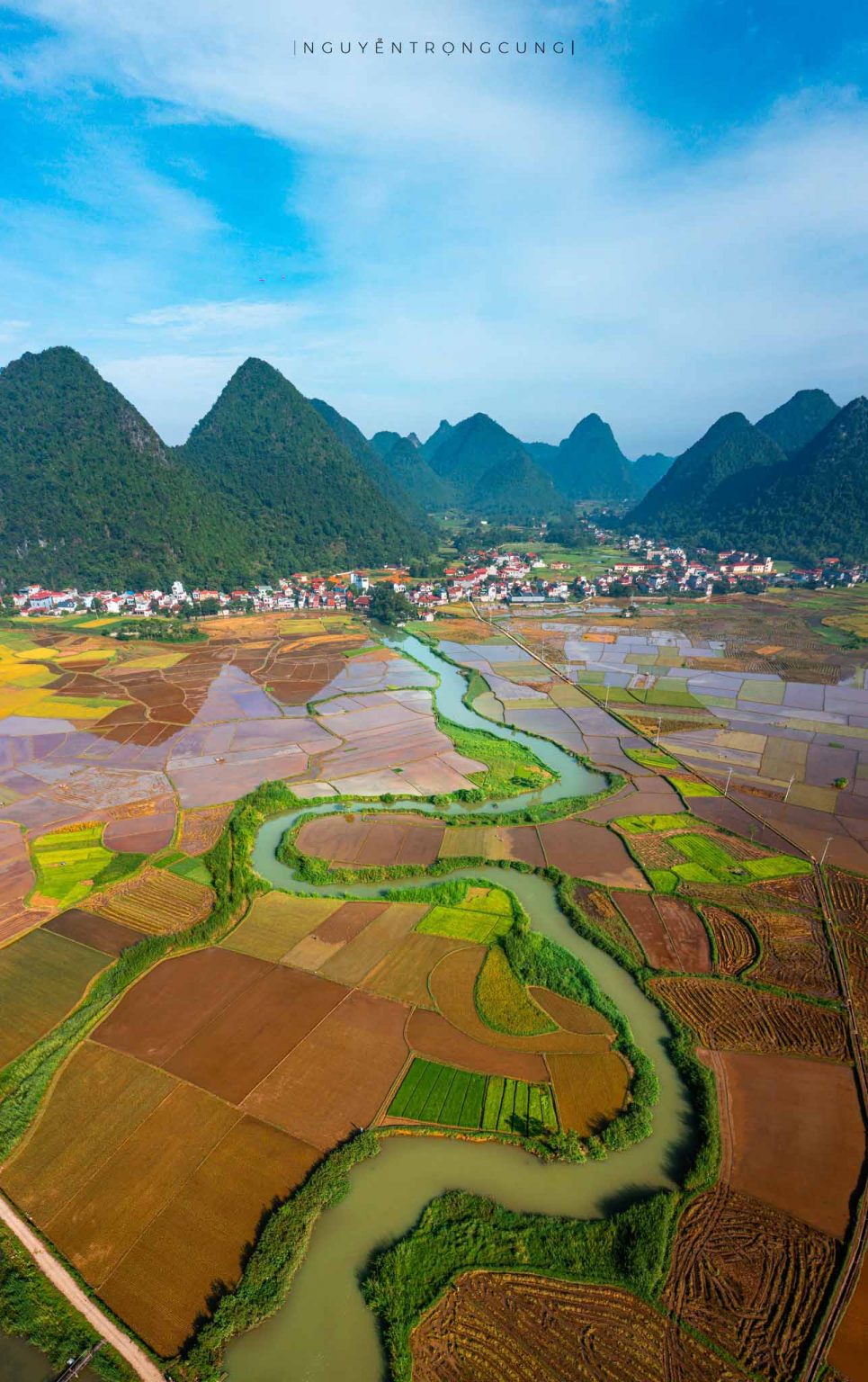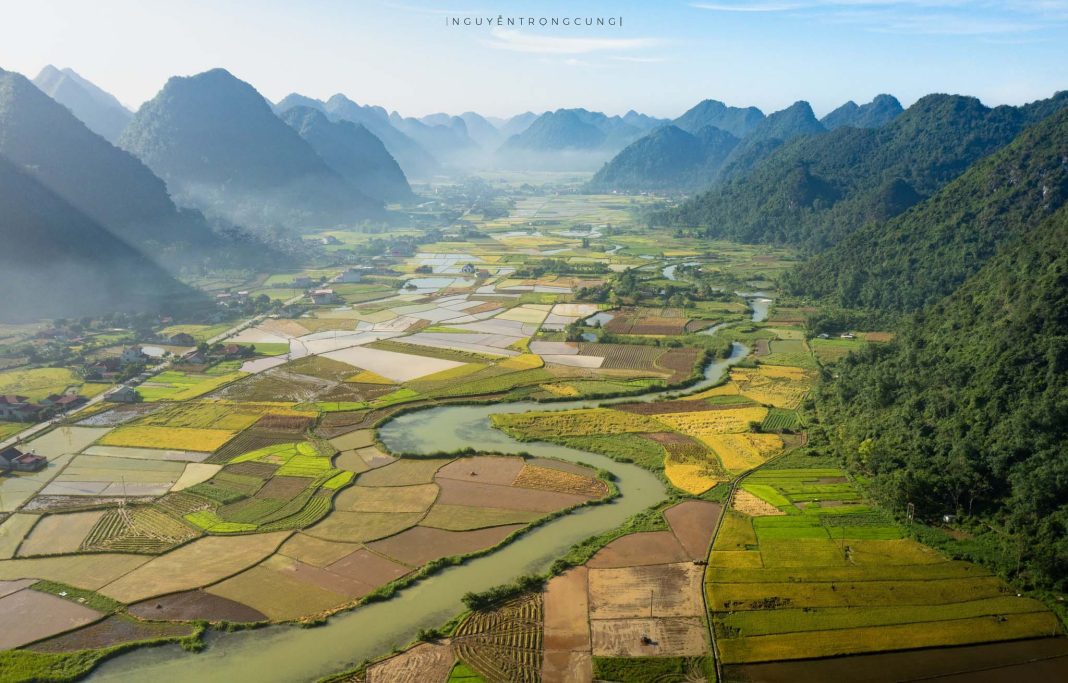

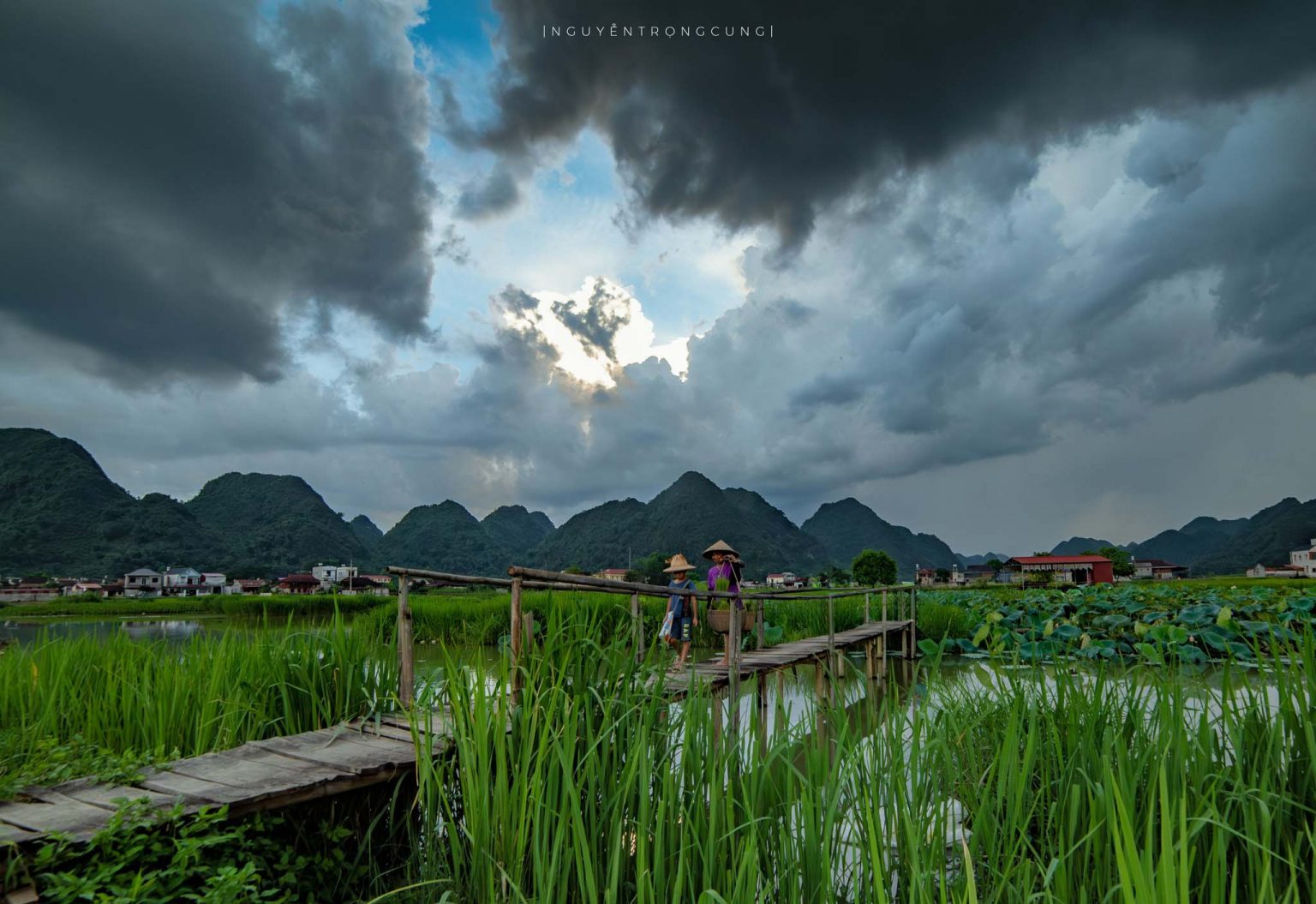
Bac Son Valley in Lang Son Province has become a popular destination in Vietnam’s northeast, famous for its patchwork of rice fields, limestone mountains, and ethnic villages.
Located in the western part of the province, the valley is ringed by towering limestone ranges and vast rice paddies. Traditional stilt houses of the Tay, Nung, and Dao communities lie scattered across the foothills, contributing to the area’s rural landscape.
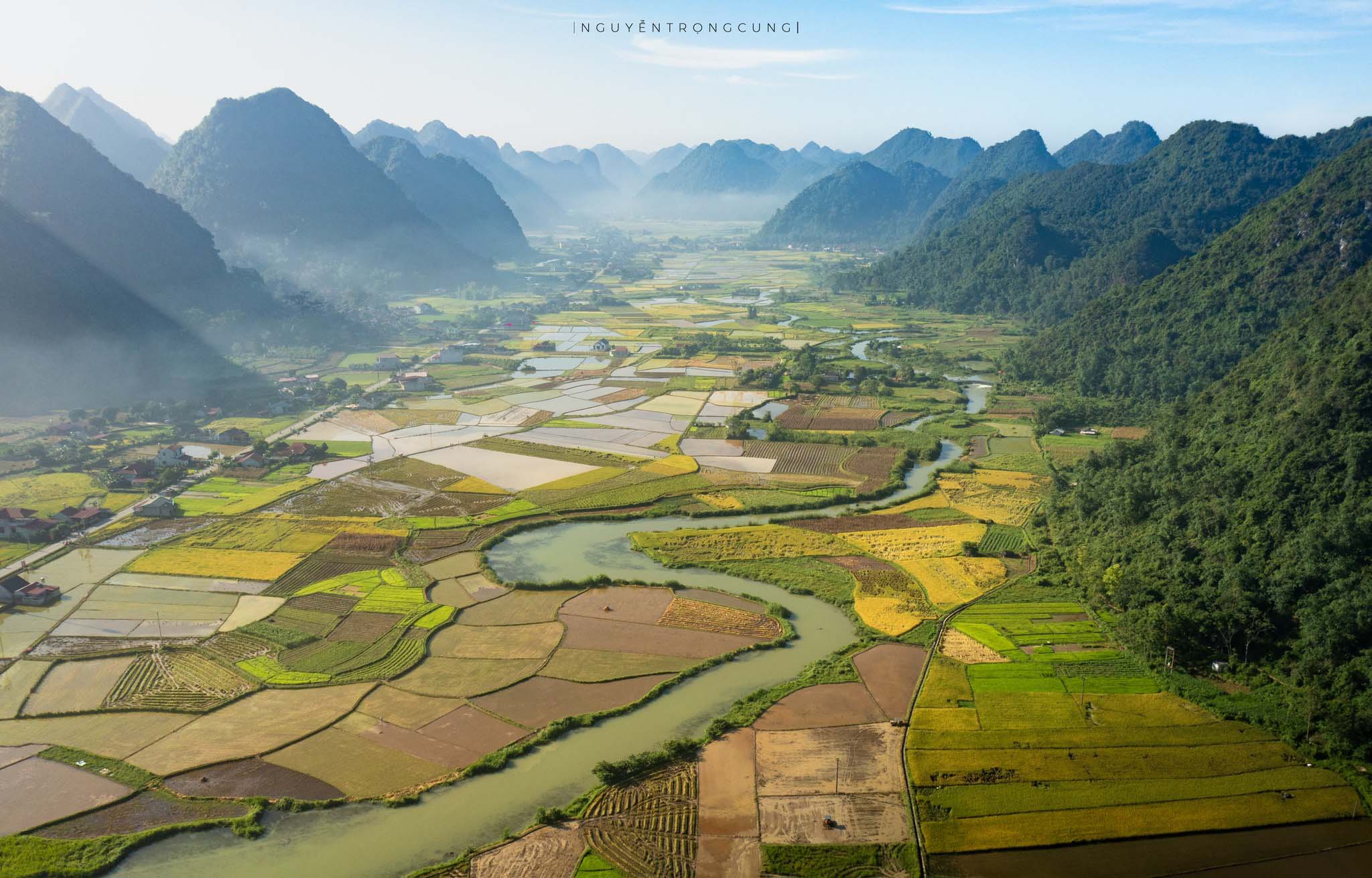
Thanks to flat terrain and favorable weather, farmers grow two rice crops a year. From late July to October, the valley turns golden as the harvest approaches, while patches of green fields waiting to ripen add contrast to the view.
Na Lay Peak, more than 600 meters above sea level, is a popular viewpoint for taking in the entire valley and the nearby Quynh Son community tourism village. Visitors interested in local culture often travel to Bac Son in early spring, around the 12th or 13th day of the first lunar month, to join the Tay community’s Long Tong festival. Other places of interest include Tam Canh Pass, Dang Mo Waterfall, Tam Hoa Lake, Pac Mo Lake, Khuon Bong Cave, and the Bac Son Flower Valley.
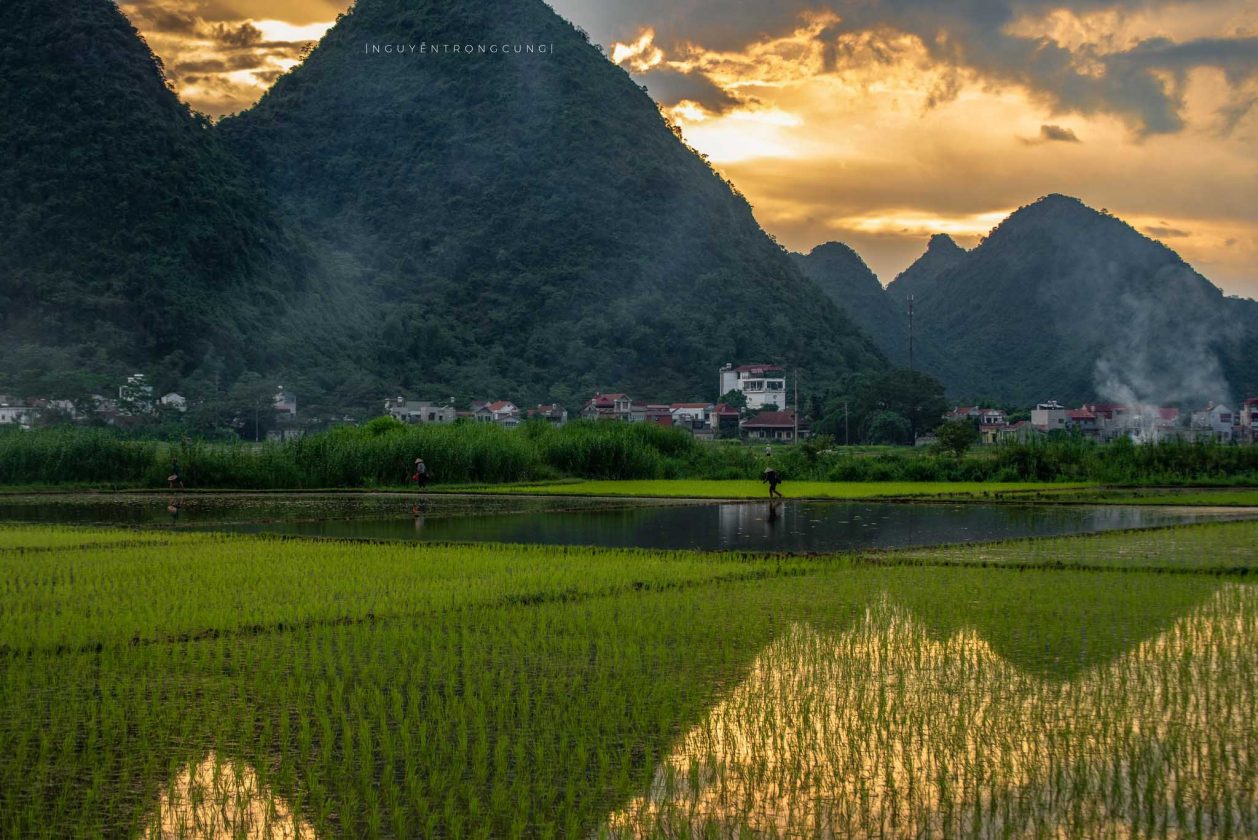
Quiet and less commercialized than many other destinations, Bac Son offers unspoiled scenery and diverse cultural traditions. The valley is home to Kinh, Nung, Tay, and Dao residents, giving travelers the chance to explore nature while experiencing daily life in ethnic communities.
Bac Son’s mild climate allows for year-round travel. The peak season runs from July to October when the weather is dry and the rice fields reach their golden hue. Spring, from February to April, brings blooming peach and apricot flowers along with the Long Tong festival. From November to January, cooler temperatures make the area suitable for trekking, mountain climbing, and other outdoor activities.