
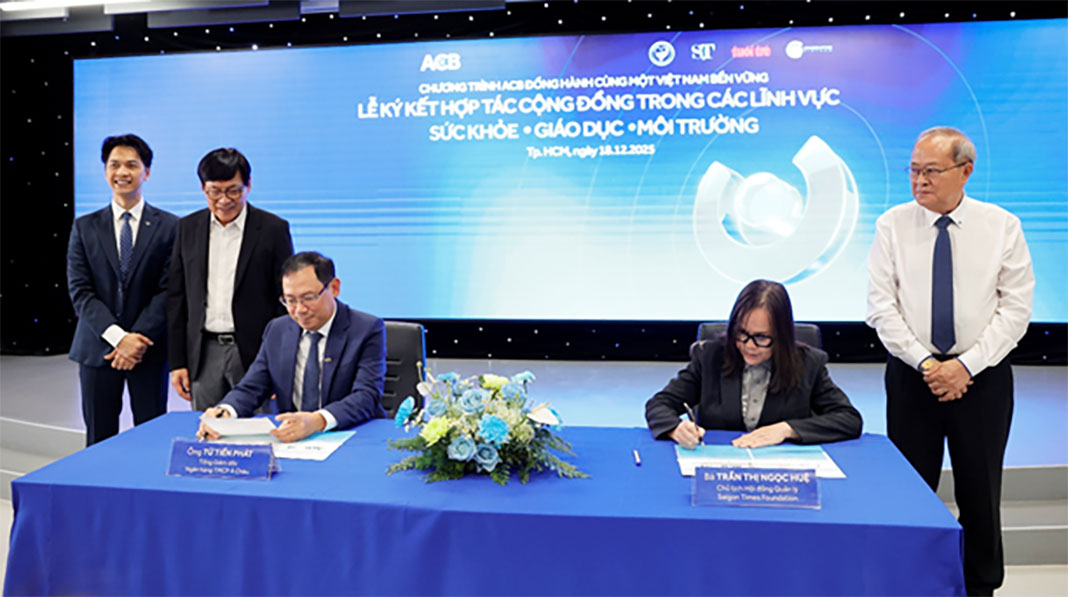
ACB signs long-term MOU with Saigon Times Foundation on education and human capital development
On December 18, 2025, in Ho Chi Minh City, Asia Commercial Bank (ACB) signed a series of memoranda of understanding with partners in education, healthcare and environmental protection, marking a clear shift in the bank’s approach to corporate social responsibility toward strategic philanthropy aligned with the Creating Shared Value (CSV) model.
Within the framework of the program “ACB Accompanying a Sustainable Vietnam,” the bank unveiled its sustainable development orientation built on long-term partnerships focused on three foundational pillars: education, healthcare, and environmental protection. This approach reflects a transition from ad hoc, short-term support activities to a more systematic, measurable philanthropy strategy aimed at generating lasting social impact.
From short-term charity to strategic philanthropy
For many years, ACB has maintained short-term charitable activities to support communities during urgent situations such as natural disasters, floods, and other emergencies. However, according to the bank’s representative, the evolving development context now requires businesses to play a more substantial social role—one that goes beyond simply “giving,” and instead focuses on creating long-term, cumulative value for society.
The distinction between short-term charity and strategic philanthropy lies in the depth of commitment and the way social challenges are addressed. While charity primarily seeks to meet immediate needs, philanthropy emphasizes long-term investment in society’s core areas, where impact is measured not only by the amount of funding provided but also by enhanced capabilities, expanded opportunities, and sustainable change over time. This principle underpins ACB’s partnership strategy, reinforcing the view that philanthropy is not a branding exercise, but an integral part of long-term development planning.
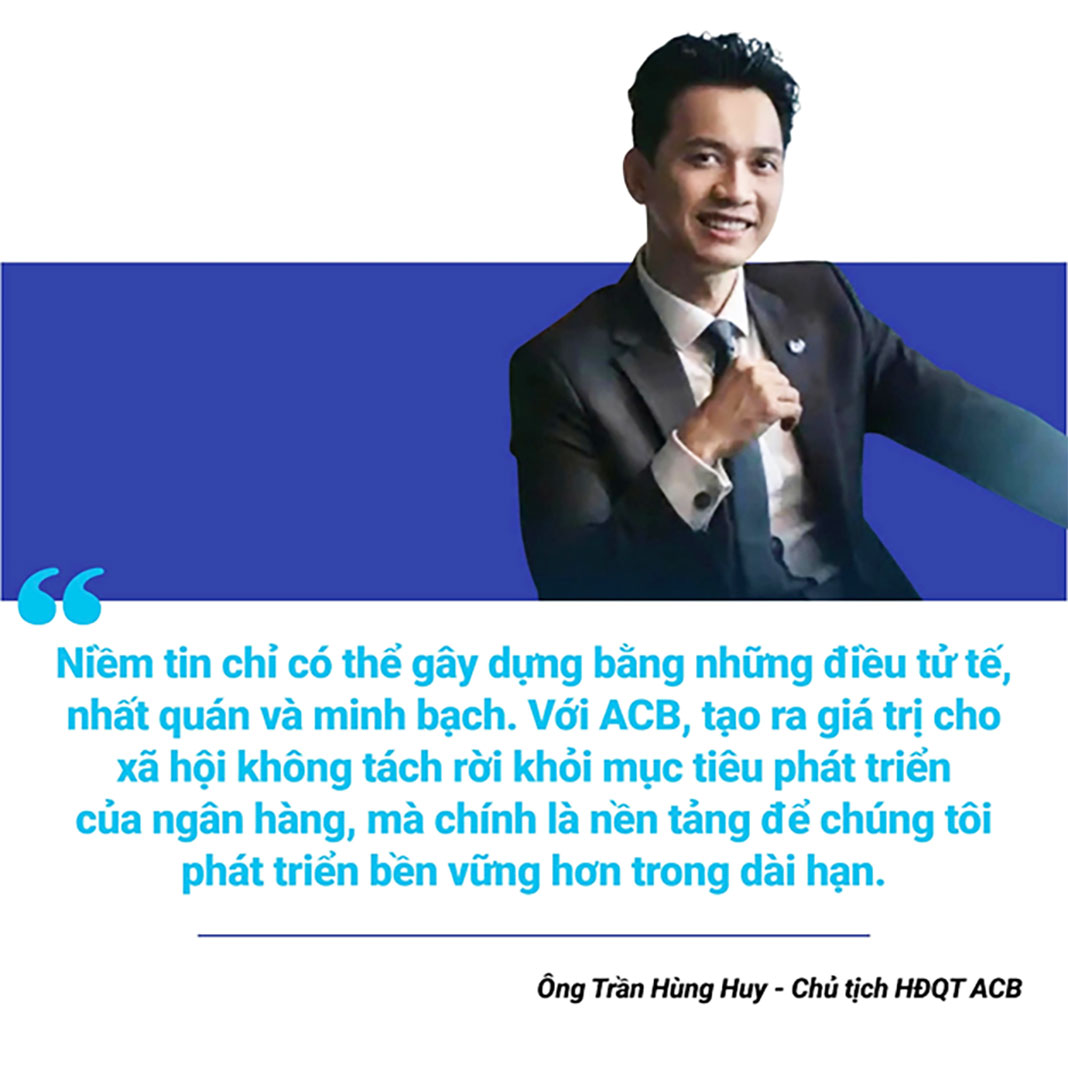
Speaking at the event, Tran Hung Huy, Chairman of ACB’s Board of Directors, said that amid growing global uncertainties, the most important question for a bank is not how fast it grows, but what kind of value it creates for the society it serves. According to him, education, healthcare, and environmental protection are among Vietnam’s most fundamental challenges, where long-term solutions can generate lasting benefits for both communities and the broader economy.
Education at the heart of the CSV strategy
 Among the agreements signed, the partnership between ACB and the Saigon Times Foundation stands out as a key highlight, placing education at the center of the bank’s sustainable development strategy. Under the MOU, the two sides will jointly implement the scholarship program “ACB – Saigon Times Foundation: Học để tạo giá trị” (ACB – Saigon Times Foundation Scholarship: Pathways to Future-Smart Generations). The program aims to support underprivileged students while enhancing their learning capacity, independent thinking, and adaptability to a rapidly changing labor market.
The Saigon Times Foundation is a non-profit philanthropic organization with more than 23 years dedicated to education and human resource development. Over the past two decades, the foundation has implemented numerous support programs nationwide, awarding thousands of scholarships to disadvantaged students and carrying out educational projects to help improve the quality of human capital. The partnership with ACB is expected to further expand the program’s reach and enhance the quality of support provided to learners.
Speaking at the signing ceremony, Tran Thi Ngoc Hue, Chairwoman of the Board of the Saigon Times Foundation, emphasized that education is a long-term process requiring perseverance and sustained engagement. According to her, investing in education is not merely about helping learners overcome short-term financial difficulties, but more importantly about fostering capabilities, critical thinking, and social responsibility—core attributes of the workforce in the next phase of development.
Ms. Hue noted that the partnership with ACB reflects a convergence in the two organizations’ approaches, as both view philanthropy as a core value of corporate social responsibility. Through long-term collaborations with businesses, the Saigon Times Foundation seeks to cultivate cumulative social value over time, contributing to a more equitable and harmoniously developed society.
In addition to its cooperation with the Saigon Times Foundation, ACB also partners with Tuoi Tre newspaper on the “Tiep suc den truong” (School Support) program, offering tuition loans to underprivileged first-year university students. In 2025 alone, the bank deployed student-support credit packages totaling approximately US$2 million, underscoring its view of education as a form of long-term social investment.
Healthcare and the environment in the shared value framework
Alongside education, ACB has also signed cooperation agreements in healthcare and environmental protection to complete the overall picture of its CSV strategy. In healthcare, the bank works with the Ho Chi Minh City Association for Supporting Poor Patients to implement the “Journey of Hope” program, providing treatment cost support and essential assistance for underprivileged children with cancer.
In environmental protection, ACB continues to carry out initiatives related to forest conservation, water resource restoration, and wildlife protection, based on the belief that safeguarding nature is fundamental to the long-term stability of the economy. According to the bank’s representative, these programs are not standalone activities, but part of an overarching strategy involving specialized partners and clear impact assessment mechanisms.
CSV as a long-term development model
Under an increasingly recognized approach, Creating Shared Value (CSV) is not a separate corporate social responsibility activity, but a development model in which businesses generate economic value while simultaneously addressing core social challenges. Unlike traditional CSR initiatives that often focus on distributing post-profit resources, CSV integrates social objectives directly into corporate strategy, operating models, and value chains—enhancing competitiveness while delivering sustainable social impact.
Also speaking at the ceremony, Mr. Pham Phu Ngoc Trai, Strategic Advisor on Sustainable Development at ACB, observed that sustainable development is not only about doing good for society, but also about how businesses build long-term competitiveness for themselves. The Creating Shared Value model enables companies to view social issues as an integral part of their development strategy, where the interests of the community and those of the business are not separate, but aligned.
From a broader perspective, the signing ceremony on December 18 reflected the convergence of organizations that share common values, each playing a distinct yet complementary role in the journey toward sustainable development. The programs are designed not as one-off initiatives, but as long-term commitments aligned with ACB’s sustainable development strategy for the 2025–2030 period.
With this orientation, ACB said it will continue to integrate social and environmental considerations more deeply into its core business operations, while expanding cooperation with domestic and international partners to amplify positive impacts and contribute meaningfully to the sustainable development of Vietnamese society.