
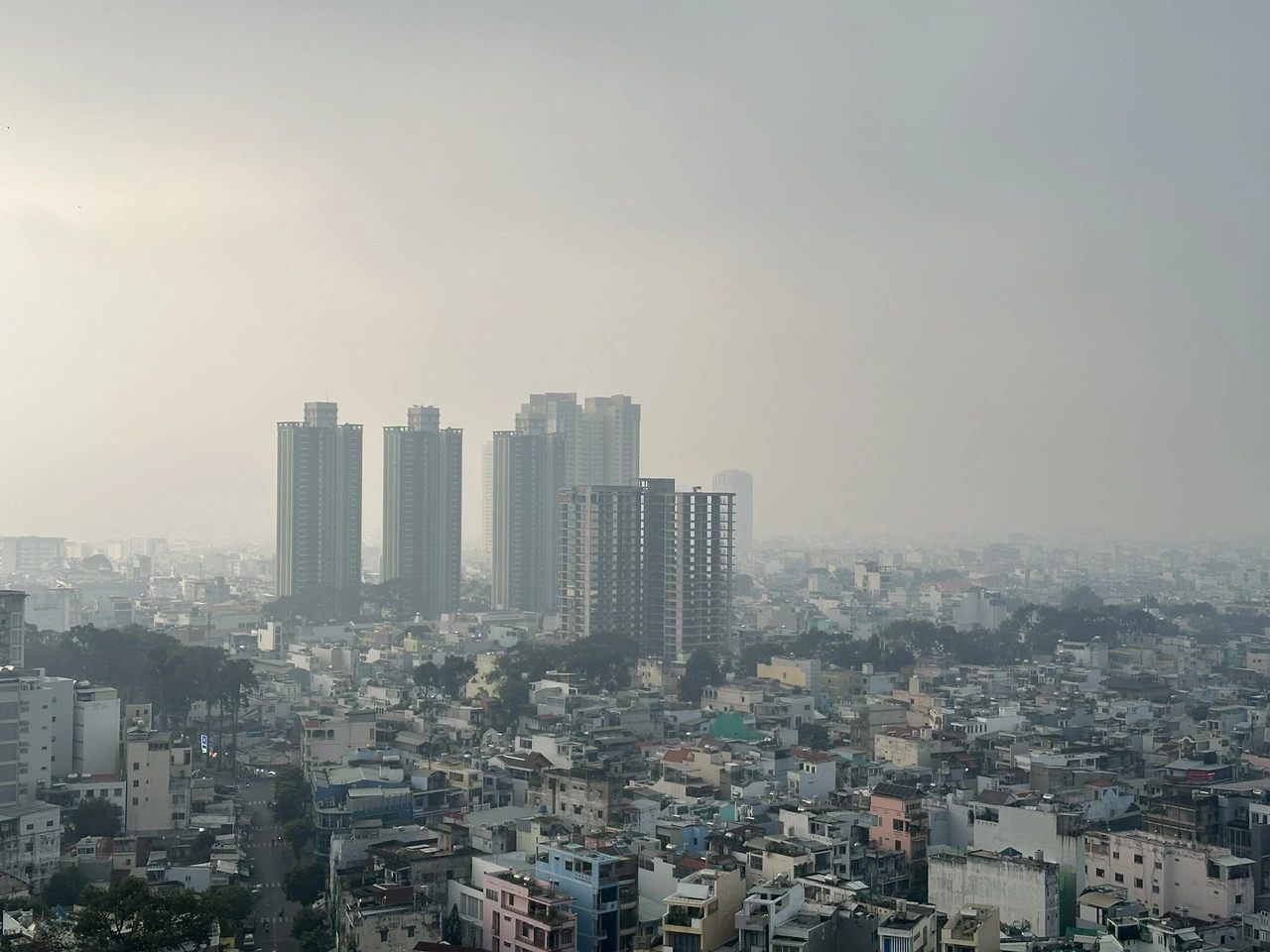
HCMC — Air quality in several Vietnamese provinces and cities deteriorated to poor and unhealthy levels on December 17, according to the Northern Center for Environmental Monitoring at the Vietnam Environment Agency under the Ministry of Agriculture and Environment.
In Hanoi City, air quality index (AQI) readings at 8 a.m. showed unhealthy conditions at multiple monitoring stations. The station at 556 Nguyen Van Cu Street recorded an AQI of 163, while the Bach Khoa University station on Giai Phong Street reported 193. Air quality at Nhan Chinh Park on Khuat Duy Tien Street stood at 136, classified as poor.
Other northern localities also reported elevated pollution. In Phu Tho Province, the Hung Vuong Street station in the former Viet Tri City recorded an AQI of 107. Bac Giang’s former provincial administrative complex posted 103. In Hung Yen Province, a station on Nguyen Van Linh Street recorded 169.
In Haiphong City, a monitoring station on Tran Hung Dao Street recorded an AQI of 159. Thai Nguyen Province reported an AQI of 154 at the Gang Thep Stadium station.
In southern Vietnam, HCMC also saw degraded air quality. The station at 20 Ly Chinh Thang Street recorded an AQI of 126, while the intersection of Le Huu Kieu and Truong Van Bang streets recorded 124.
The ministry said air pollution in Hanoi and surrounding provinces is affecting public health and socio-economic activities. It asked authorities in Hanoi, Hai Phong, Bac Ninh, Hung Yen, Phu Tho, Thai Nguyen and Ninh Binh to step up street cleaning, increase dust removal, tighten controls on construction and transport emissions, and curb waste and agricultural burning.
Local governments were also told to strengthen public health warnings and provide regular air quality updates through local media and the VNAir application.
Vietnam’s AQI scale ranges from 0 to 500 and is divided into six categories: good (0–50), moderate (51–100), unhealthy for sensitive groups (101–150), unhealthy (151–200), very unhealthy (201–300), and hazardous (above 300), each with corresponding health warnings.