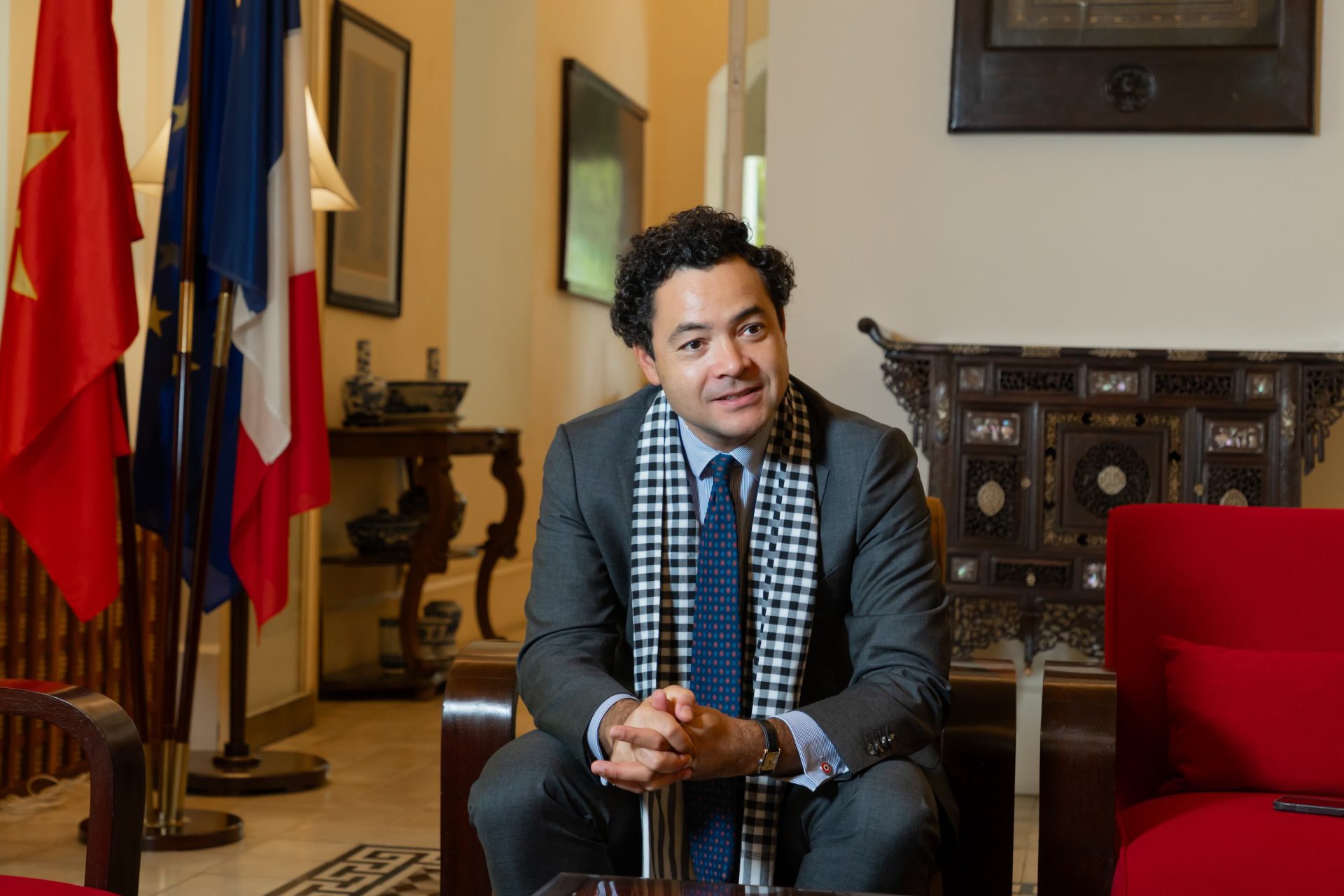
As France and Vietnam deepen their comprehensive strategic partnership, economic cooperation is entering a new phase shaped by long-term vision and shared priorities. In an interview with The Saigon Times, Consul General of France in HCMC Etienne Ranaivoson discusses how growth, sustainability and trust are expected to define the trajectory of France–Vietnam economic relations toward 2030.
The Saigon Times: Within France’s Indo-Pacific strategy, how do you assess Vietnam’s current position and role? Where does Vietnam rank among the priorities for French corporations as they consider restructuring their value chains and innovation hubs in this region?
Consul General Etienne Ranaivoson: Within France’s Indo-Pacific strategy, Vietnam holds a very important and increasingly central position. It is a key partner for France in Southeast Asia, thanks to its strategic location, political stability, dynamic economy, and strong commitment to openness, multilateralism, and international cooperation.
In 2024, France became the first European Union country to sign a comprehensive strategic partnership with Vietnam, marking the highest level of diplomatic relations between the two countries. Vietnam is also a country with which France shares long-standing relations, supported by deep historical, cultural, and people-to-people ties, as well as a rapidly expanding economic partnership.
Many French companies see Vietnam as an attractive destination not only for manufacturing, but also for higher value-added activities such as R&D, engineering, digital services, and sustainable technologies. The country’s skilled workforce, improving infrastructure, and strong integration into global trade networks make it a reliable and competitive partner for the long term.
Following the implementation of the EU–Vietnam Free Trade Agreement (EVFTA), beyond growth figures, what solutions for harmonizing technical standards should both sides pursue to facilitate easier market access for French goods (such as pharmaceuticals and premium food products) and Vietnamese exports?
The proper implementation of the EVFTA remains a key objective of the EU-Vietnam relationship. This relationship was also recently elevated to a Comprehensive Strategic Partnership with the official visit of European Council President Antonio Costa. Together with the EU delegation, Eurocham and the French Chamber of Commerce in Vietnam (CCIFV), France is constantly pushing to reduce trade barriers and facilitate exchanges between our economies and people.
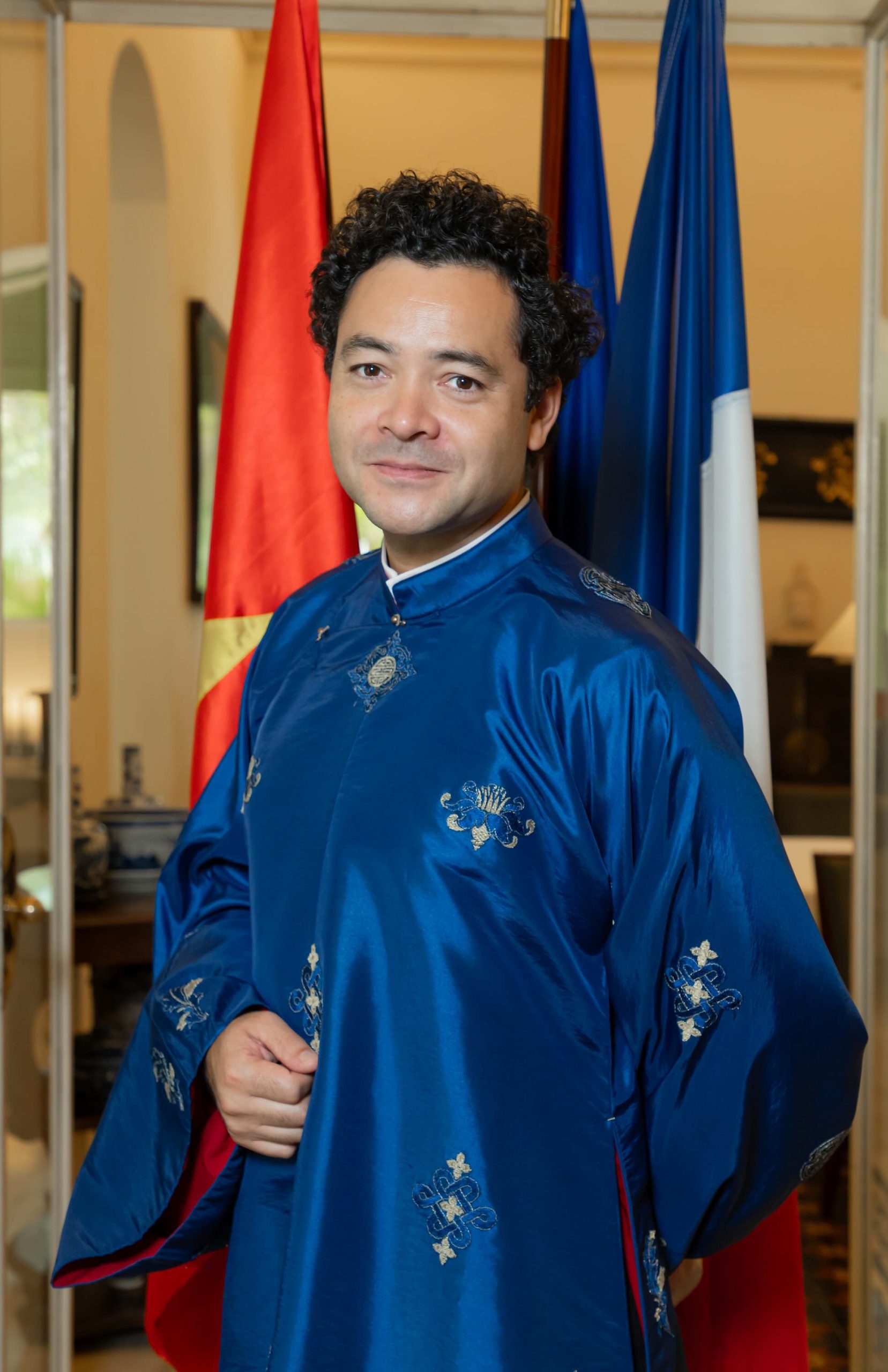
France excels in “Art de Vivre” and luxury industries, while HCMC is emerging as a dynamic consumer hub. How do you perceive the city’s potential to become a regional hub for creative economies and luxury brands, bolstered by the presence of French brands?
HCMC has very strong potential to become a regional hub for creative industries and luxury brands. It is a dynamic, fast-growing metropolis with a young, increasingly affluent population, a strong entrepreneurial spirit, and a vibrant cultural and creative scene.
The presence of French brands, known worldwide for their craftsmanship and quality, can play an important role in this evolution. French luxury and creative brands bring not only products, but also know-how in branding, design, retail experience, and sustainable value creation. Combined with the creativity, talent, and energy of HCMC, this can help position the city as a regional reference point for high-end consumption and innovation.
But France is far more than luxury or arts de vivre. Many French companies are highly successful here in HCMC, especially in other dynamic sectors such as agri-food, sport, gaming, healthcare, infrastructure, environmental services, finance and digital technologies, showing the diversity, innovation, and strong economic footprint of France in the region.
France holds a clear competitive advantage in clean energy and climate technology. In your view, which specific sectors is France most prepared to share its technological expertise and governance know-how to help Vietnam achieve its sustainability goals?
France is well positioned to support Vietnam’s sustainability ambitions by sharing both technological expertise and governance know-how across several key sectors.
Renewable energy is indeed one of the priorities. French companies and research institutions bring strong experience in project development, financing mechanisms, and grid integration. In this area, the French Development Agency (AFD) plays a key role by supporting energy transition projects in Vietnam through financing, technical assistance, and policy dialogue. As part of the Just Energy Transition Partnership (JETP), France committed in 2022 to providing 500 million euros in public financing through the AFD to support Vietnam’s energy transition. A concrete example is the 76-million-
euro loan agreement signed between Vietnam Electricity Group (EVN) and AFD to support the Bac Ai Pumped Storage Hydropower Plant Project in Khanh Hoa Province. This loan is the first of six international financing packages, with a total value of nearly 480 million euros, dedicated to this strategic project, which will contribute to grid stability and the integration of renewable energy in Vietnam.
Sustainable urban development and transport are also key areas of cooperation. France has recognized expertise in public transport systems, low-carbon mobility, and integrated urban planning. This is reflected in several Franco-Vietnamese projects involving technical assistance, feasibility studies, and long-term planning for sustainable cities and mobility solutions. In the logistics sector, CMA CGM is also contributing to greener transport through initiatives such as its electric barge (e-barge), which supports the decarbonisation of river transport and logistics chains.
Water management and environmental services represent another strong field of French expertise, including drinking water, wastewater treatment, flood management, and coastal protection, areas that are particularly relevant for Vietnam in the face of climate change. A good example of French-Vietnamese cooperation is the Center of Asian Research on Water (CARE), which conducts fundamental and applied research on regional water and environmental challenges, particularly those affecting HCMC and the Mekong Delta.
Together, these examples illustrate how France combines technology, financing, research, and governance expertise to support Vietnam’s sustainability goals through concrete and long-term partnerships.
As France’s representative in southern Vietnam, how do you envision the transformation of HCMC through major infrastructure projects like the metro, and how will this enhance the investment climate for the French business community?
These projects are essential not only for improving urban mobility and reducing congestion, but also for supporting more sustainable, inclusive, and well-planned urban growth. Modern public transport systems help structure the city, connect economic zones more efficiently, and improve quality of life for residents. 
Better mobility and infrastructure increase productivity, reduce logistical costs, and make the city more attractive for international companies and talent. That is the key for the future of the Vietnam International Financial Center in HCMC that France is willing to support.
For the French business community, these projects also create concrete opportunities to bring French expertise in engineering, transport systems, urban planning, and operations. The recent SNCF (the French national railway company) delegation in HCMC, Artelia’s involvement on Metro Line No. 1 in HCMC, Metro Line No. 2 in Hanoi and the future North-South high speed train are prime examples.
Vietnamese individuals who have studied in France are an invaluable asset. Does the Consulate General have plans to bridge this “intellectual network” with key economic projects between our two nations?
Absolutely. Vietnamese individuals who have studied in France are indeed an invaluable asset for strengthening France-Vietnam relations and supporting concrete cooperation, as they combine excellent professional skills with a deep understanding of both cultures and working environments. These alumni are also well positioned to become valuable partners, and possibly future leaders, in major Franco-Vietnamese projects. I am always happy to welcome Vietnamese alumni of French institutions at the French residence.
In this regard, the France Alumni network of Campus France, the French national agency responsible for promoting French higher education and managing international student mobility, plays a central role. Through numerous activities, such as education fairs, networking events, workshops, or receptions, it brings together Vietnamese alumni of French higher education institutions as well as graduates of French-Vietnamese programs in Vietnam.
These platforms allow us to identify talent, encourage exchanges, and connect alumni with employers, as well as with economic and institutional stakeholders.
If you were to use three keywords to summarize the future of France-Vietnam economic relations in 2030, which words would best describe the shared aspirations and ultimate destination of our two countries?
This is a difficult question, but I would say: growth, sustainability, trust.
Reported by The Ky