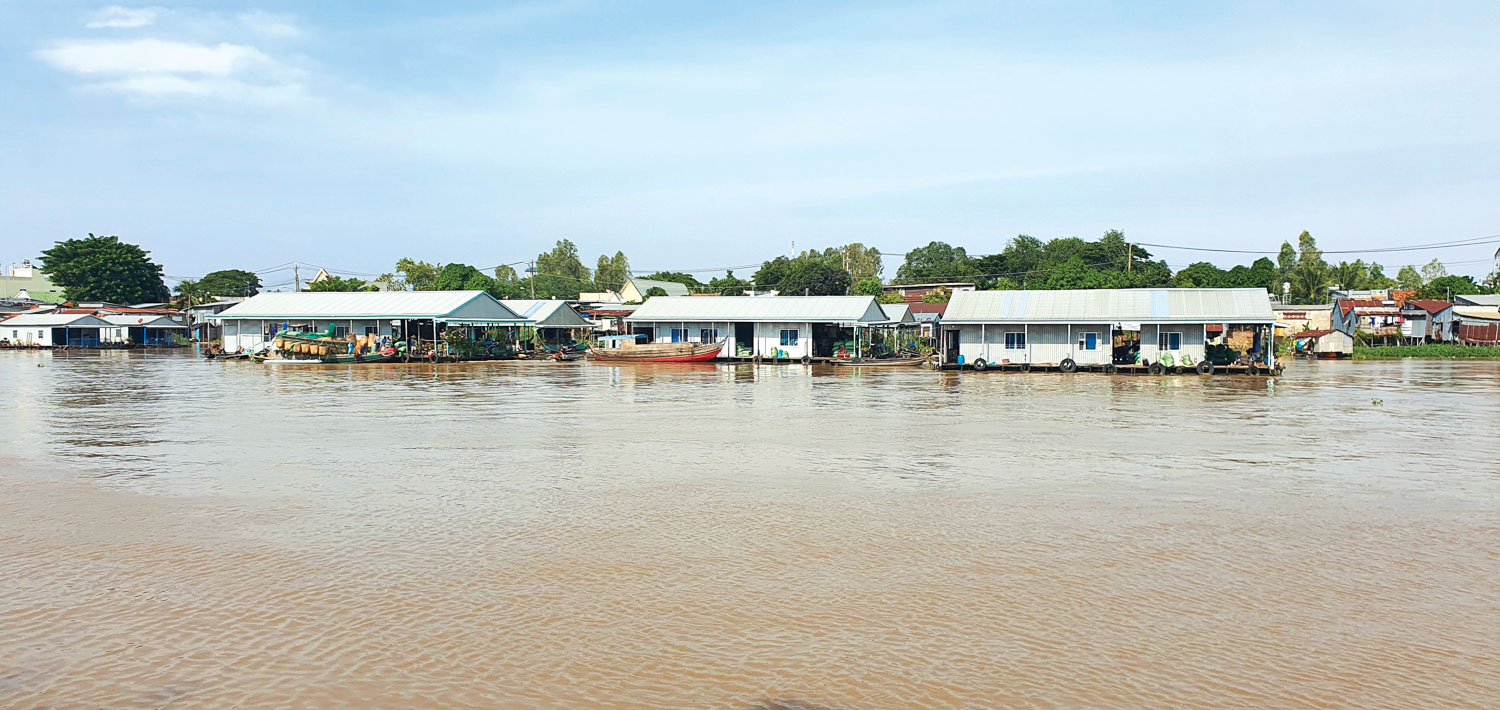
Even the Netherlands has shifted from the traditional mindset of “diking to block water” to the forward-looking strategy of “Room for the River,” which restores space for rivers to flow naturally. In Vietnam, it is time for sectors with significant economic contributions to make the necessary investments to fully control flooding, while sectors with lesser contributions should develop roadmaps for restructuring production, housing, and transport. Such plans should gradually reduce population density and restore areas for water storage. This reclaimed land can be envisioned as “Room for the Delta.” The Mekong Delta forms the final downstream stretch of the Mekong River, one of the world’s largest and most complex river systems. Extending 4,800 kilometers, the river flows through six countries—China, Myanmar, Thailand, Laos, Cambodia, and Vietnam—before reaching the sea. With a basin covering approximately 800,000 square kilometers, the Delta is shaped not only by local activities within the region but also by developments across the entire Mekong River basin and the adjacent seas, including the East Sea and the Gulf of Thailand. Hydrologically, the Mekong Delta represents the confluence of multiple water sources. The first is the Mekong River itself, which shapes annual flooding, delivers alluvial deposits, provides essential nutrients, […]
Solutions to flooding in Mekong Delta
By Duong Van Ni, Ph.D