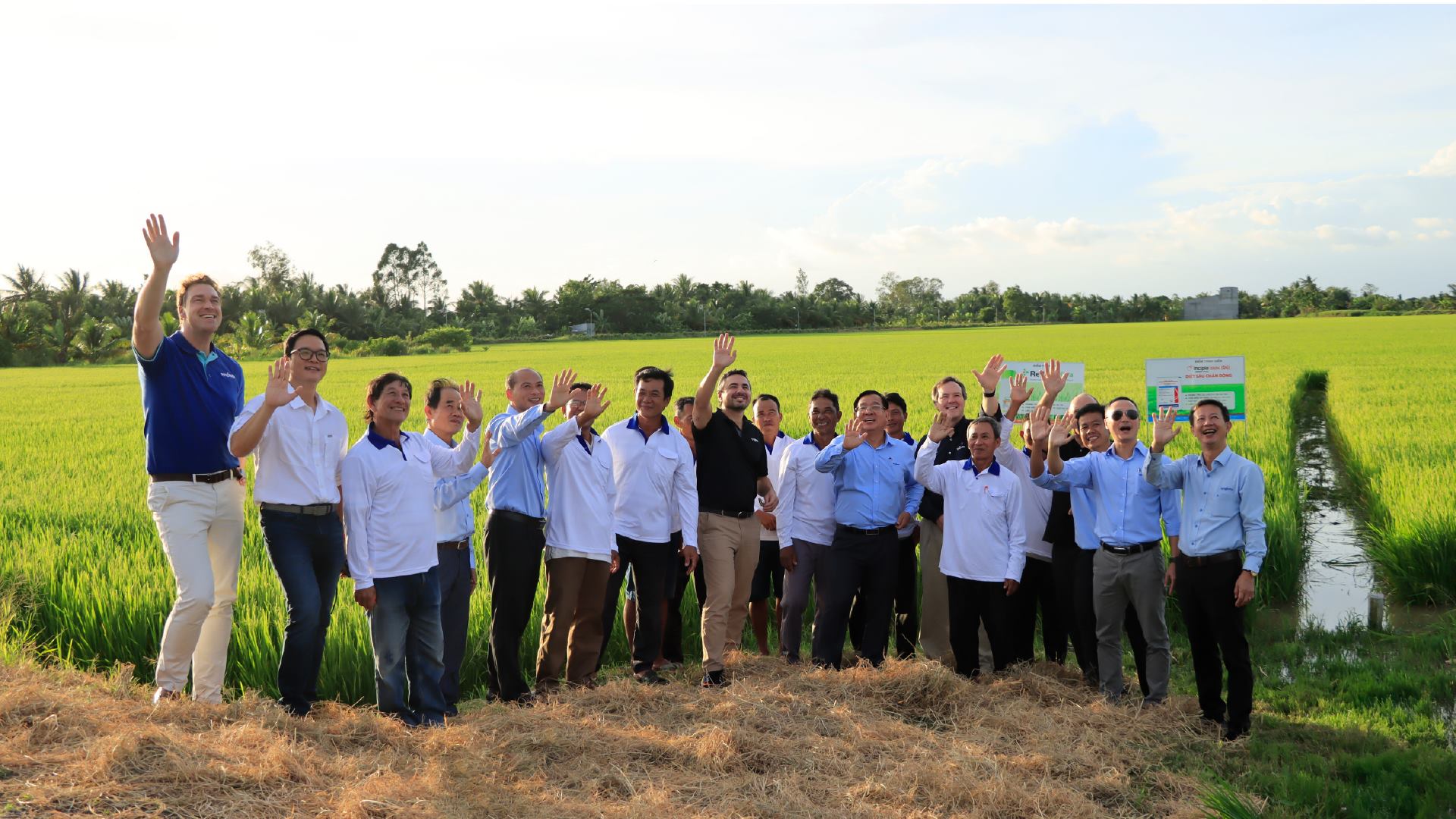
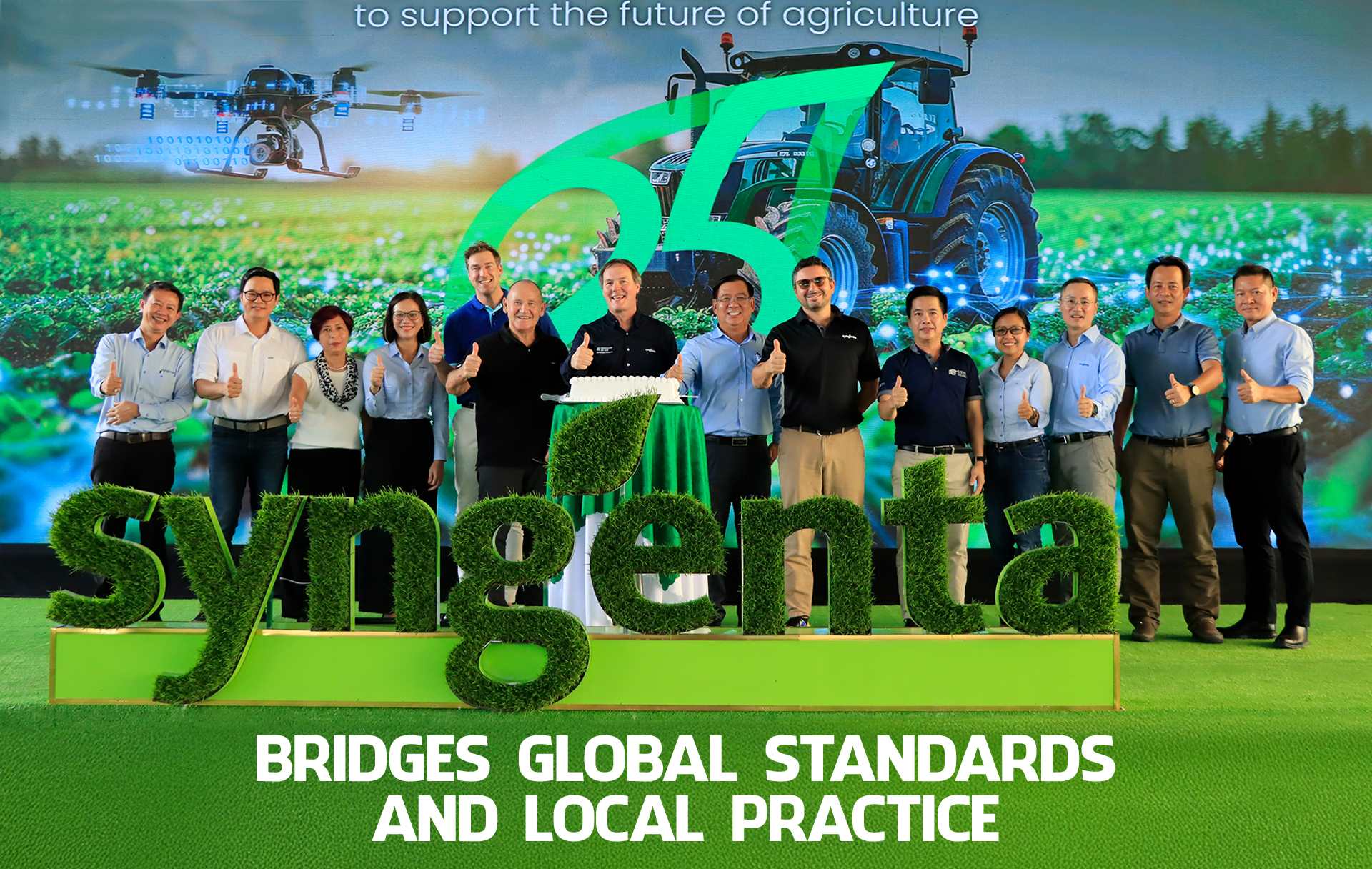
This November, Steven Hawkins, President of Syngenta Crop Protection, traveled to Vietnam to meet farmers, visit field sites across the Mekong Delta, and review the progress of Syngenta’s local innovation and sustainability programs. His three-day trip took him from the Mekong Delta’s rice fields to Syngenta’s research hubs in Vinh Long, giving him a close view of how rapidly Vietnamese agriculture is transforming and how farmers are shaping that transition.
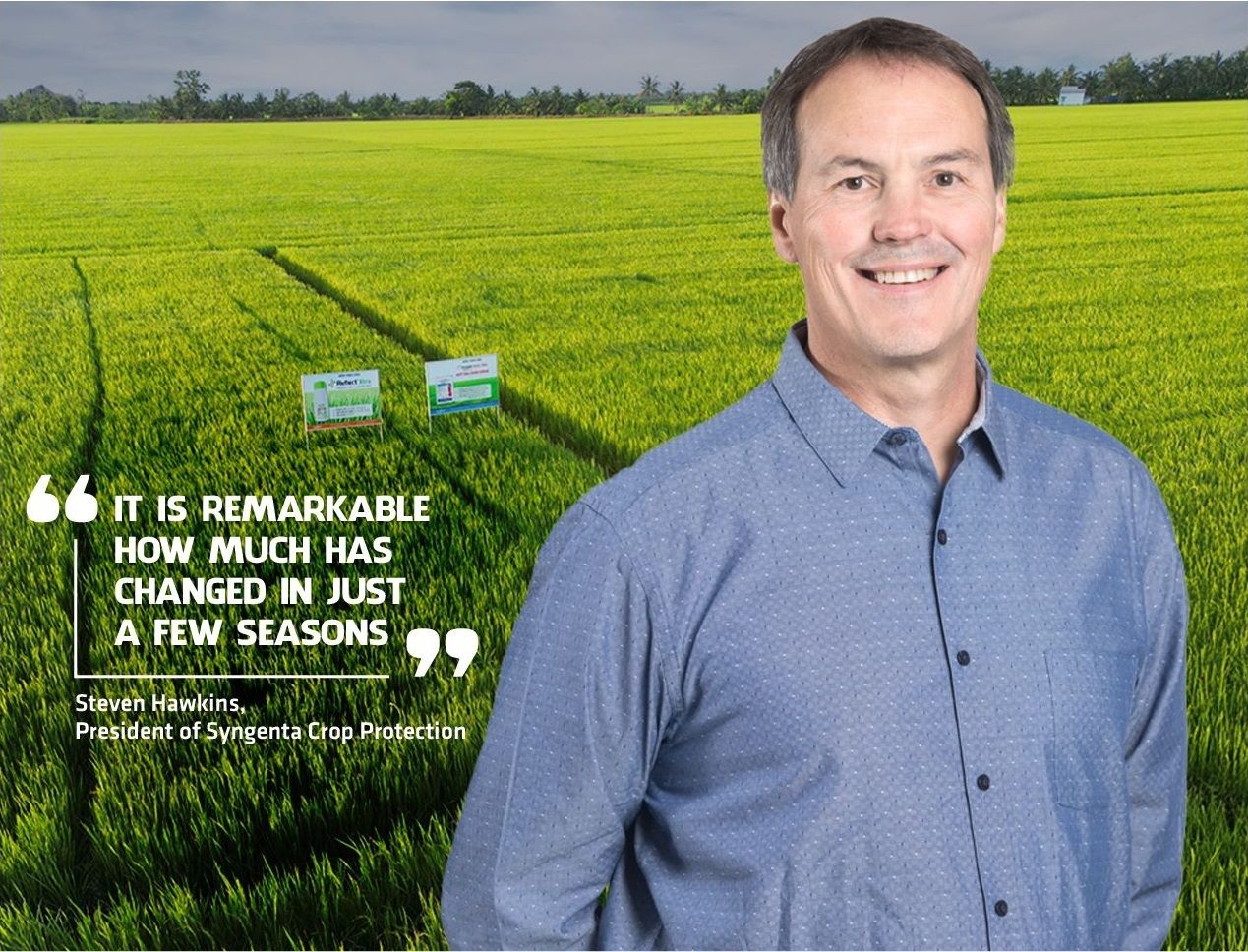
Returning from a field trip, Steven describes the unmistakable change in Vietnam’s rice-growing heartland. The landscape remains familiar, but the way farmers work has shifted rapidly. Drones now hum above the fields where manual spraying once dominated. Farmers glance at their phones as Cropwise delivers hyperlocal weather alerts and pest risk information in real time. “It is remarkable how much has changed in just a few seasons,” Hawkins says, noting that technology adoption in Vietnam is driven not by trends but by practical necessity.

Globally, the agricultural chemicals market is projected to reach around US$251 billion in 2025 and nearly US$300 billion by 2030, according to estimates from Mordor Intelligence. Within that broad figure, momentum is increasingly found in biological crop-protection products and precision-farming tools, such as drones and AI-based advisory systems, rather than in traditional inputs alone. Syngenta remains one of the world’s dominant players, holding 14.5% of the market share in 2024, but competition from generics and shifting environmental regulations mean companies are under pressure to adapt.
Vietnam offers a particular kind of test case. The country’s agricultural sector is mainly shaped by smallholders, many of whom farm scattered plots and rely on personal experience or neighbourly advice rather than formal agronomic training. Syngenta’s operations here, stretching from R&D centers in the former provinces of Nam Dinh and Vinh Long to a manufacturing site in Bien Hoa, Dong Nai Province, have been designed to localise product development to Vietnam’s varied soils, climate patterns and crop cycles. Much of the company’s work involves field demonstrations, training sessions and technical assistance, which it says reach roughly a million farmers each year.
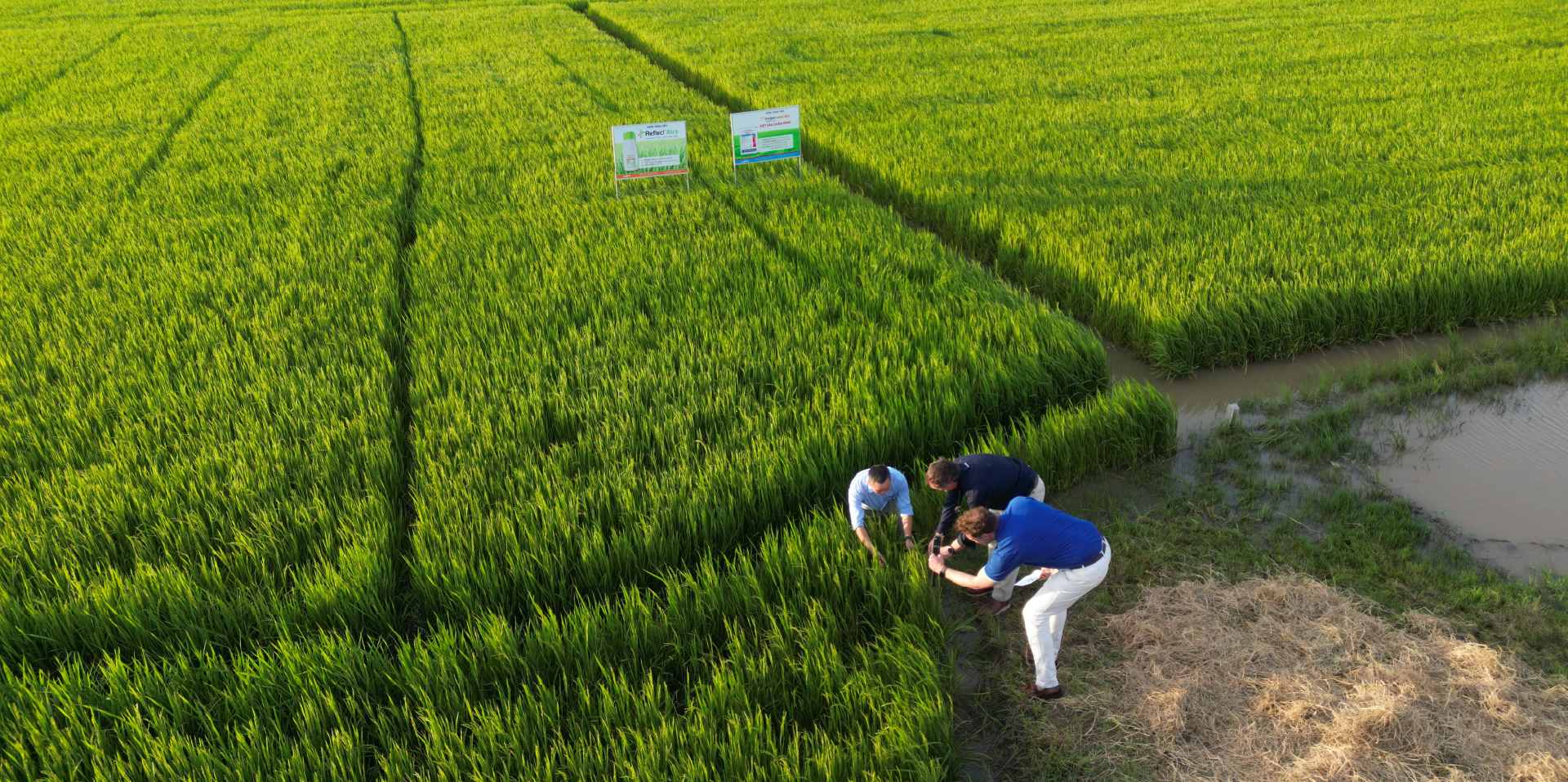
During his recent visit to the Delta, Hawkins observed farmers flying compact drones over their fields. A few years ago, he recalls, most spraying was still done on foot, slowly, laboriously, and with farmers directly exposed to chemicals. Now, many say drone systems are easier to control and require much smaller amounts of product. Whether this change reflects a national shift toward “greener agriculture,” as policymakers often describe it, or just a practical search for efficiency, farmers seem to be adopting the tools quickly.
The Cropwise platform underpins much of this change. On a typical day, the app delivers weather warnings, suggests spray timing, or flags pest outbreaks based on local data. Syngenta’s research sites have increasingly incorporated drone-assisted spraying into their trials, and by the end of 2024, the company had trained 460 drone pilots in the Mekong Delta alone, with an additional 100 pilots in the North, covering nearly all drone pilots in the country. Farmers using drones report fewer missed patches and less crop trampling, small improvements that accumulate over a season.
Artificial intelligence is creeping quietly into the system as well. AI models are used to model pest patterns and test ecological risks, while some products, such as the insecticide Incipio, have been partially designed using predictive modelling. Biological products, growing at a global compound rate of 14.7%, form another plank of Syngenta’s portfolio, though their adoption in Vietnam remains closely tied to practical results and regulatory approvals.
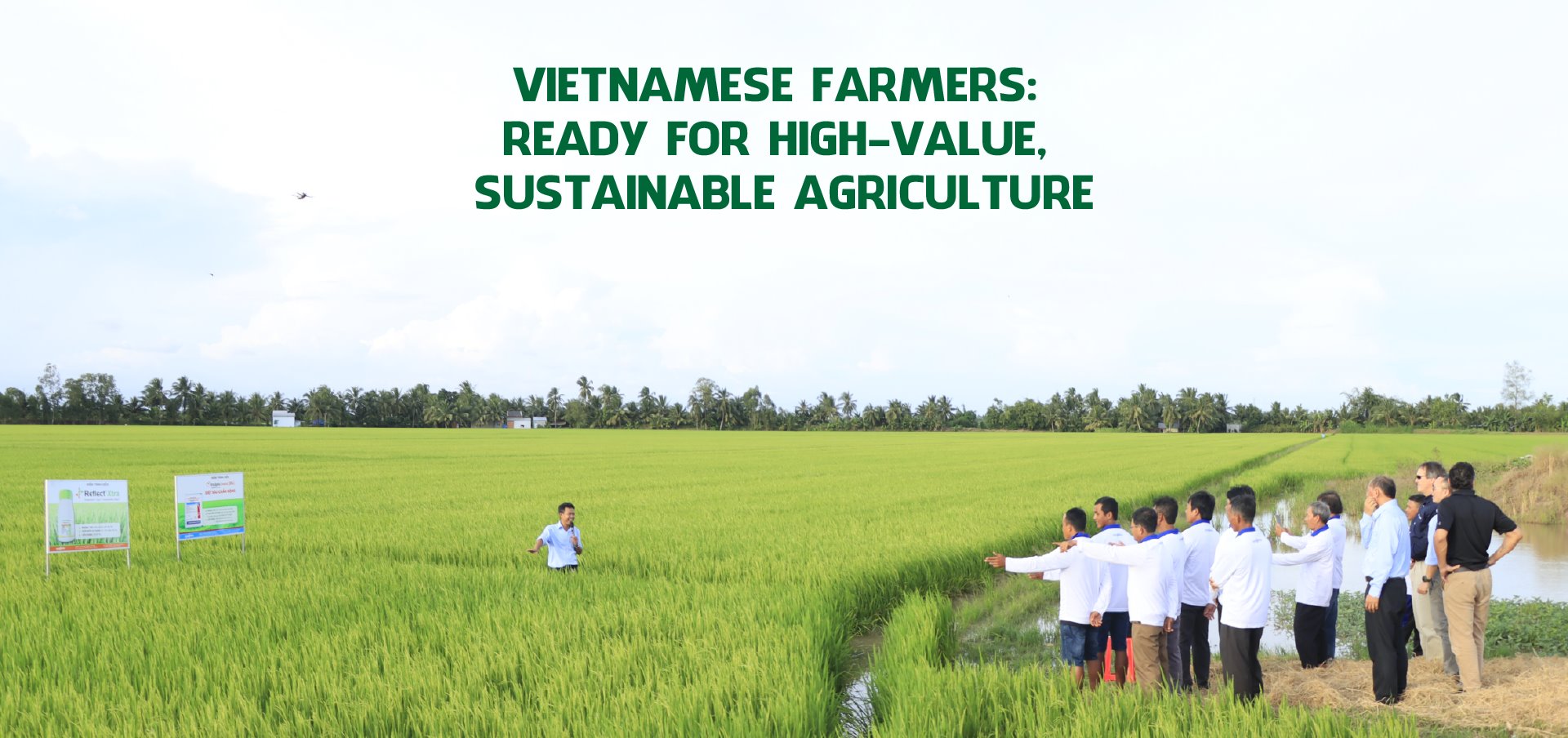
If there is a common thread in Syngenta’s work, Hawkins says, it is the willingness of Vietnamese farmers to experiment. In the Delta, farmers often gather in small groups to discuss spray-mix ratios or consider the risks of upcoming weather systems. The interest seems to be less about adopting the latest technology and more about finding methods that reduce losses, save labor, and fit within tight seasonal schedules.
When drones first emerged, they weren’t seen as futuristic symbols. Farmers cautiously tested them on small strips of land, comparing yields or checking for drift. By the time the technology spread across districts, many had realized it provided a simple way to save time in the field while avoiding direct contact with chemicals.
“What farmers talk to me about is not technology,” Hawkins says. “They talk about risk. They talk about protecting their income. They talk about making decisions they can trust under pressure.”
Rising input costs, unpredictable weather, and increasing safety expectations are boosting demand for integrated solutions that combine crop protection, digital tools like Cropwise, and on-field advisory services. Syngenta positions itself less as a product seller and more as a decision-making partner. For farmers managing tight margins and complex conditions, support is framed as risk management—helping them produce more with less through improved science, better data, and practical solutions tailored to their fields.

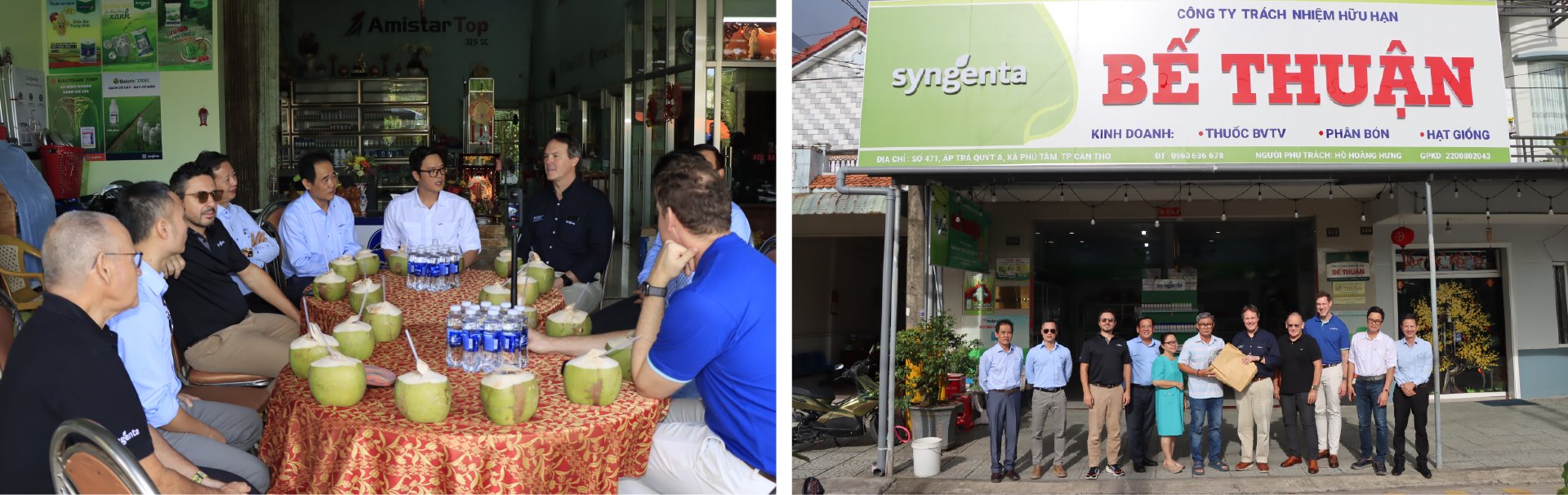
For Hawkins, much of this work comes back to the everyday realities of farming. Having grown up on a Canadian farm and still managing family land, he emphasizes that direct contact with farmers is key to understanding what sustainability looks like in practice. In Vietnam, where access to reliable advice is uneven, programmes offering technical training or safety guidance have become part of Syngenta’s long-term strategy.
Technology has gradually been integrated into this broader approach. Cropwise now offers localized data for several provinces, helping farmers adapt to changing climate patterns or emerging pests. AI tools accelerate modeling and field-test scenarios. Products like Incipio, applied in grams rather than liters, indicate a shift toward lower-dose inputs, although their long-term impact will likely depend on how widely they are adopted and how farmers incorporate them into other practices.
Regional projects reveal the diversity of Vietnamese agriculture itself.
In upland areas, maize cultivated on sloped land shows how farming methods can protect the environment while maintaining productivity. Syngenta’s erosion-control practices help stabilize hillside fields and preserve topsoil, ensuring the land stays viable for future seasons. The potato value chain provides another example. In collaboration with PepsiCo, Syngenta supports farmers with protocols, digital monitoring, and training aimed at improving quality and reducing losses. The results are evident not only in yield gains: Vietnam is now increasing potato chip processing capacity, with PepsiCo investing in a new factory to boost local sourcing and enhance export prospects.
Syngenta highlights various community initiatives: training over 35,000 farmers in safe handling, collecting 140 tonnes of agricultural waste, planting 6,000 trees, and completing several small infrastructure projects such as bridges, houses, and schoolrooms in rural areas. These figures, alongside the company’s commercial efforts, demonstrate how sustainability now combines education, risk reduction, and on-the-ground support.
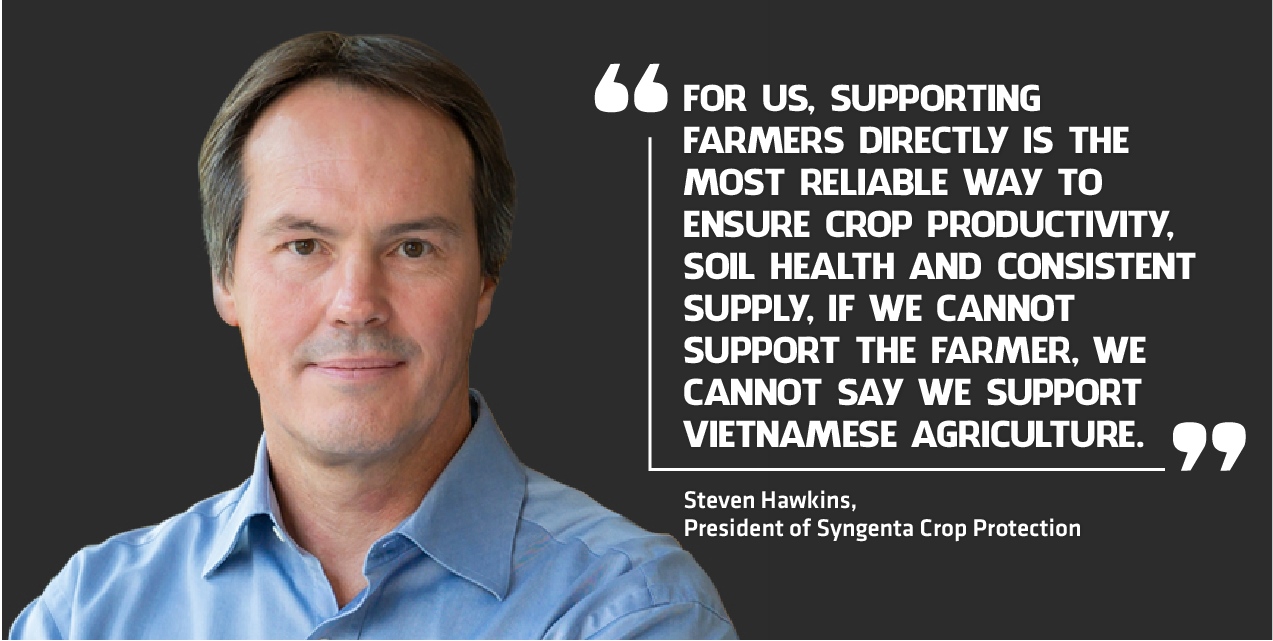
“For us, supporting farmers directly is the most reliable way to ensure crop productivity, soil health and consistent supply,” Hawkins says. But he adds that the relationship is ultimately reciprocal: “If we cannot support the farmer, we cannot say we support Vietnamese agriculture.”
On his latest visit to the Mekong Delta, Hawkins emphasized that the purpose was not only to monitor operations but also to listen. Many farmers shared which digital tools had made things easier and which still required human judgment. The conversations highlighted a simple point often lost in discussions of precision farming and AI: technology may shape the future of Vietnamese agriculture, but farmers themselves remain the ones deciding how that future unfolds. As Hawkins states, “Vietnam is one of the most dynamic smallholder markets in the world. If we can help farmers grow more with less – with better science and better data – the lessons learned here will travel far beyond Vietnam.”
Vietnam reminds us that the future of agriculture will not be written in boardrooms, but in the decisions farmers make every day. If we continue supporting Vietnamese farmers to grow more with less—using better science, data, and solutions designed for their fields—the lessons learned here will influence how smallholder agriculture develops worldwide. Technology might determine what is possible, but farmers in Vietnam are shaping what comes next.