
HCMC – To achieve the ambitious export target for 2026, Vietnam must maintain average monthly revenue of US$45-46 billion, a feat that requires an urgent shift from volume-based growth to higher value-added strategies.
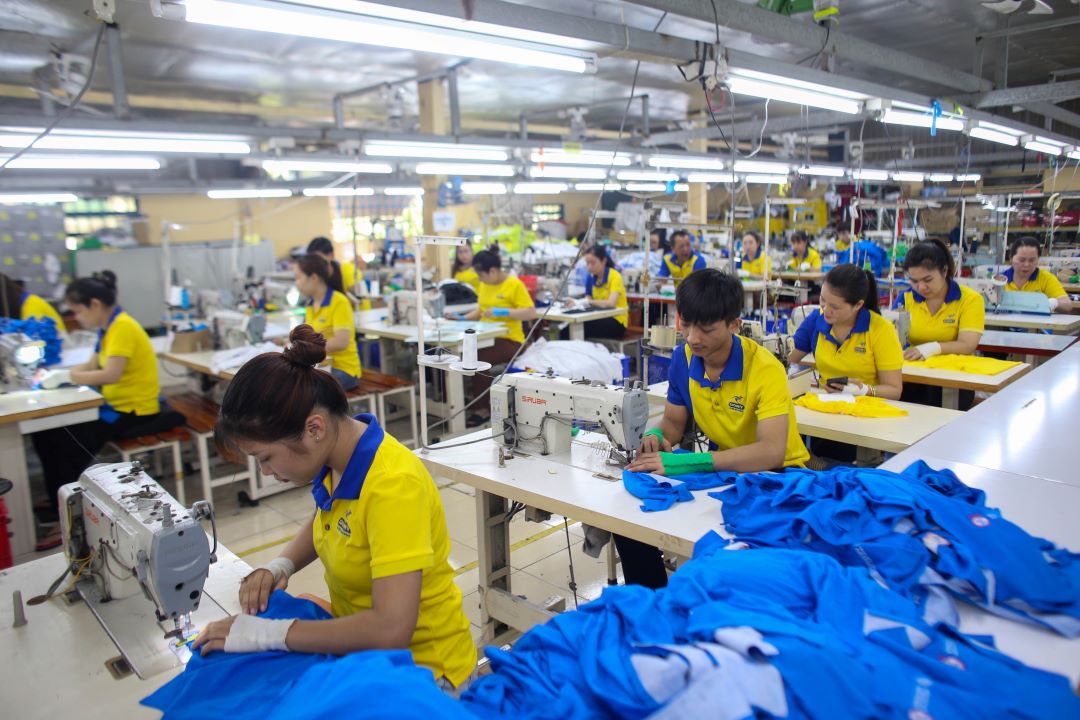
This demand comes as factories nationwide rapidly reactivate production lines post-Tet to meet a steady flow of orders, even as global market uncertainties and rising costs squeeze profit margins.
Order books are filling up through the second quarter of this year for key sectors like garments, footwear and furniture, the level of certainty remains fragile. But many manufacturers report that lead times for order confirmations have shortened significantly as global buyers maintain a cautious stance. In the textile industry, firms are increasingly balancing traditional Free on Board (FOB) contracts with cut-make-trim (CMT) services to stabilize cash flow and maintain employment, even at lower profit margins.
Despite a positive Purchasing Managers’ Index (PMI) of 52.5 in January, indicating the seventh consecutive month of expansion, the sector faces a paradox. Export volumes rise but profitability shrinks due to a 5% decline in order prices alongside rising labor and logistics costs.
The current growth model, heavily reliant on low-cost advantages and raw exports, is reaching its limits. Major export sectors like electronics remain dominated by foreign direct investment (FDI), while domestic firms are often confined to assembly and low-value processing. This structural imbalance limits the spillover effects of export growth on the local economy.
Furthermore, increasingly stringent global standards regarding carbon emissions, traceability, and labor rights are driving up compliance costs, forcing enterprises to either invest in technological upgrades or risk losing market share.
To sustainably reach the US$550-billion milestone, Vietnam’s export sector must restructure its approach by increasing localization rates, developing supporting industries, and investing in deep processing and branding. Experts emphasize that the true significance of this target lies not just in the gross turnover, but in the ability of Vietnamese enterprises to retain a larger share of value within the domestic economy. Shifting from a cost-driven to a value-driven model is now a prerequisite for Vietnam to maintain its competitive edge in a global trade environment that increasingly prioritizes quality and technology over scale.