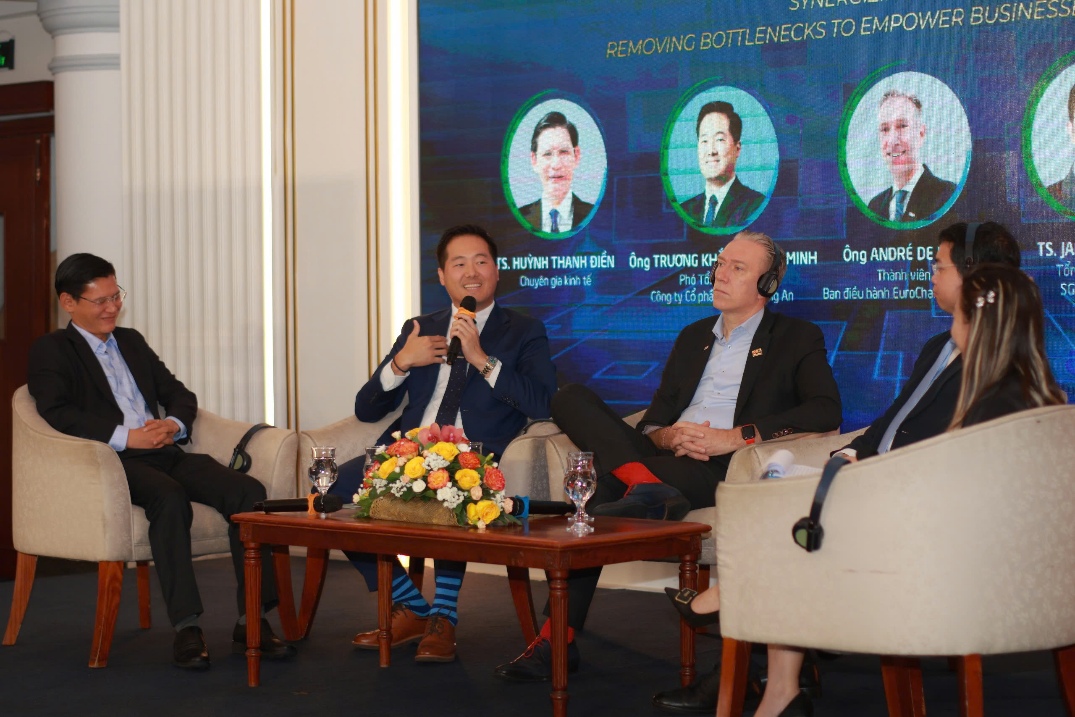
HCMC – Vietnam is increasingly viewed as a stable and predictable investment destination in a volatile global landscape, heard the seminar “Economic Outlook 2026: FDI Businesses and the Roadmap for Vietnam’s Rise” held in HCMC today morning.
- European business confidence in Vietnam hits seven-year high: EuroCham
- Decoding business confidence and the roadmap for enterprise growth
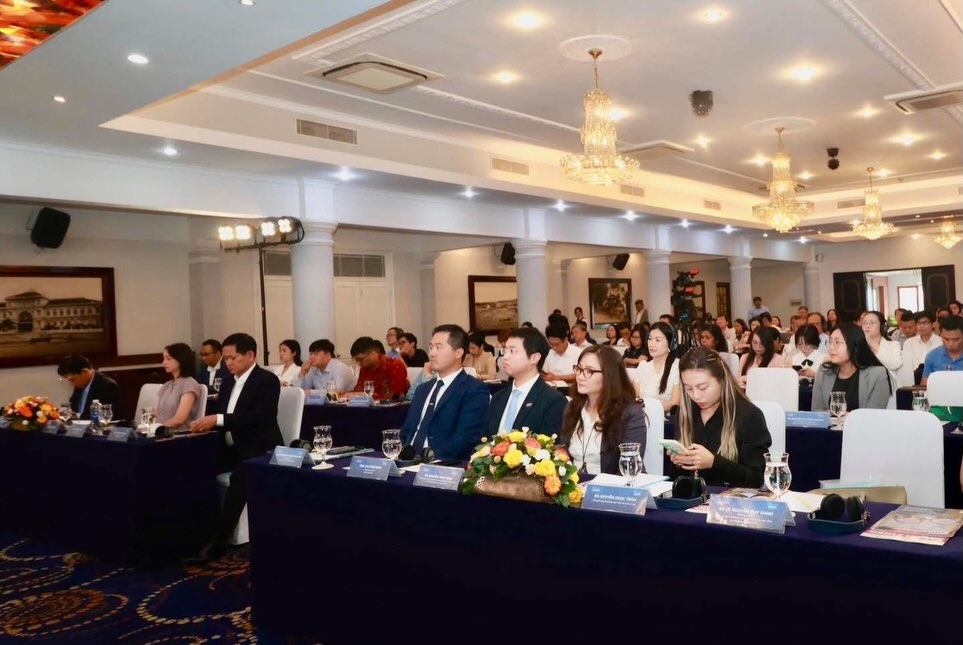
Held by the Saigon Times Group, the event brought together economists, business leaders, and representatives of international organizations to exchange insights on the economic outlook and strategic responses for 2026.
It examined key uncertainties shaping the business environment and explored ways for Vietnam to upgrade its position in global value chains, mobilize resources, and address implementation bottlenecks.
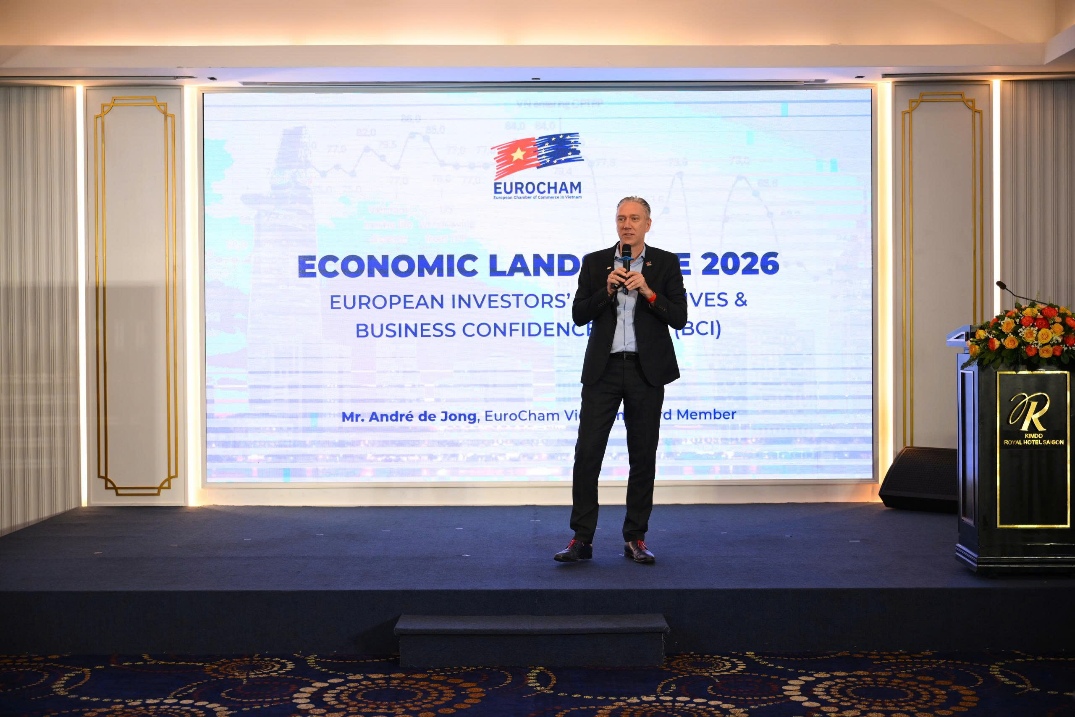
At the opening of the seminar, André de Jong, board member of EuroCham Vietnam, said that business confidence among European firms in Vietnam rose sharply, with the Business Confidence Index (BCI) in the fourth quarter of 2025 reaching 80 points, up 29% compared with the same period last year and the highest level in seven years.
He highlighted that “in a world of structural uncertainty, Vietnam offers what investors value most: predictability.” Notably, 88% of European businesses expressed optimism about the outlook over the next five years.
Amid geopolitical shocks, trade tensions, and the ongoing restructuring of global supply chains, Vietnam has emerged as a “low-risk environment in a high-risk world,” a fundamental source of competitive advantage.
However, Vietnam’s competitive advantages are shifting. Traditional factors such as low labor costs and tax incentives are no longer sufficient. Investors are now placing greater emphasis on transparency, sustainability, and compliance with international standards.
Dr. Jackson Woo, managing director of SGS Vietnam, global buyers are tightening supplier requirements. Businesses are increasingly expected to meet standards related to product quality, environmental protection, emissions, and social responsibility, alongside ensuring full traceability across supply chains.
Mechanisms such as the European Union’s Carbon Border Adjustment Mechanism, set for full implementation in 2026, are expected to add pressure on key export sectors.
Another key topic at the event was the rise of integrated eco-industrial parks, increasingly viewed as a new infrastructure foundation for attracting high-quality FDI.
Truong Khac Nguyen Minh, deputy general director of Prodezi Long An Corporation, presented a model structured around four tightly integrated pillars: sustainable technical infrastructure, industrial symbiosis, integrated service ecosystem, and digital infrastructure and data governance.
Overall, this model positions industrial parks not merely as providers of production space but as platforms that systematically and efficiently support businesses in meeting global standards.
Looking ahead, Economist Dr. Huynh Thanh Dien warned that while Vietnam will benefit from new trade opportunities, compliance requirements will become increasingly stringent. Companies that fail to meet standards on governance, environment, and social responsibility risk being excluded from global supply chains.
Vietnam is entering a new development phase where the quality of investment takes precedence over quantity. In this context, foreign investors are no longer just seeking a manufacturing base but are increasingly viewing Vietnam as a long-term strategic partner in building sustainable and resilient value chains.