
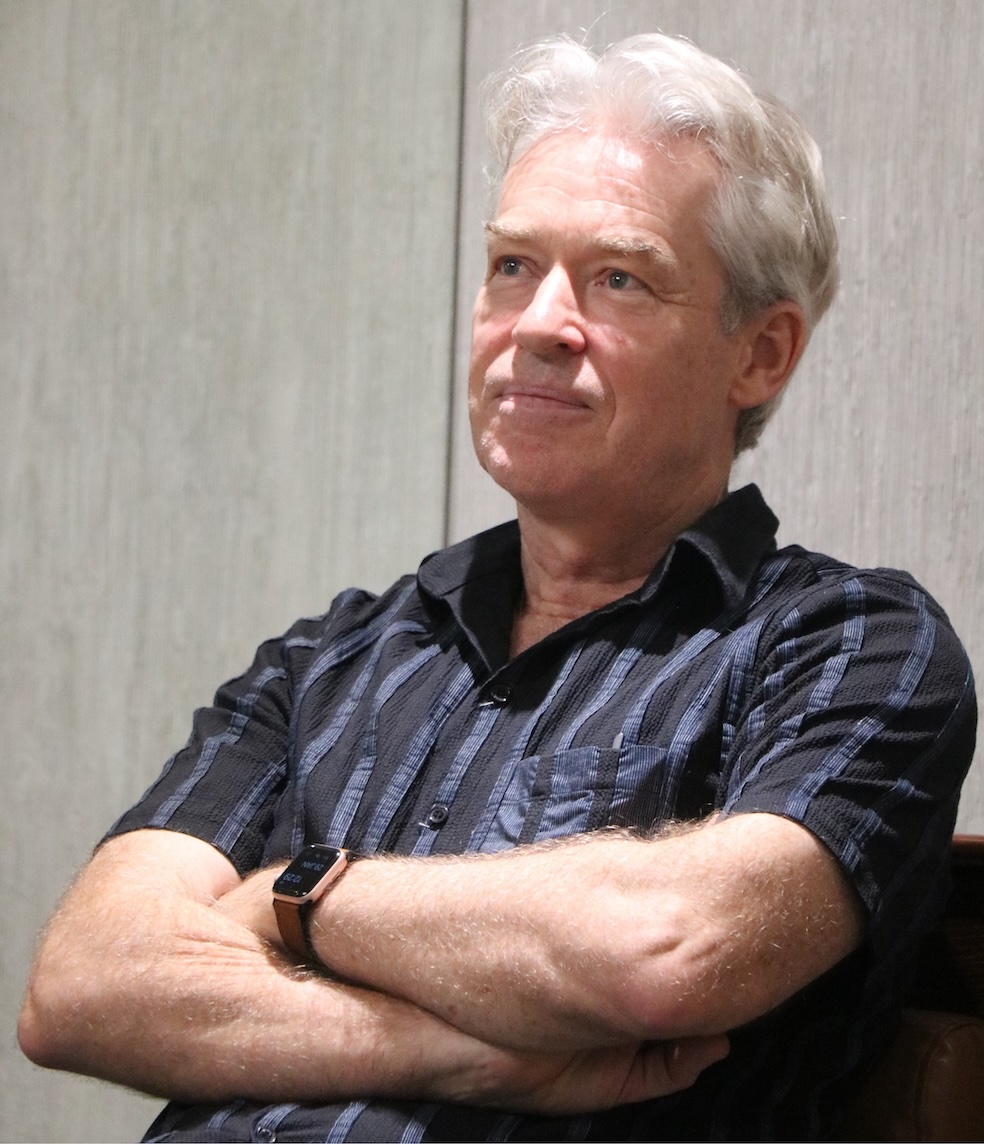
Having first visited Vietnam in 1993, economist and management consultant Anthony Holland has witnessed the country’s journey from hardship to global integration. In an interview with The Saigon Times, he reflects on Vietnam’s economic resilience, the shift from risk avoidance to growth thinking, and why emotional intelligence and psychological safety are shaping the country’s modern workplaces.
The Saigon Times: You first visited Vietnam in 1993. When you look at the streets of HCMC today in 2026, what does that contrast feel like to someone who saw the country before?
Anthony Holland: The change is nothing short of enormous. To understand where Vietnam is today, you have to remember where it started. When I first visited in 1993, life was incredibly hard. The Doi Moi (renovation) was in its infancy, and the trade embargo had only just been lifted. There was very little foreign investment, and the country was visibly poor. I remember a landscape dominated by bicycles rather than motorbikes.
Yet, even then, there was a striking sense of social equality in that struggle. I didn’t see the extreme homelessness that often plagues Western cities. People were working tirelessly with very little capital. Today, seeing Vietnamese people finally telling their own story—economically and culturally—is heartwarming. The world used to see Vietnam only as a war; now, the economy is telling a different, powerful story of its own.
As an economist working in Hong Kong during the early 90s, how did you analyze Vietnam’s position among the “Asian Tigers”?
At that time, I was part of an Asian emerging markets group. Vietnam was almost invisible to international investors because the economy was still quite closed. My job was to dig for any available economic data to write research papers that could educate Western banks and investors about the potential here.
I felt then, as I do now, that Vietnam has been treated with a degree of historical injustice by the global community. After 1975, the trade embargo was extremely damaging. Unlike other nations involved in major wars, Vietnam received no “Marshall Plan” for reconstruction. In many ways, the economic war continued for decades. Seeing the country navigate those “rough seas” to become a thriving global player today is a testament to a level of resilience that few other nations can claim.
You spent years as a management consultant for major firms like PwC in Australia, specializing in risk management. How has your professional “lens” changed since moving to Vietnam?
It has been a fascinating shift. In Australia, my job was to look at a business and ask: “What can go wrong?” That is the essence of risk management—analyzing strategic threats, systems, and processes to prevent failure. It requires a very methodical, analytical, and “overthinking” mindset.
Since moving here and working within EQquest Asia alongside my wife, my focus has flipped. Instead of looking at the “downside” or what can go wrong, we focus on the “upside”—what can go right. We work on strengthening organizational culture and building bridges between foreign and local perspectives. It is a much more positive way to apply my experience. Instead of identifying reasons for failure, I am now helping identify paths for growth and better communication.
You have lived here for eight years now. How has the transition from “traveling” to “living and working” affected your view of the local business environment?
Moving countries is always a big deal, and moving to Vietnam was the biggest move of all. The first year was challenging—learning how to get electricity connected, registering a business, settling our daughters into RMIT University here and buying an apartment. My wife handled almost all of that because of the language barrier, which put a lot of pressure on her.
What I’ve learned is that while traveling is about the “fun,” living here is about understanding the “steady and smooth” way things operate once you begin to integrate and find your rhythm. We’ve built a network and a team. Professionally, I’ve realized that Vietnam doesn’t necessarily need more “foreign experts” to come in and lecture. There is plenty of local capacity. The real work is in helping different cultures understand each other so they can work together effectively.
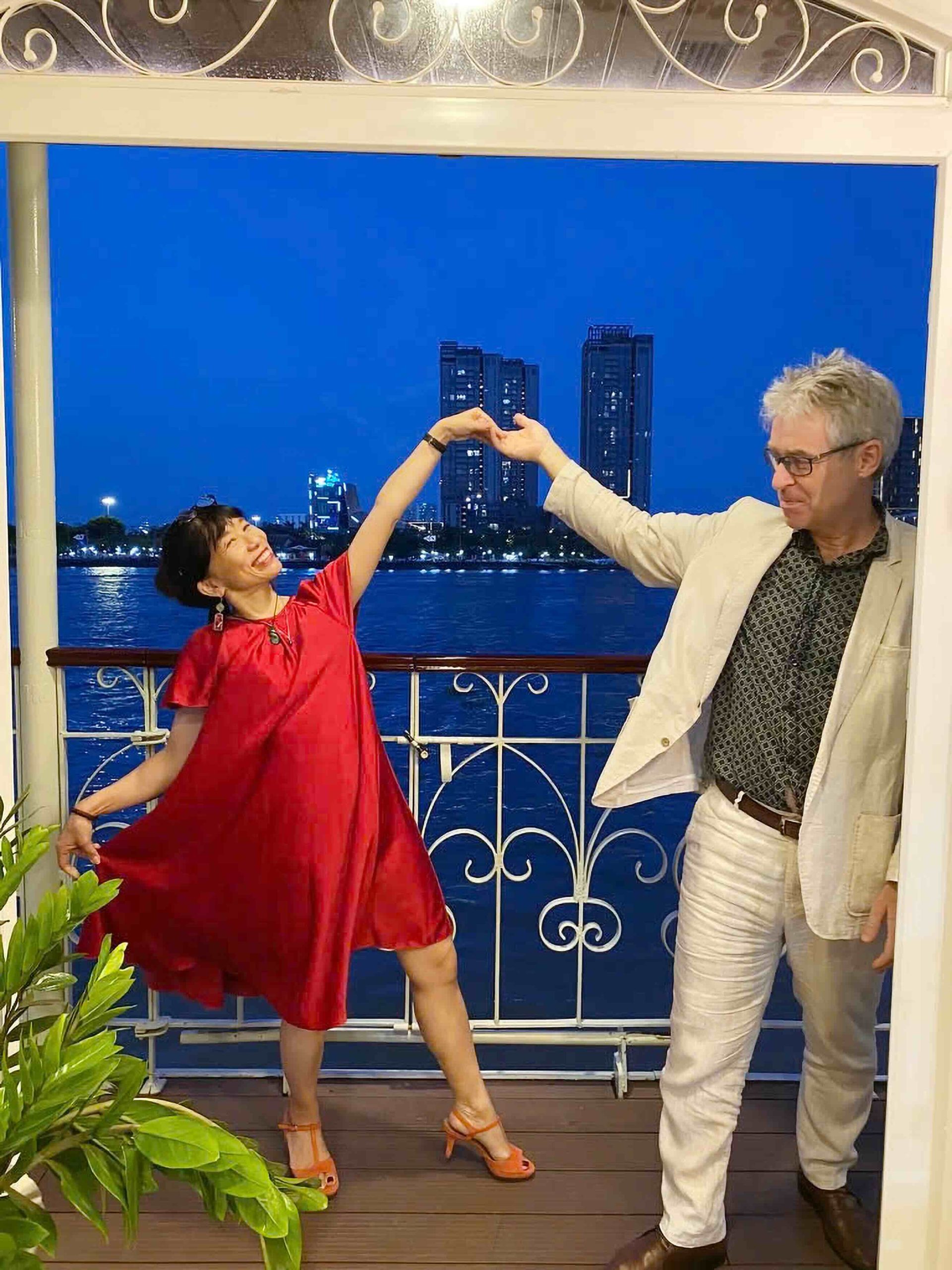
You and your wife were early proponents of Emotional Intelligence (EQ) in the Vietnamese workplace. Why is EQ the “secret sauce” for modern organizations?
When we first started, we had to explain the concept a lot – much less nowadays though. Essentially, EQ is about understanding feelings—your own and those of others—and how those feelings trigger reactions. In an organization, especially one with a strong hierarchy like many in Vietnam, EQ is vital.
It helps people become more refined in their judgment of how they relate to others. Bosses and employees have different emotional needs. By using EQ profiles, we can gather data to understand a company’s culture. It’s about building bonds. We’ve worked with very smart teams in financial services who were experts in their fields but struggled to collaborate across departments. EQ provides the language for that collaboration. It helps people see each other as people, not just as “business units.”
You often speak about “Psychological Safety.” How does this concept change the way a team performs?
Psychological safety is an environment where people feel they can trust each other and communicate frankly. It means a junior employee feels safe enough to share a great idea without the fear of being criticized or dismissed. I love seeing the “light bulbs” go off in people’s heads during our workshops when they realize, “It’s okay for me to think this” or “I can share this idea.” You have to work hard to build that culture, but once you do, the energy becomes far more productive.
You’ve made a very deliberate choice to support your wife as the CEO while you work in the background. What led to this “role reversal” in your professional lives?
We have been a team for 33 years, married for 30. For most of our time in Australia, I had the “fancy” career and the high salary, while my wife was the primary caregiver for our daughters. In the West, you don’t have nannies; she made significant sacrifices for the family.
When our daughters finished school, it was time for “her turn.” Coming to Vietnam was her dream, her calling. She is a natural leader—very strategic, a great communicator, and incredibly determined. I see my role as the “backbone.” I have skills in risk and logic that can help, but I prefer she leads. I don’t want to be at the front of the company because the work we do on building cultures is better led by a Vietnamese person. I am proud to support her mission to empower women and transform cultures.
You mentioned she does boxing and martial arts. It seems there is a lot more to her than her elegant appearance?
(Laughs) She is very tough. We are actually training right now to go to Mount Everest Base Camp—a 20-day trek. She is small and can look fragile, but she is not. She has a fierce intelligence and a “can-do” attitude that is typical of Vietnamese women but enhanced by her global experience. My role is often just about staying out of the way of her momentum!
As someone who has watched Vietnam’s trajectory for over three decades, what is your message to the people of this country?
My main message is: Believe in yourselves. There is a lingering perception that “foreign” means “better” or “expert.” That is not true. Vietnamese people have been through more than most and have developed incredible resilience. You are the 163rd largest country in the world; you should be leading and driving global trends.
I want to see more foreigners coming here to learn from Vietnam. You have navigated incredibly rough territory to grow your economy while the rest of the world is struggling. Anything is possible here. Whether it’s building the Metro or hosting the Olympics, Vietnam has the talent and the “can-do” spirit to achieve it. It is very much Vietnam’s time to shine.
And finally, a word for your wife and partner of three decades?
I’d say, “I’ve got your back.” We are strong together. We’ve raised a family—which is much harder than any business—and now we are living this great adventure in Vietnam. She continues to amaze me after all our time together and I want her to keep achieving great things. This is her time, and I’m honored to be part of it.
Reported by The Ky







