
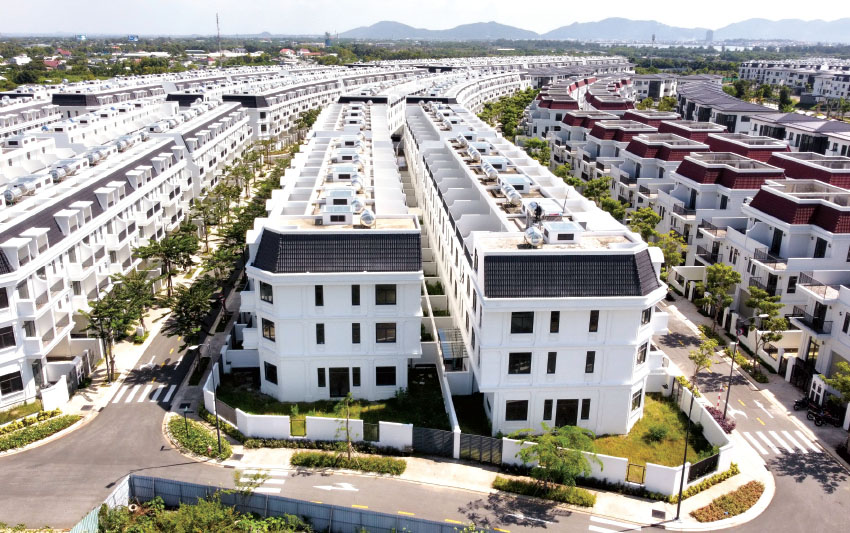
HCMC – Vietnam’s housing prices have risen by an average of 10–15% a year in recent years, with spikes of up to 30% at times, according to the Ministry of Construction.
At a meeting of the Central Steering Committee on Housing Policy and the Real Estate Market on December 17, officials said Vietnam currently has 3,297 commercial housing, social housing and land-lot projects nationwide. These projects represent around 5.9 million units, with total estimated investment of VND7.42 quadrillion.
Since 2022, the property market has gradually recovered, with annual transaction volumes ranging from about 537,000 to 785,000 across segments. However, housing prices have increased much faster than other property types.
While prices for tourism, resort and industrial real estate have risen by 5–10% per year, residential housing and land prices have continued to climb sharply. In Hanoi, average apartment prices in the third quarter reached VND70–80 million per square meter, while townhouses and villas were priced at VND100–200 million per square meter.
In HCMC, apartment prices rose from about VND35 million per square meter in 2018 to more than VND91 million in 2024. Many central-area projects now command VND120–150 million per square meter. Over the same period, average per capita income increased by only 6–7% annually, further reducing housing affordability.
Capital inflows into real estate remain strong. By the end of August, total outstanding capital in the sector reached about VND4.1 quadrillion. Real estate corporate bond issuance in the first nine months totaled nearly VND398 trillion, up almost 44% year on year. Registered foreign direct investment in the sector rose 15.2% to US$5.18 billion.
On social housing, Vietnam is implementing 698 projects with more than 657,000 units. About 102,000 units were completed this year, exceeding the annual target.
Concluding the meeting, the prime minister instructed the Ministry of Construction to build and publish a nationwide real estate market database by the first quarter of 2026. He also called for continued institutional reforms, tighter control of input costs and the development of a transparent, stable and sustainable property market.
The Government plans to control prices from the input stage, including land costs, construction materials, financing and investment procedures. It also aims to establish real estate and land-use rights trading centers to improve transparency and curb speculation.
In addition, Vietnam will diversify funding sources for real estate, reducing reliance on bank credit. Channels such as corporate bonds, foreign investment, public-private partnerships and other lawful funding sources are expected to be promoted to support market stability and project implementation.