
For Saigonese, the beach town of Vung Tau is a familiar spot they flock to, especially during the summer months of May to August. But Spring carries a charm entirely its own. Fewer crowds, some fresh seafood, and wonderfully crisp, cool air with a strong coastal breeze that you will find absolutely refreshing.
On a recent trip there, I was able to discover its evolving face. Just like the evolution of HCMC these past few years since Covid, with a beautifully expanded Bach Dang riverside promenade, Vung Tau has grown.
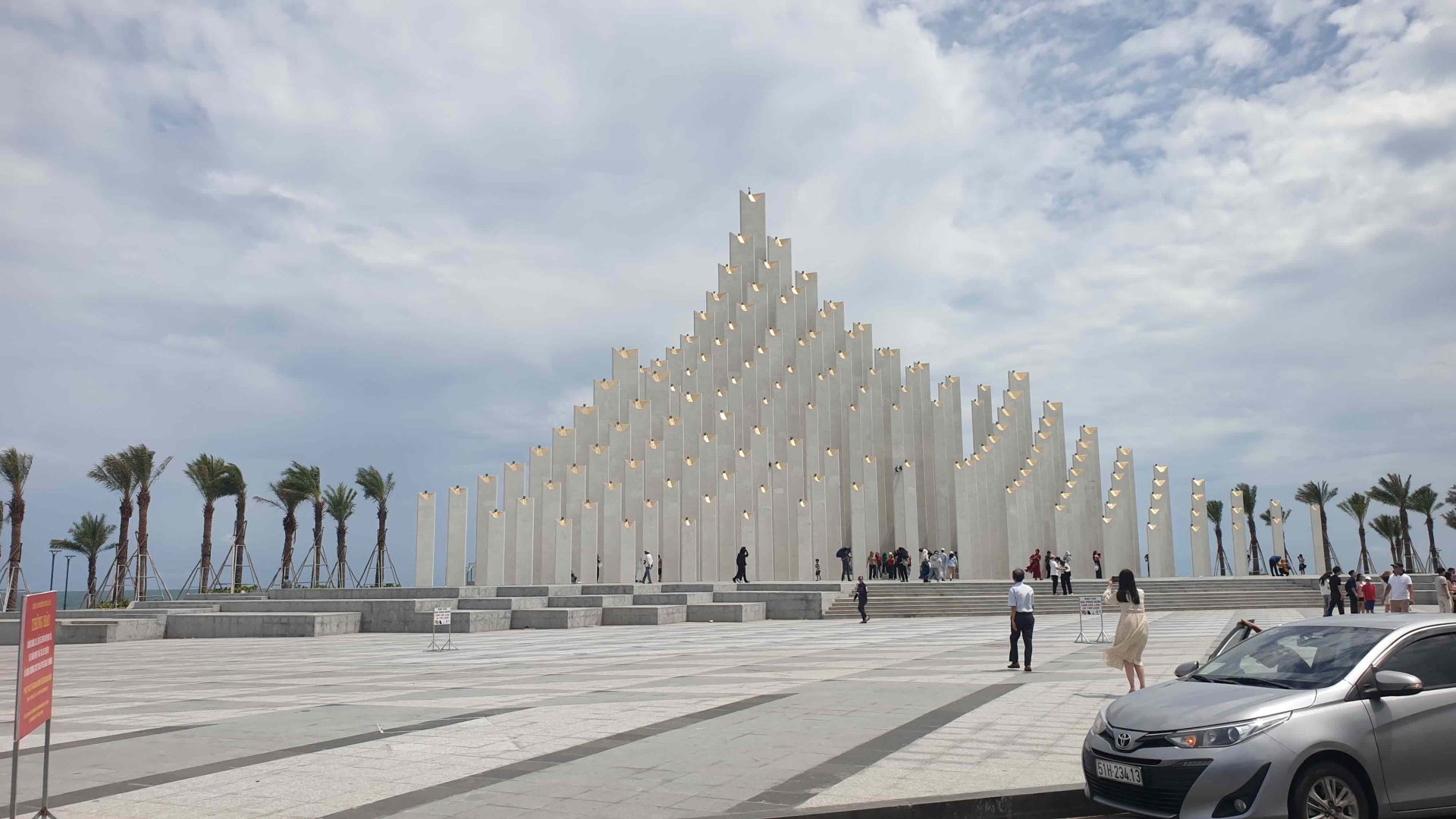
Along the long, expansive stretch of Back Beach (Bai Sau), new hotels have sprouted and more are being developed at the far end, with ongoing road works, beach landscaping and a stunning new shimmering monument (Thap Tam Thang), about 20 meters long I estimate. Shaped like a giant collection of steel organ pipes, it stands tall on the beige sand, playing the new natural melodies of the former city of Vung Tau.
The sand and seacoast are cleaner than before, with far less litter as well. The nice thing too about visiting in Spring is you do not see as much of the seaweed; I guess because they do not multiply as rapidly in the colder waters. That made swimming even more fun! The waves are slightly stronger than in Summer but stick close to the shore and away from the warning beach flags and you will still have an enjoyable time.
Front Beach (Bai Truoc), a scenic crescent-shaped cove, is another spot to check out, especially at night, when the many fishing boats are anchored back close to shore. Together with the bigger ships and their lights further out at sea, what you see is a real-time, maritime painting of this lively place.
Food galore
What is a trip to Vung Tau without savoring its rich tapestry of food? On this recent trip, we discovered delicious Banh Cuon at La Chuoi Quan, 203 Nguyen Van Troi. Banh Cuon is a traditional Vietnamese breakfast of warm rice noodle rolls, mixed with wood ear mushrooms and topped with yummy garnishes like Lap Xuong (sausage), Cha Lua (Vietnamese-style deli pork meat also called Gio Lua in the North). Banh Cuon is so popular, its available nowadays any time of the day in many places throughout Vietnam.
This joint offered a version made with scrambled egg too, sort of like an omelette. Quite a food fashion now in Saigon too. La Chuoi Quan also has a selection of local steamed cakes, made with banana and coconut, neatly wrapped in banana leaves. In fact, while we were chowing down the Banh Cuon, a restaurant staff was making a live stream video to promote the cakes. I was sold and bought some. They were super delicious.
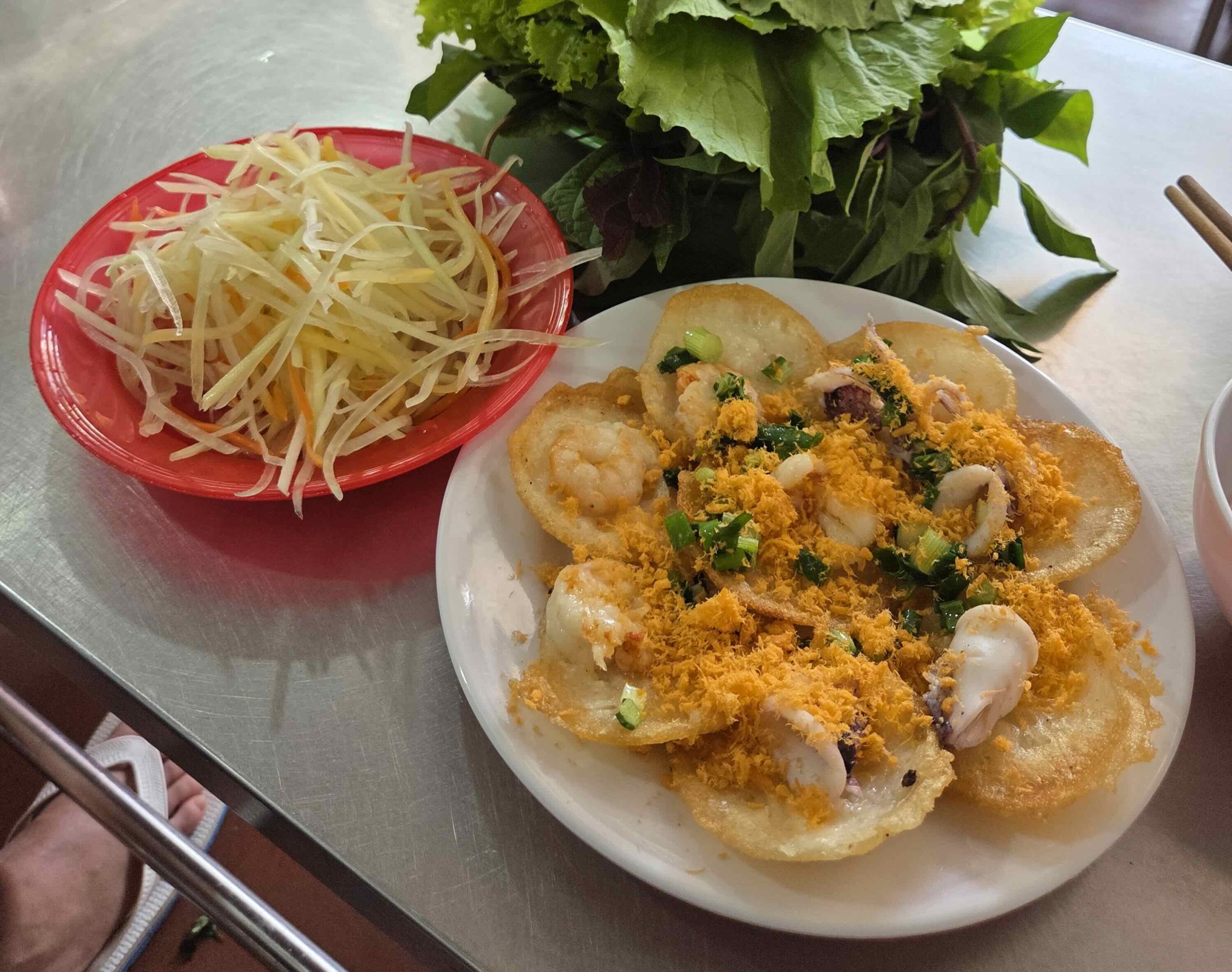
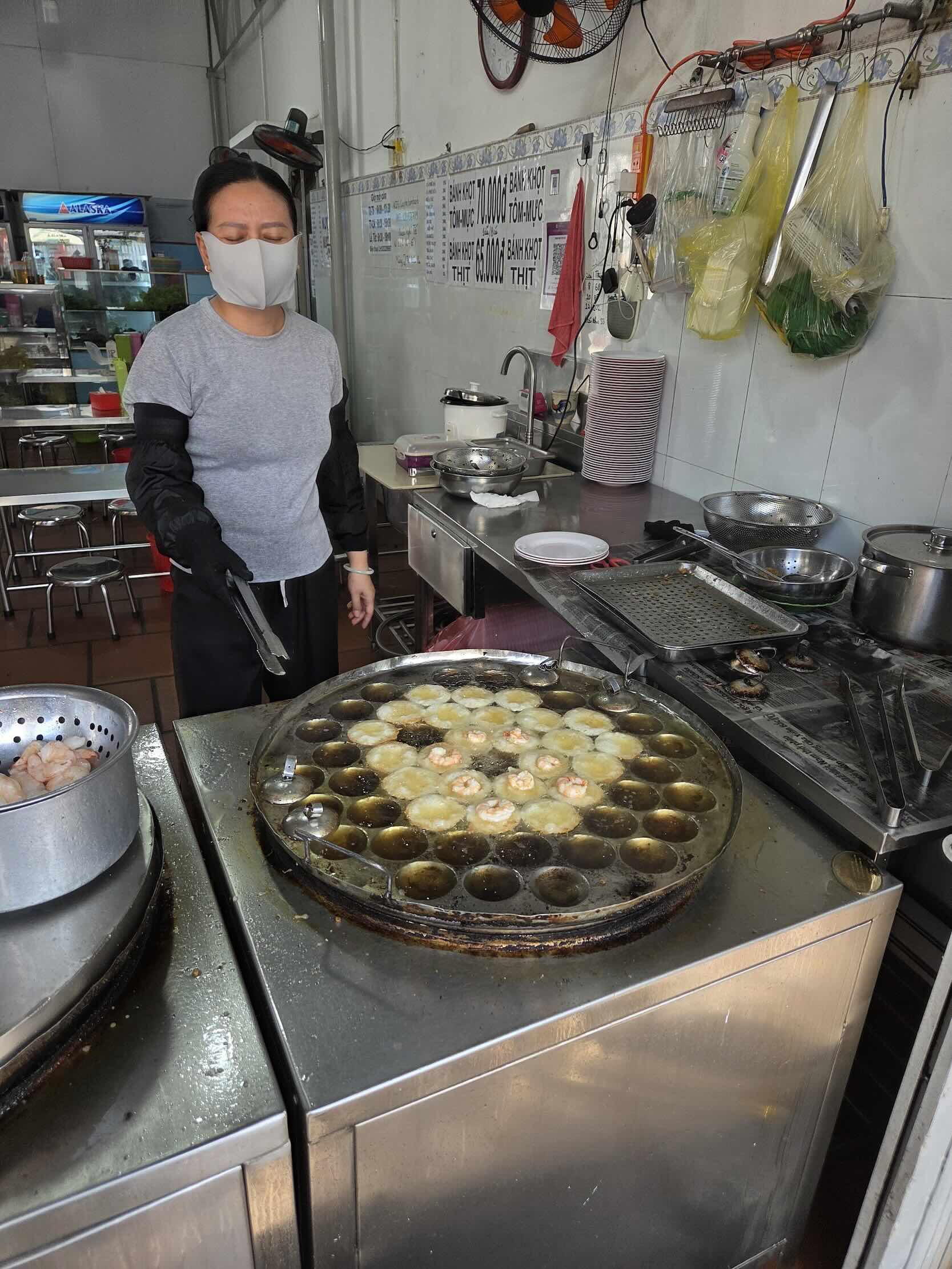
A local dish that is divine is Vung Tau Banh Khot. It is available in many places throughout the city. This trip, we visited Banh Khot Cay Tre at 8B Luong Van Can.
Banh Khot is like a deep-fried cup-shaped fritter, usually with either seafood or minced pork, and eaten with sliced raw papaya and a mountain of local fresh vegetables. You wrap them all up in a do-it-yourself vegetable roll and dip it into their Vung Tau style light Nuoc Mam (fish sauce) and enjoy. We were stuffed but happy. To wash it all down, we ordered fresh sugarcane juice. When it’s just made, you can literally smell the fragrant sugarcane and taste the flavorsome grains, still swimming in the cup.
Freshness is a word I always associate with Vung Tau seafood. The famous seafood restaurant Ganh Hao is a place you should check out when you visit. Local seafood is top-notch there. They have two branches; both are strategically positioned near the sea.
Ganh Hao 1 is along Tran Phu Road, a beach road that winds along a scenic promontory after Front Beach (Bai Truoc). Ganh Hao 2 is located at the Ferry Terminal for Con Dao Island connections. With their quality seafood dishes and good service, we always enjoy the local fare there.
Ever since the Oil Boom in the 1980s, international visitors have come to Vung Tau. Some liked it so much, they made this place home. At the same time, enterprising Vietnamese set up restaurants serving all kinds of cuisines. The result is a cosmopolitan food and beverage scene where you can find Greek food to Italian Pizza and Pasta, to Taiwanese Bubble Tea, to Japanese Sushi.
Italian restaurant Pizzeria David is a case in point. Started by an Italian chef and his Vietnamese wife in 2005, it is located at 92 Ha Long Street, with a picturesque view of the sea. The versatile kitchen offers skillfully done pizza from their wood-fired oven, a selection of handmade pastas and other Italian favorities, as well as a neat sample of Italian wines. Chomping into your pizza here, surrounded by red brick décor and the sound of Italian pop music, you might think you’re in Sorrento, not Vung Tau!
Alas, after this Italian detour, we woke up from the delicious dream and headed off to the Lighthouse, not too far away and a popular destination for tourists.
A stunning view
Fifteen minutes up the mountain, on a clear day, I could see why. The whole of Vung Tau could be seen from the top and the wide, stunning seacoast too, for miles and miles. Just magnificent!
The Lighthouse itself is a sight to behold. Built by the French in 1862, it is one of the oldest lighthouses in Southeast Asia. Rising 18 meters, the structure is a massive, solid white cylinder measuring three meters in diameter. Situated on top of the Nho Mountain, 170 meters above sea level, the beauty has a light range of 35 nautical miles.
After taking in the panoramic aerial sights, you could do what we did and just head down to a coffeeshop, grab a cup of coffee and stroll along the beach. That, to me, is the essence of Vung Tau. The sea, the sand and the wonderful views. Despite its evolution, it is still at core, simple, down-to-earth and scenic.