
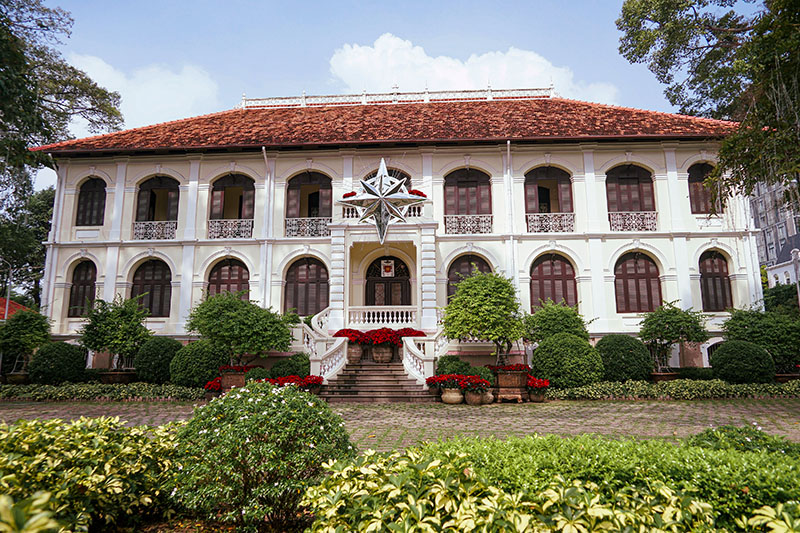
HCMC is entering a pivotal phase as it expands its administrative boundaries and seeks to redefine its urban identity. Yet, amid rapid development, the city’s cultural heritage—the foundation of its character—remains fragile and too often overlooked.
Frequently portrayed as a young metropolis lacking the historical depth of Hanoi, Hue, or Hoi An, the city is sometimes underestimated. Many researchers contend that this view is incomplete, obscuring the distinctive and rich heritage that underpins southern Vietnam’s largest urban center.
Abundant heritage, limited activation
Le Tu Cam, chairwoman of the HCMC Heritage Association, emphasizes that the city has long been a crossroads of cultures. Vietnamese, Chinese, Khmer, and French communities have all contributed to a rich blend of tangible and intangible heritage. With the implementation of Resolution 76 on provincial administrative restructuring, HCMC’s heritage footprint has expanded to encompass coastal, island, craft village, spiritual, and culinary traditions from the former Ba Ria–Vung Tau and Binh Duong provinces.
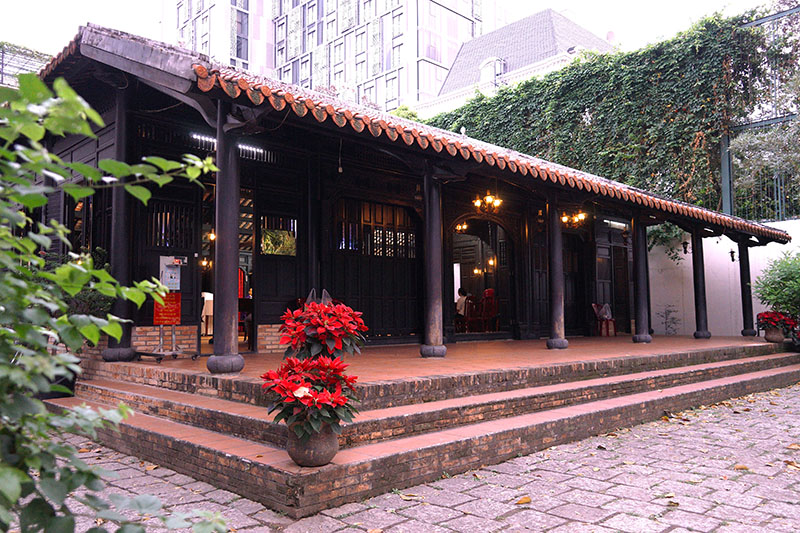
Following the merger, HCMC now boasts 321 historical and cultural relics and scenic sites, including four special national relics, 99 national‑level relics, and 218 city‑level sites. The city is also home to 25 museums and 23 national treasures. According to the municipal tourism authority, 681 heritage‑related resources have been identified as potential tourist attractions, ranging from the city center and riverfronts to coastal areas, traditional craft villages, and former industrial zones.
Heritage, in other words, is not scarce—it is woven so deeply into daily life that it often goes unnoticed. Walking through historic quarters such as Cho Lon, Tan Dinh, Thi Nghe, Mong Bridge, and Bach Dang Wharf, or past landmarks like Notre Dame Cathedral, the Central Post Office, the Reunification Palace, and the Fine Arts Museum, reveals a paradox: the city possesses a wealth of heritage, yet much of it remains static.
Cho Lon, in the former District 5, illustrates this gap vividly. With its assembly halls, bustling markets, narrow alleys, and vibrant Chinese-Vietnamese community life, the area could serve as a living heritage district. Instead, most of its cultural assets remain embedded in local routines rather than integrated into organized tourism. Existing tours are largely informal, lacking structured design and professional management.
A similar situation can be seen along the Tau Hu–Ben Nghe Canal, once a vital commercial artery connecting markets, ports, and boat communities. Despite its potential to become a signature tourism product, activities along the canal today remain sporadic and limited in scale.
Heritage at risk before recognition
Rapid urbanization has placed immense pressure on HCMC’s architectural and cultural heritage. Many once‑iconic structures have vanished, surviving only in memories or archival photographs. At a conference in late November, researcher Tran Huu Phuc Tien highlighted a small but telling example: an anchor engraved with the year 1962, a relic of Saigon’s port history, once stood near the high‑speed ferry terminal to Vung Tau. It disappeared during an urban upgrading project—without documentation or notice.
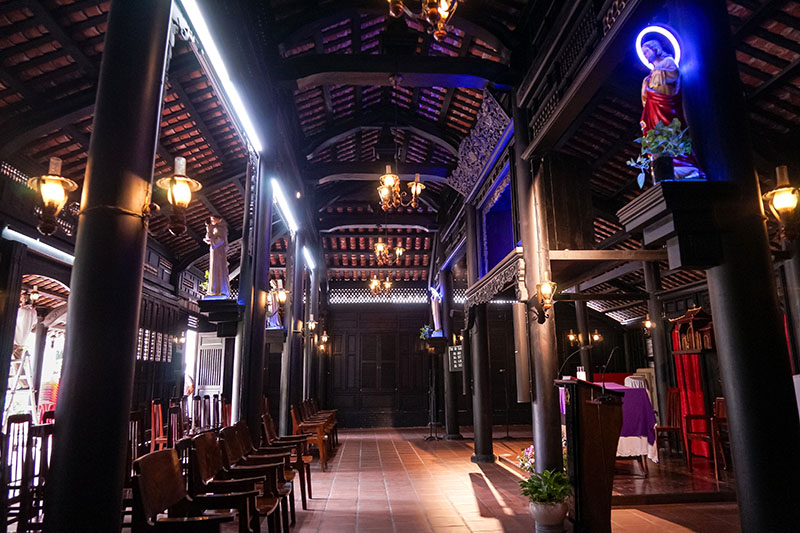
These losses extend far beyond isolated artifacts. Entire structures have faded from the cityscape, including the Ba Son Shipyard, the Saigon Zoo steel bridge, Ba Cang Bridge on Hang Bang Canal, Davis Station at Tan Son Nhat International Airport, Chi Lang Park, the Tax Trade Center, Nhi Thien Duong Bridge, and Quach Thi Trang Roundabout. September 23 Park is another poignant example: originally Saigon’s main railway station, built by the French in the late 19th century, it once served as a vital transport hub before being repurposed into a public park.
Religious sites, long regarded as anchors of community life, face similar risks. Hoi Son Pagoda—built in the 17th century and recognized as a national architectural relic—was completely destroyed by fire in 2012, a stark reminder of how quickly heritage can vanish without adequate protection.
Even sites that survive are often underutilized. As Nguyen Van My, chairman of Lua Viet Tourism Company, observed, a café at 57 Nguyen Du Street now occupies what was once the largest printing house in Indochina, owned by Nguyen Van Cua—a piece of history largely unknown to the public.
According to the HCMC Department of Planning and Architecture, the city has 1,253 villas built before 1975 listed for preservation, excluding those in the former Binh Duong and Ba Ria–Vung Tau provinces. Nearly half have been altered or demolished in recent decades, signaling not only architectural loss but also an erosion of urban identity.
Strikingly, no Catholic buildings are currently classified as heritage sites. This omission excludes structures such as Tan Xa Palace—also known as the Archbishop’s Chapel—built in 1799 and now 226 years old.
Experts argue that HCMC has yet to fully unlock the economic value of its cultural heritage. Phan Yen Ly suggests that modern‑era heritage, shaped by colonial history and 20th‑century urbanization, could become the city’s distinctive tourism brand. Yet, to date, only about 20% of this potential has been realized.
From a business perspective, Pham Anh Vu, deputy general director of Viet Tourism Company, observed that heritage sites are too often reduced to mere photo backdrops. In contrast, visitors from Europe and North America seek stories, immersive experiences, and interactive activities within historic spaces. Yet current regulations frequently restrict businesses from organizing such activities inside heritage sites, limiting opportunities for product development and deeper engagement.
Looking ahead
HCMC has been shaped by openness and exchange, with waves of people, cultures, and trade intersecting here for centuries. Every alley, river bend, and neighborhood carries layers of memory—and as those layers fade, so too does the city’s identity.
A metropolis risks losing its appeal without a strong cultural foundation. It also struggles to compete if its tourism map is reduced to a patchwork of disconnected sites. In this light, heritage is not merely about preserving the past. When managed effectively, it becomes a vital resource for shaping the future of HCMC as it expands its boundaries and redefines its urban identity.