
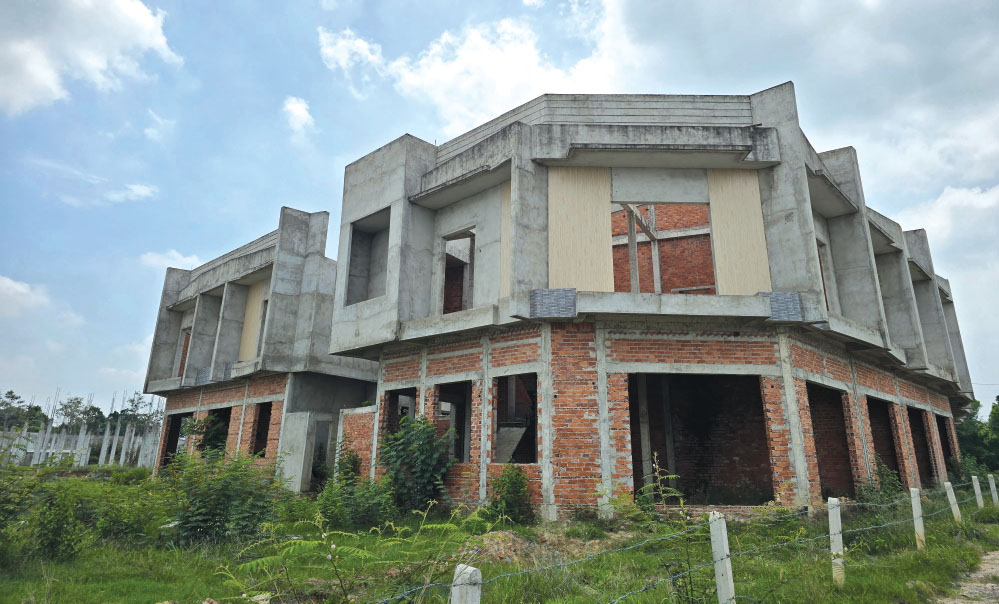
HCMC – The Government has issued a new decree guiding the implementation of special mechanisms and policies intended to resolve problems faced by long-delayed and long-stalled projects under the National Assembly’s Resolution 29/2026/QH16 dated April 24, 2026.
Decree 147/2026 is seen as a major policy move to do away with obstacles facing thousands of projects and revive substantial capital flows.
Under the decree, the review and approval authority is clearly divided to avoid overlaps. For projects granted land use right certificates in violation of regulations, provincial departments of construction or departments of planning and architecture will take the lead in assessing compliance with urban planning schemes.
Based on the assessment results, provincial governments will consider and approve adjustments to land use purposes or land use durations. One key breakthrough is that adjusted land areas will not be required to undergo new land allocation or land lease approval procedures.
At the same time, provincial departments of agriculture and environment will be responsible for determining land prices before transferring the information to tax authorities to calculate additional financial obligations.
The decree also introduces a clear formula for recalculating land use fees by subtracting the amount corresponding to the previous land use purpose from the land use fee determined under current policies. Notably, if investors have already paid more than the recalculated amount, the State will not refund the difference.
To ensure transparency, land registration offices are required to publicly announce lists of certificates subject to adjustment three times at 30-day intervals. Following notification, the offices will revise cadastral records accordingly.
In cases where assets are mortgaged, the issuance of revised certificates must be carried out simultaneously among the registration authority, land users, and mortgage holders to ensure legal certainty.
For projects found violating investor selection procedures or land management regulations, provincial departments of finance will lead in the review process. These departments will comprehensively assess investor capacity, planning compliance, and ensure that projects do not encroach on defense, security, or forest land planning.
Once provincial authorities decide to continue land allocation, relevant agencies will complete the remaining procedures. If land allocated before May 2026 includes forest land but lacks approval for land-use conversion, authorities will not reissue conversion decisions. Instead, investors will only be required to plant replacement forests.
Similarly, for projects located on land subject to unlawful recovery decisions, Decree 147 assigns departments of finance to lead the review process, with the mandatory condition that projects must not be involved in disputes or complaints. Once all requirements are met and approval is granted, departments of agriculture and environment will advise on land allocation procedures under the normal process.
The decree also sets out measures for cases where investors lack the capacity to continue project implementation. In such situations, provincial governments will decide on reimbursing compensation, support and resettlement funds advanced by investors, along with all construction costs incurred on the land. The reimbursement will be sourced from local budgets through other development investment expenditures, providing a safeguard for social capital and helping foster a fairer investment environment.