HCMC – Confidence among European businesses in Vietnam is rebounding, thus driving a shift in investment from short-term expansion to higher value-added activities, according to André de Jong, a board member of EuroCham Vietnam.
- European business confidence in Vietnam hits seven-year high: EuroCham
- Vietnam seen as low-risk environment amid global uncertainty
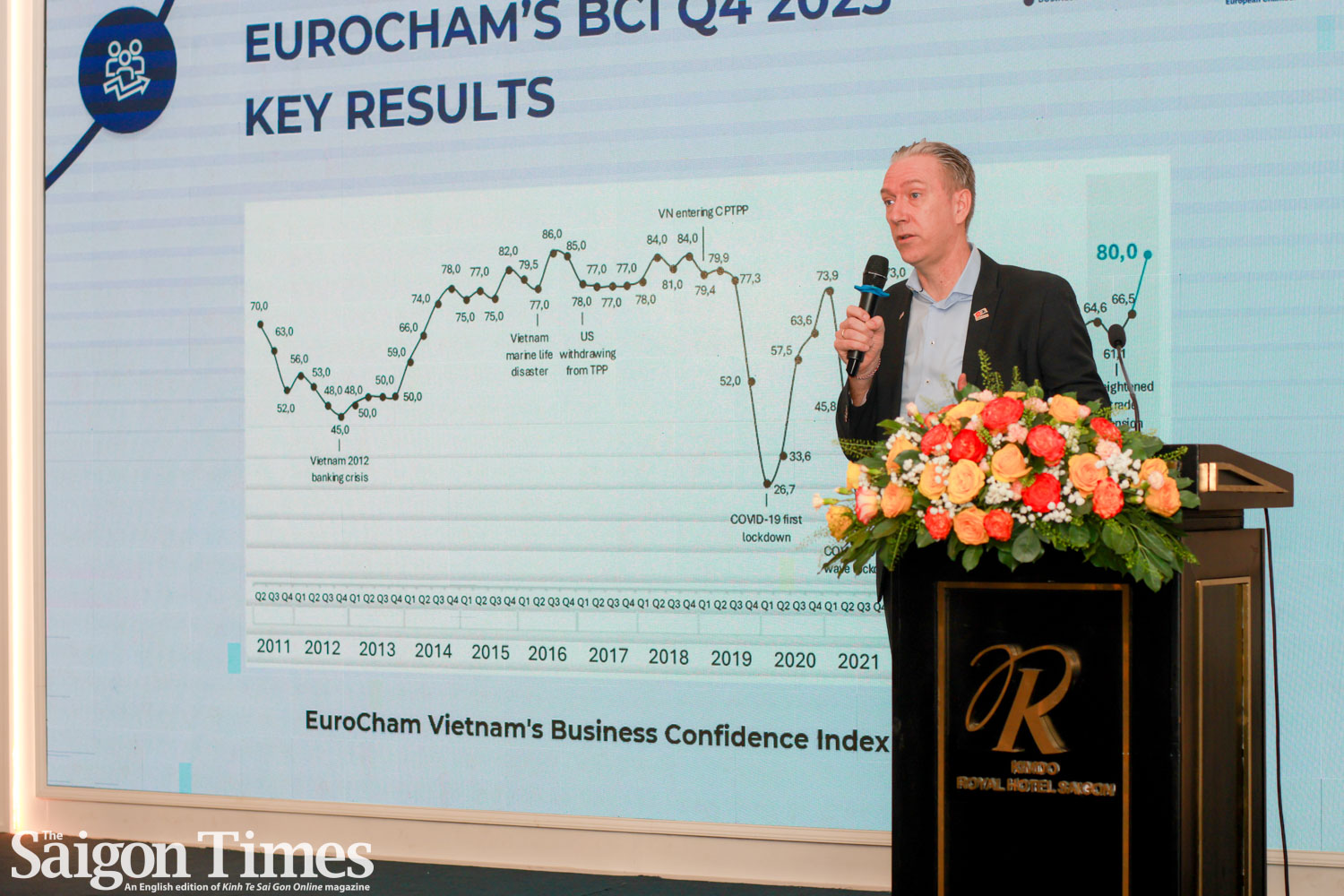
Speaking at the seminar “Economic Outlook 2026: FDI Businesses and the Roadmap for Vietnam’s Rise,” held by the Saigon Times Group today, April 2, de Jong said EuroCham’s Business Confidence Index (BCI) rose to 80 in the fourth quarter of 2025, up 29% from a year earlier and the highest level in seven years. He said the figure reflects a broad-based recovery in confidence among European firms operating in Vietnam.
Confidence in a stable investment environment
The improvement comes despite a volatile global backdrop over the past year, marked by shifting trade policies, supply chain disruptions and changing regulatory requirements.
According to de Jong, Vietnam’s ability to offer a stable, consistent and predictable environment remains a key factor in attracting investors.
He said that efforts to streamline the political and administrative system have helped strengthen business confidence, with policies implemented more clearly and consistently. This has set Vietnam apart from many other emerging markets.
In 2025, rising trade tensions and U.S. tariffs added uncertainty to the global business environment. In response, Vietnam engaged in dialogue and sent delegations to negotiate and ease tariff impacts, which the business community viewed as timely and flexible moves.
This helped reinforce investor confidence in the Government’s ability to manage challenges, he emphasized. At the same time, Vietnam’s diversified foreign policy and broad network of partners have helped reduce geopolitical risks and support long-term trade ties.
As major economies continue to adjust trade policies, often with sudden tariff measures, Vietnam is increasingly seen as a more stable destination. “A predictable environment is a key reason why confidence is returning,” said de Jong.
Vietnam’s 17 free trade agreements and 15 comprehensive strategic partnerships are helping reduce risk and sustain foreign investment flows, while strengthening its role in global supply chains as companies diversify operations.
At the operational level, this recovery is visible in day-to-day business activity. “It feels like things are back to normal,” he said, pointing to improvements in factories and offices.
In a volatile global environment, that sense of stability has become a competitive advantage for Vietnam.
Shift toward higher-value investment and local integration
EuroCham surveys show a clear shift in how European firms invest in Vietnam.
“There are three main trends: a focus on higher value, more targeted investment and deeper local integration. Vietnam is no longer just a base for garments and footwear. Those sectors remain important, but companies are moving toward higher-value activities,” de Jong said.
Nearly half of firms are diversifying their investment portfolios, with more sourcing locally to benefit from tariff preferences linked to Vietnamese origin and to strengthen supply chains.
Workforce quality is becoming a key advantage. Around 45% of firms said they are prioritizing hiring and retaining talent, especially in engineering, data and sustainability. Jong said Vietnam’s edge now lies more in workforce quality than low labor costs.
“Vocational training is essential. Companies need skilled technicians to run machinery effectively, not just advanced degrees,” he said.
Around 41% of firms are increasing investment in technology. He said areas such as artificial intelligence and semiconductors are now part of daily operations rather than experimental fields.
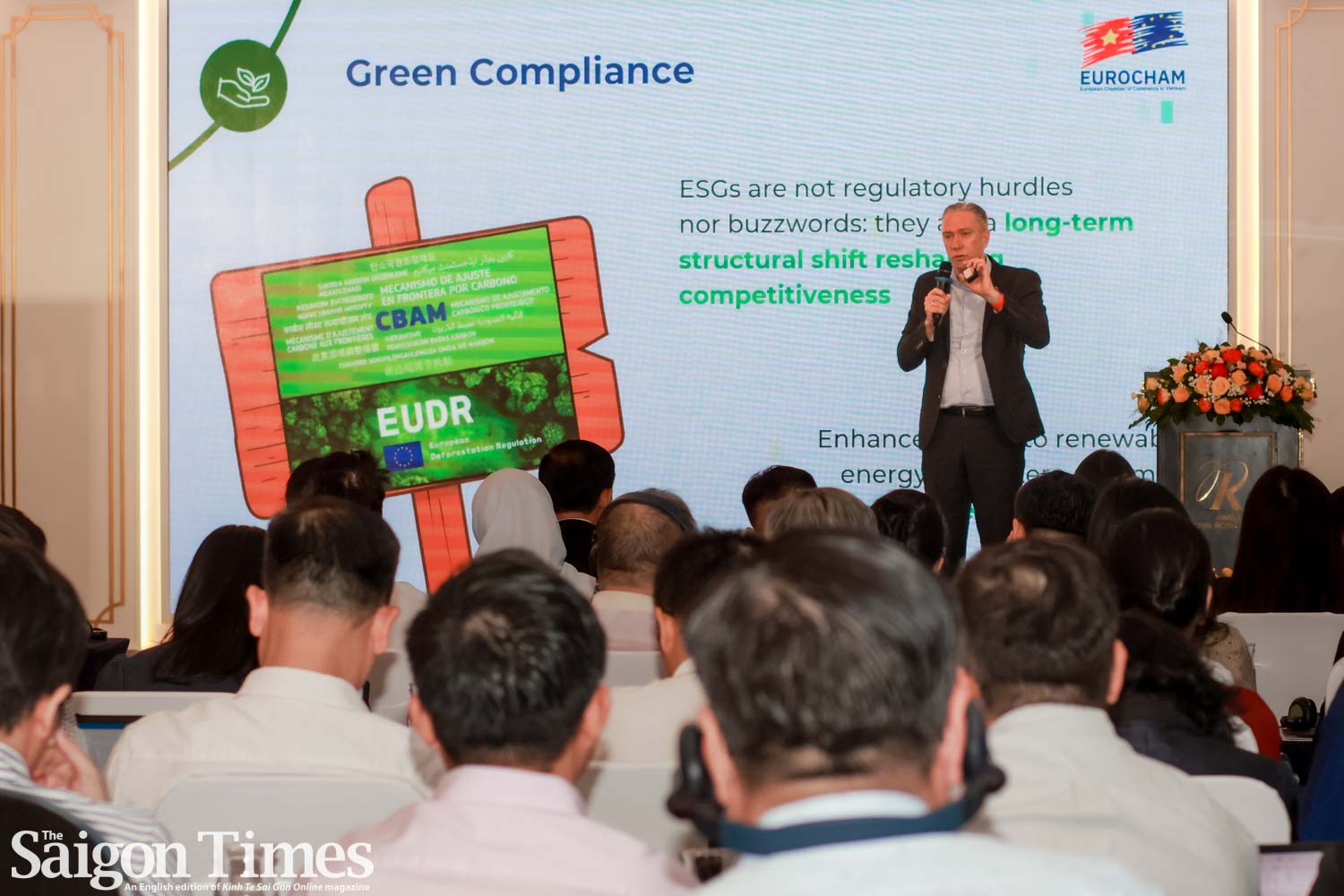
European firms are requiring local partners to meet similar standards, as they face strict compliance requirements in Europe.
However, the shift poses challenges, especially for small and medium-sized enterprises (SMEs). EuroCham data shows that while large companies can meet green standards, many SMEs are still adapting and facing rising compliance costs and more complex reporting requirements.
At the policy level, European businesses have noted positive reform signals from the Vietnamese Government, particularly in responding to business feedback. Still, challenges remain. About 53% of firms said administrative procedures continue to be a major obstacle, although this has improved.
Over the long term, European investment in Vietnam may not be the largest in scale but is typically long-term and focused on quality. Companies are looking to build lasting partnerships rather than pursue short-term gains.
André de Jong also pointed to the upgrade of Vietnam–EU ties to a comprehensive strategic partnership as a sign of deeper cooperation.
“We want to ensure that as Vietnam enters a new phase, it is supported by European technology, governance expertise and long-term partnership,” he said, adding that current trust levels could form the basis for a decade of sustainable, mutually beneficial cooperation.