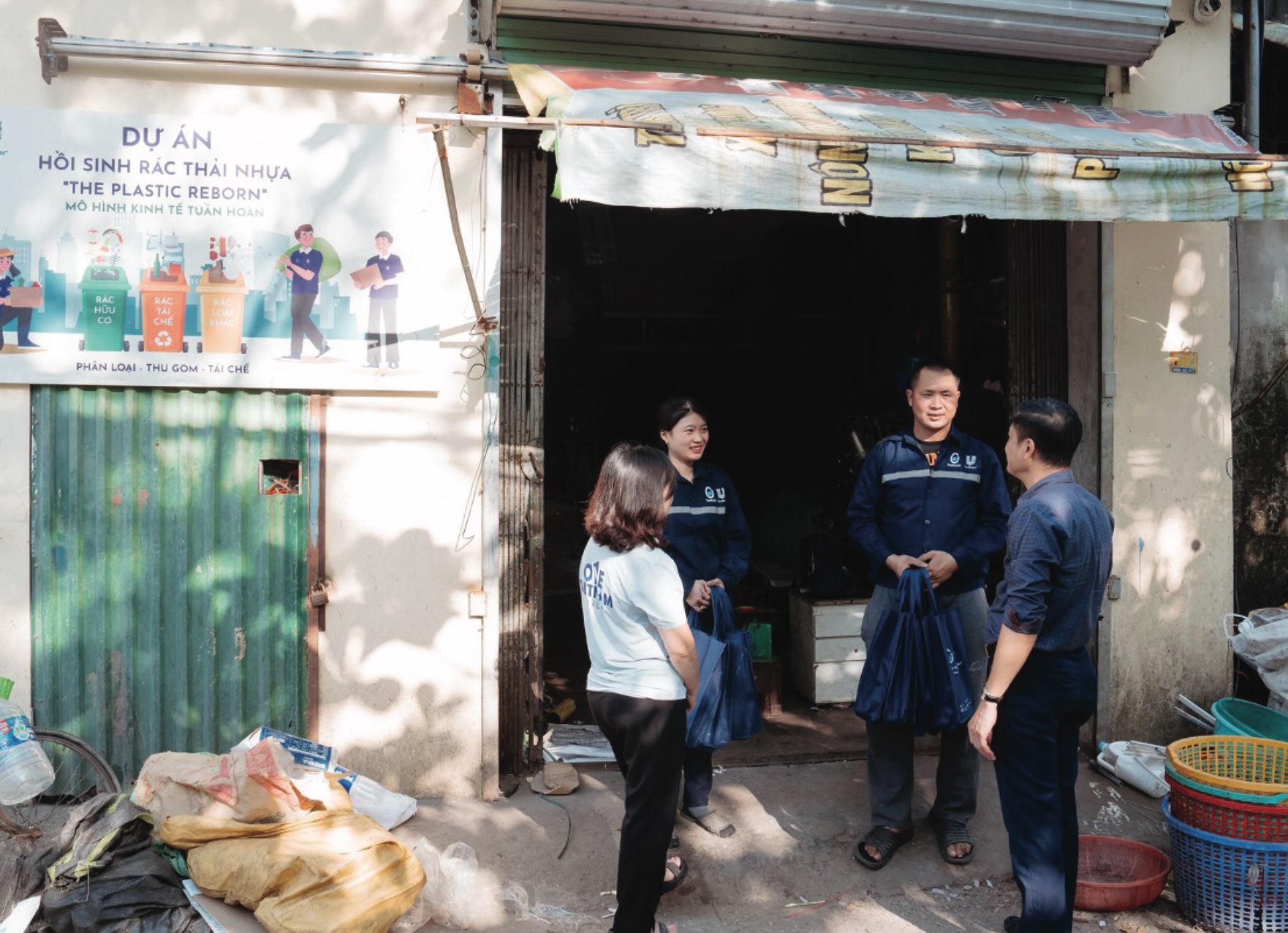
As the circular economy gains traction as a future model, a working version has long existed in Vietnam. Informal scrap collectors handle most recyclable materials but remain outside policy frameworks and value sharing. A circular system operating off the books In theory, a circular economy turns waste into production inputs, reducing resource use and emissions. In practice, Vietnam has operated a similar system for decades without formally recognizing it. A 2022 report by the World Wide Fund for Nature estimates that Vietnam generates about 0.89 million tons of sorted plastic waste for recycling each year, or roughly 30% of total output. About two-thirds is collected by informal workers—scrap pickers and waste buyers. Most material flows are therefore driven by a self-organized network rather than formal systems. The chain runs from collectors to intermediaries, sanitation cooperatives, aggregation points and recycling plants, forming a largely complete system despite the lack of formal planning. At the operational project level, “The Plastic Reborn,” run by Unilever and VietCycle between 2021 and 2025 in Hanoi and HCMC, collected and recycled more than 40,494 tons of plastic. It linked around 200 collection points and supported about 3,000 informal workers, showing the system can scale with the […]
Informal but indispensable
By Truong Thi Thu Huong (*)