HCMC – The Ministry of Industry and Trade has drafted multiple response scenarios to secure fuel supply and stabilize the domestic market as escalating conflict in the Middle East drives up global oil prices.
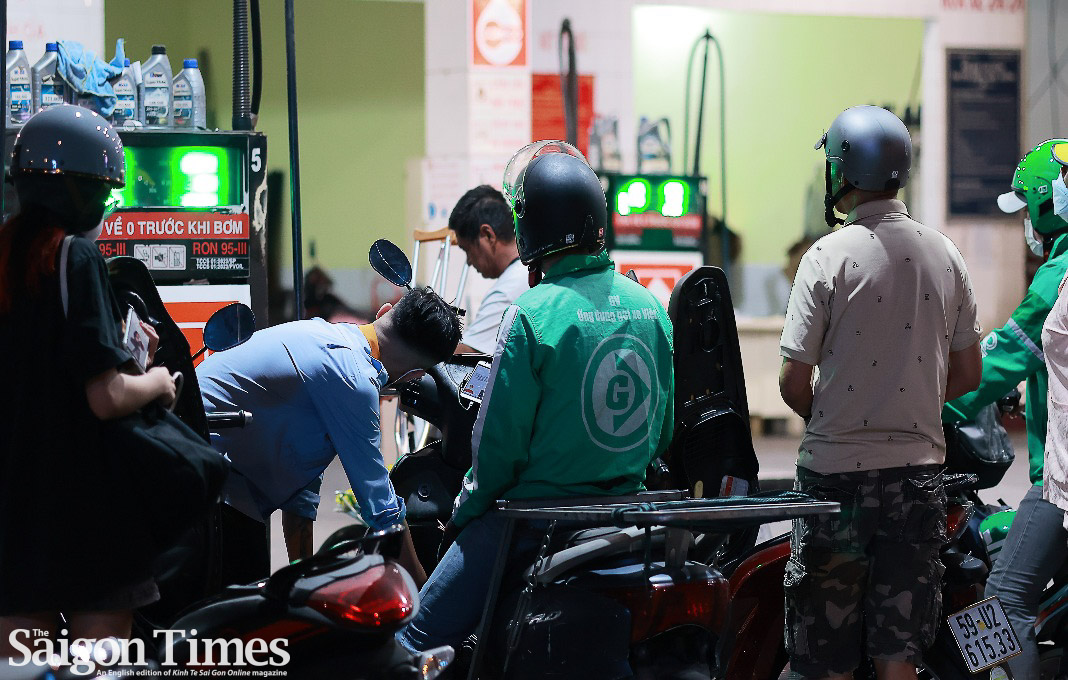
Retail fuel prices rose sharply in the adjustment today, March 5. E5 RON92 increased by VND1,926 per liter to VND21,449 per liter, while RON95-III rose by VND2,189 to VND22,340 per liter.
Diesel climbed by VND3,758 to VND23,037 per liter. Kerosene recorded the largest increase, up VND7,132 to VND26,601 per liter. Heavy oil picked up by VND1,807 to VND17,496 per kilogram.
The ministry convened emergency meetings with the Nghi Son and Binh Son refineries, major fuel wholesalers and the Vietnam Oil and Gas Group (PVN) days after the fighting broke out, Tran Huu Linh, director of the Agency for Domestic Market Surveillance and Development, was quoted by the Vietnam News Agency as saying.
Proposals have been reported to the Government and are expected to be submitted to the prime minister. The ministry will monitor global supply and price movements and take timely action, Linh said.
Authorities will step up inspections of fuel imports, exports, inventories and distribution. Wholesalers have been ordered to meet their assigned minimum fuel supply quotas for 2026 and comply with reserve requirements to ensure sufficient supply for the distribution system.
Market surveillance forces and local industry and trade departments have been instructed to tighten oversight of retail outlets and prevent hoarding or unreasonable price increases.
The ministry is working with relevant authorities, including the Ministry of Finance, to develop price stabilization measures under different scenarios, ranging from a quick de-escalation to prolonged supply disruptions. Use of the fuel price stabilization fund is being considered in a worst-case scenario.
Domestic refineries have been asked to maintain stable operations and fulfill contracted volumes. They were also urged to diversify crude oil imports, including sourcing outside the Middle East.
Fuel wholesalers and distributors must avoid supply disruptions across their systems and ensure continuous sales at retail stations. Linh emphasized the need to share supply and profits within distribution networks to maintain market stability.
The ministry has proposed issuing a new decree to replace the current fuel trading regulations. It also plans to seek coordination with the Ministry of Finance, the Ministry of Science and Technology, and the State Bank of Vietnam on fuel price management.
The State Bank of Vietnam and provincial authorities have been urged to prioritize foreign currency and credit access for fuel producers and traders to facilitate crude oil and fuel imports.