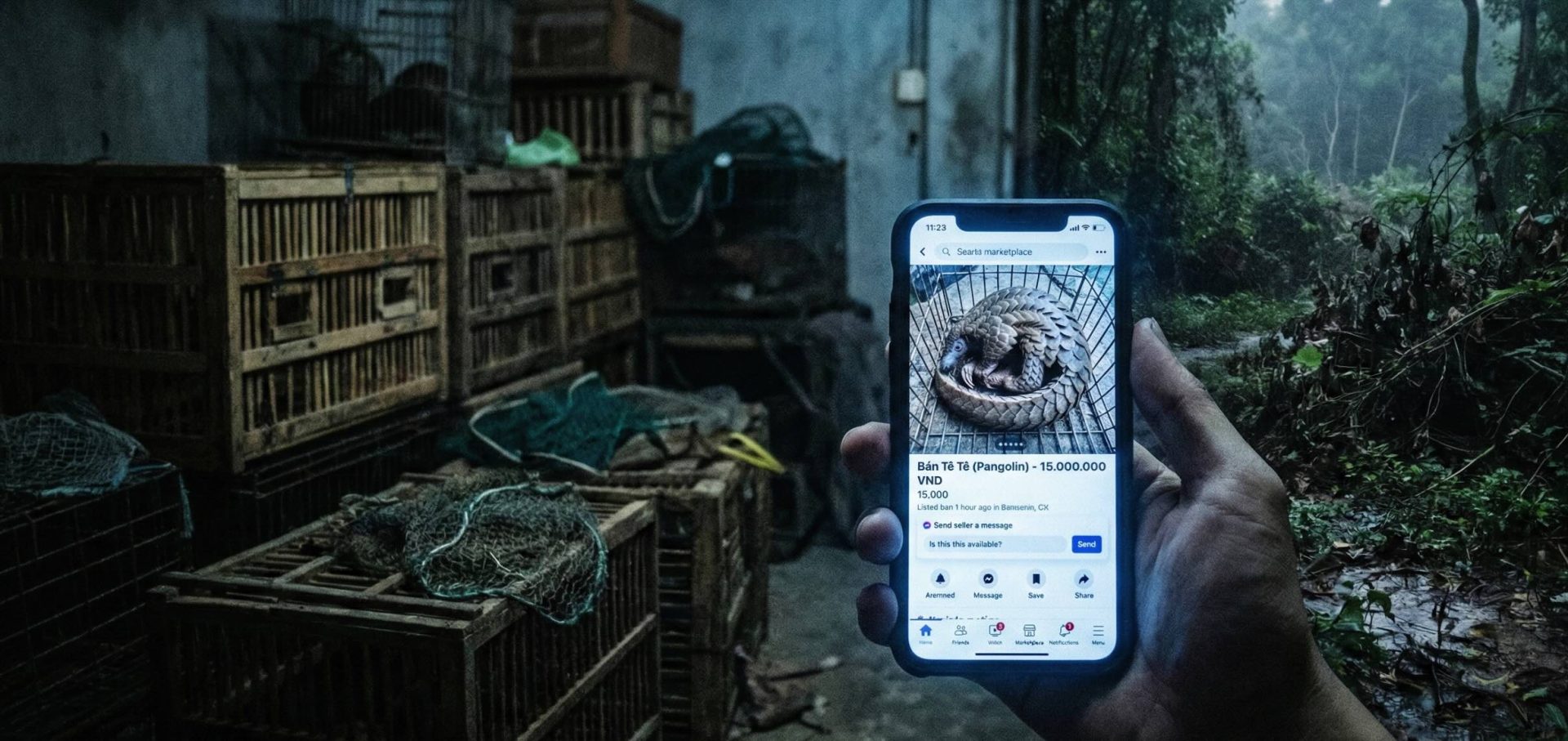
Illegal wildlife trade has always been quick to adapt. What is new is not the crime itself, but the arena in which it now thrives. An underground market in plain sight From closed Facebook groups to encrypted messaging apps, wildlife trafficking has firmly migrated into the digital sphere. What was once a clandestine, physical trade has evolved into a market operating discreetly across public online infrastructure. This transformation raises a deeper question: beyond enforcing individual violations, who holds responsibility in a platform-driven economy? And more urgently, who bears the ultimate social cost? The old image of wildlife trafficking—shadowy transport runs and hidden warehouses—is increasingly obsolete. Today, much of the advertising, brokering, and buyer–seller matchmaking unfolds online, through anonymous accounts, private groups, and mainstream social networks, most prominently Facebook. According to data from Education for Nature–Vietnam (ENV), a science and technology organization focused on wildlife conservation, the first nine months of 2025 saw 1,274 cases of illegal wildlife advertising and trading detected online. These accounted for 53% of all recorded wildlife violations during the period. Dozens of groups—some with memberships in the hundreds of thousands—were identified and dismantled. The scale is striking. Advertisements tied to these cases involved 279,558 individual animals, […]
When wildlife goes online
By Hong Van