
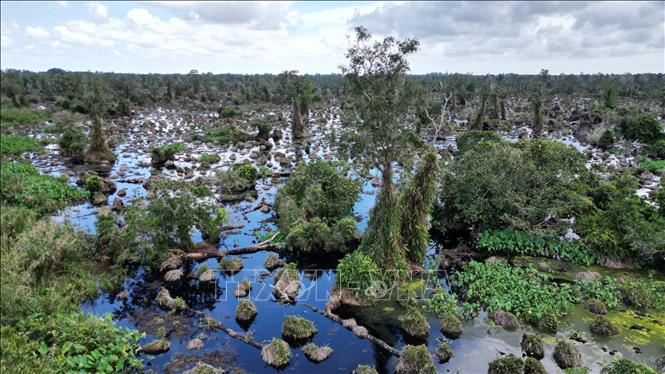
HCMC – Hundreds of hectares of melaleuca forest in U Minh Ha National Park in the Mekong Delta province of Ca Mau are showing signs of severe decline, raising concerns about a potential shift in the area’s natural ecosystem if timely restoration measures are not taken.
According to the park’s management board, between 200 and 300 hectares of forest have been affected, mainly in subzones 1 and 4. Large numbers of native melaleuca trees have collapsed as they reach advanced age, while low-lying areas that remain inundated for more than six months a year have experienced particularly severe impacts.
Park officials said one of the underlying causes is the presence of so-called “red water” created by dissolved peat soils. The water reduces light penetration, limiting photosynthesis for young melaleuca trees and hindering natural regeneration. During the dry season, peat layers beneath the forest floor become loose and lose cohesion, making mature trees more vulnerable to falling.
The warning comes as U Minh Ha National Park, one of the three core zones of the Ca Mau Cape World Biosphere Reserve, faces increasingly complex natural ecological changes. The park’s waterlogged peatland melaleuca forest ecosystem plays a crucial role in conserving biodiversity in the Mekong Delta.
As forested areas gradually give way to grasses, sedges, reeds, and ferns, park authorities have called on relevant agencies to develop solutions to better regulate water levels and work with national research institutions to conduct a comprehensive assessment of peatland and forest degradation.
Maintaining ecological balance in the park remains a major challenge because it is a strictly protected primary forest where human intervention is highly restricted. As a result, natural ecological processes are gradually altering the forest’s structure.
To address the problem, water management and hydrological engineering measures are being considered top priorities. At the same time, the national park is strengthening patrols, monitoring activities, and public awareness campaigns, while encouraging residents in surrounding buffer zones to adopt more sustainable agricultural and livestock production models to reduce pressure on protected areas and support biodiversity conservation.
U Minh Ha is home to more than 100 plant species and nearly 200 animal species, including a number of rare birds and mammals listed in Vietnam’s Red Data Book. Conservation efforts remain a central mission of the park, supported by strict management regulations aimed at safeguarding one of the Mekong Delta’s most valuable wetland forest ecosystems.







