
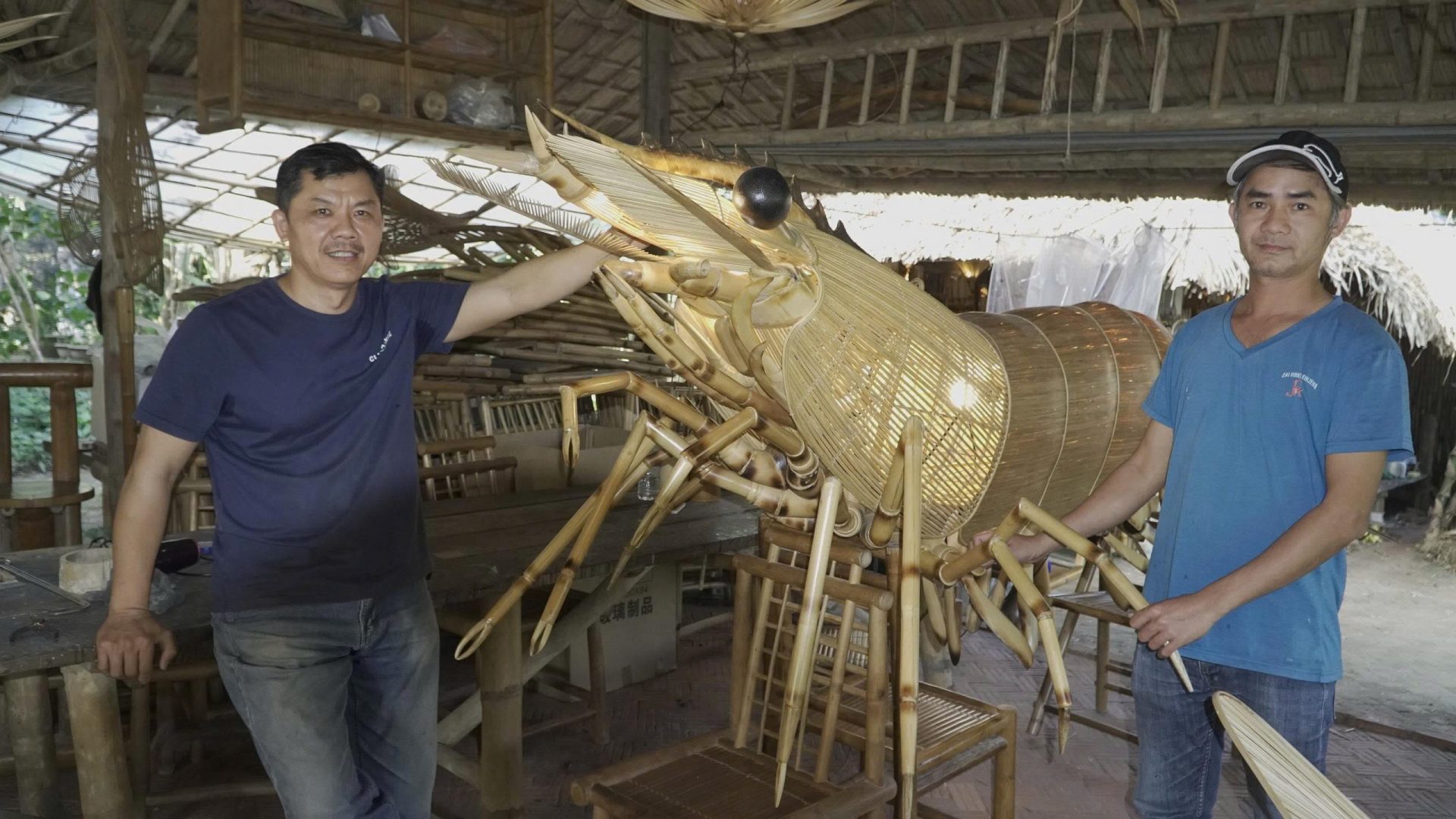
From microscopic insects to towering monumental models, the journey of artisan Vo Tan Tan at Taboo Workshop in Hoi An Dong Ward, Danang City is more than just a transition of raw bamboo into contemporary sculpture. It is a strategic endeavor to anchor the Vietnamese handicraft brand on the global tourism map.
In the emerald heart of Cam Thanh’s water coconut forest, where winter breezes weave through fronds and sunlight scatters shifting patterns across the ground, Vo Tan Tan’s workshop rises as a living museum of ingenuity. The rhythmic click of chisels and the nostalgic, earthy scent of treated bamboo fill the air. For Tan, bamboo is never a mere material—it is a vessel of spirit. Each culm conceals a latent soul, waiting for the patience and vision of a craftsman to awaken it.
A symphony of rough, sturdy bamboo stalks
Bamboo is woven into the very fabric of Vietnamese identity, a companion from the dawn of the nation to the simplest household objects. Yet, elevating this kind of grass to the heights of figurative art is a grueling odyssey. Tan believes that if a craftsman invests both heart and patience, they can coax the rigid material into any form imaginable, no matter how lifelike.
The genesis of a masterpiece, whether a tiny ant or a complex structural model, begins with a rigorous selection process. Not every stalk is destined for art. The artisan must trek to find bamboo of the perfect maturity. It is dense enough to withstand meticulous carving, yet supple enough to be molded. This is followed by a treatment process to ensure durability against harsh humidity and render it entirely immune to pests.
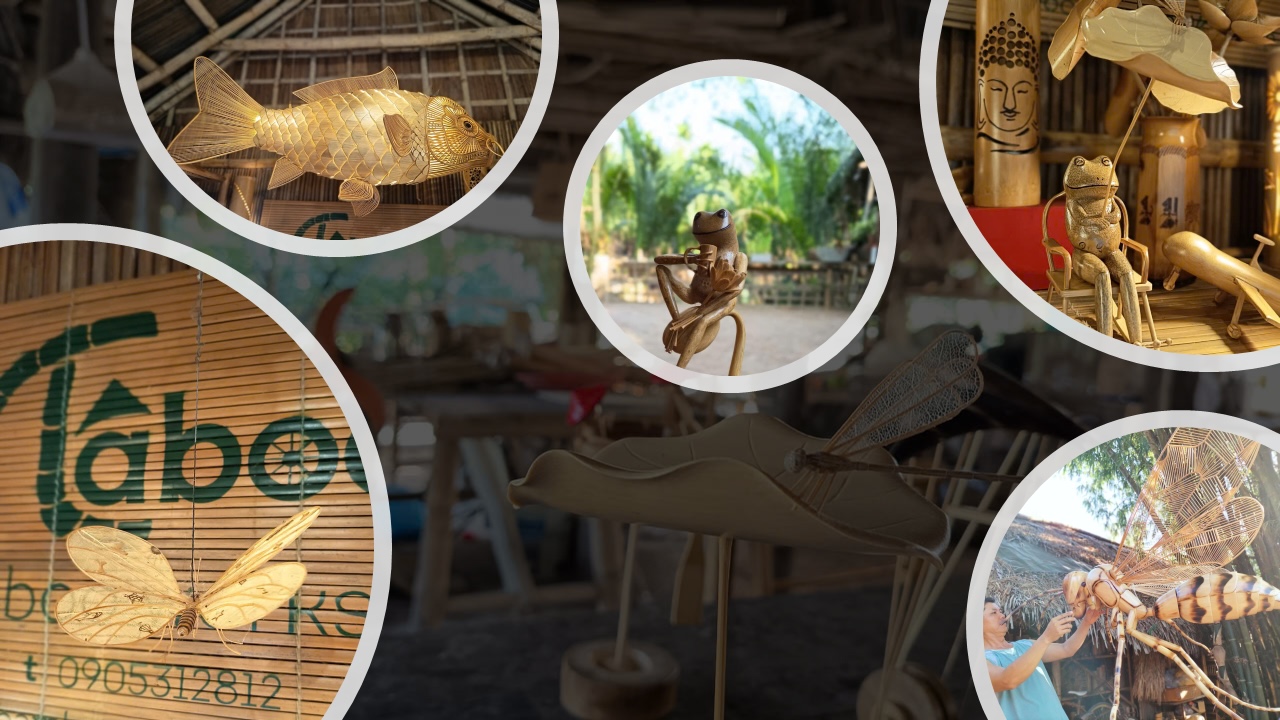
The fabrication phase is where a craftsman’s resolve is truly tested. Shaping requires precision down to the millimeter. Tan maintains that a single errant cut or an overzealous stroke can cause the soul of the creature to vanish instantly. It is a silent dialogue between man and material, where haste has no place.
The philosophy of the living spirit and the art of the invisible
The core distinction of Tan’s works lies in his ability to capture the vital spirit and kinesis of the animal kingdom. To achieve this, Tan and his team do not merely work with their hands; they work with the keen, clinical eyes of naturalists.
Every piece is the result of exhaustive observation, analyzing the minutest gestures of creatures in their natural habitats. Tan posits that every species possesses a distinct personality. An ant must exude industry through its posture. A grasshopper must embody freedom in the delicate span of its wings. A crab must project power through the curve of its pincers.
This philosophy ensures that these bamboo sculptures are never static. They are so vivid that international visitors often pause, captivated, finding it hard to believe these are entirely handcrafted from wood. This synergy between artistic intuition and material properties creates truly desirable objects. Most remarkably, Tan has perfected a technique of invisible joinery. Intricately assembled pieces leave no trace of seams or adhesives, making the sculptures appear as though they were miraculously conjured by nature itself.
Ellisa, a visitor from Austria, shares her fascination. The artisans there are true visionaries, she said, adding that they create unique products that breathe with the life of the village. Every detail is exquisite yet remains functional. Taking home a piece of Vietnamese bamboo she has helped create is the most meaningful souvenir she could bring back.
The big ambition of the craftsman
Tan’s conquest of the material does not stop at the creatures hidden in the undergrowth. His workshop is also the birthplace of monumental works, towering icons such as giant mantises, fish, and dragons stretching several meters in length.
Creating these giants is not a simple matter of mechanical scaling. It is a formidable structural engineering puzzle and a test of load-bearing capacity. For these massive installations, the craftsman must calculate a bamboo skeleton robust enough to support significant weight while maintaining the sculpture’s fluid, ethereal lines.
Even at this grand scale, Tan’s standard of invisibility remains absolute. A visitor will find no iron nails or unsightly glue marks on these colossal forms. While they have yet to be officially inscribed in the Guinness World Records, their sheer scale and sophistication can, to some extent, represent a record of human endurance and creativity in the eyes of the global community.
Deborah Craco, a visitor from Canada, said: “In my country, bamboo is rare and usually only seen as simple baskets. But seeing these massive, lifelike creatures is breathtaking. The precision of the joinery is so perfect that the pieces feel magically connected. It defies belief.”
For Vo Tan Tan, bamboo craft is more than personal passion or ancestral heritage. Every piece carried home by a traveler acts as a cultural ambassador, telling the story of Vietnamese innovation and the sophistication of its village artisans.
As the world pivots toward sustainable materials and eco-conscious consumption, Tan’s art has elevated bamboo’s aesthetic value, broadcasting a powerful message of green living. From the smallest insect to the most formidable giant, these bamboo entities are steadily defining Vietnam’s brand of unique handicraft.
The versatility of bamboo, interpreted through Tan’s vision, has opened a new trajectory for traditional craft villages. It is no longer just about preservation; it is about elevating indigenous resources to a high level of intellectual and aesthetic value. From the quiet groves of Cam Thanh, these bamboo masterpieces have emerged as a beacon on the Danang-Hoi An tourism map, igniting a flame of creativity and aspiration among a new generation of local artisans.
As these bamboo spirits silently but powerfully spread traditional values, they confirm one truth: the value of natural materials is infinite, provided we approach them with an infinite heart.