
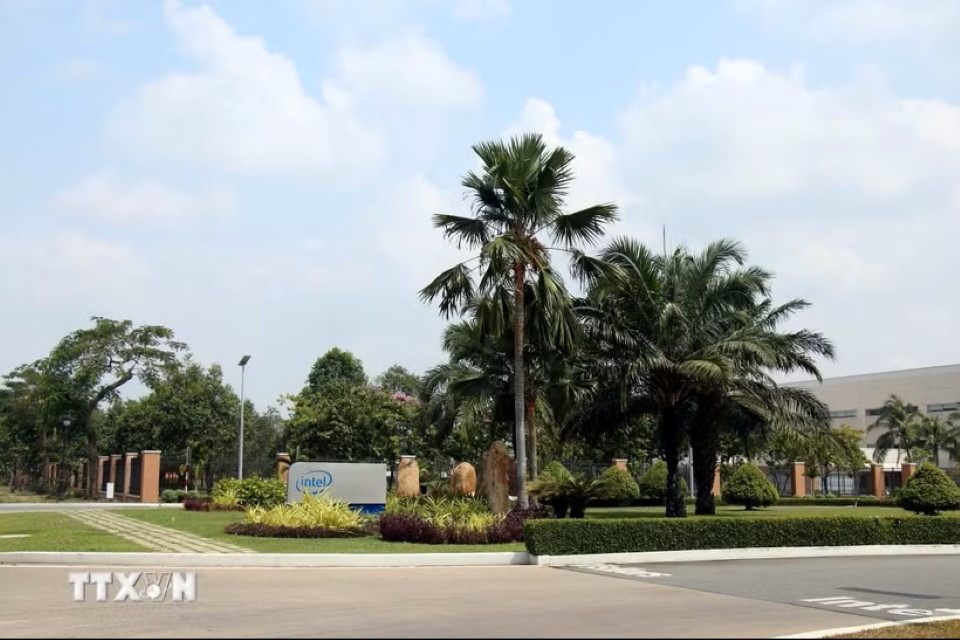
HCMC – The prime minister has approved the expansion of the Saigon Hi-Tech Park (SHTP) by an additional 194.84 hectares in Long Phuoc Ward, HCMC to support digital infrastructure, smart technologies, environmentally friendly development and a goal of achieving carbon neutrality before 2050.
The expansion area is expected to serve as a core component of the innovation ecosystem within eastern HCMC’s interactive innovation urban area. It will focus on scientific research, the development of strategic technologies and pilot-scale manufacturing in four key sectors, including microelectronics and information technology, automation, biotechnology and advanced materials.
The new zone will also function as a regulatory sandbox for testing emerging technologies, products and high-tech policy initiatives under controlled conditions. The HCMC government has been tasked with preparing zoning and detailed development plans, while arranging funding and human resources to build synchronized technical infrastructure for the project.
The expansion and a new operating framework for the SHTP were formalized under Decision No. 1061/QD-TTg recently issued by the prime minister. The new regulations replace a legal framework that has been in place since 2002, establishing updated standards for investment, construction and state management across both the existing park and the newly added area.
The move comes as land available for high-tech projects within the existing park is nearing full occupancy, creating pressure for additional space to accommodate investment from multinational corporations seeking new production and research locations.
A notable feature of the expansion is the incorporation of a carbon-neutrality target into the development framework. The requirement reflects Vietnam’s broader commitment to achieving net-zero emissions by 2050 and signals a shift toward embedding sustainability objectives directly into infrastructure planning and investment attraction strategies.
Under the new orientation, green design standards, smart-city development principles and integrated digital infrastructure are expected to favor knowledge-intensive and technology-driven investments while discouraging low-value, energy-intensive manufacturing projects.







