
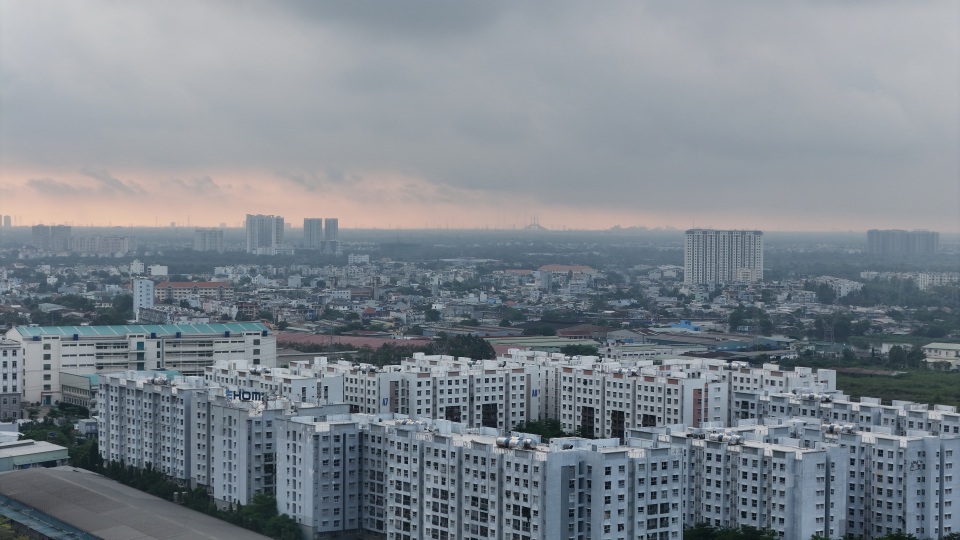
HCMC – In addition to a government-funded plan to develop 50,000 social housing units for rent between 2026 and 2030, HCMC has received investment registrations from major private developers and state-owned entities for more than 99,000 additional rental apartments.
The sharp increase in rental housing supply marks a new strategic priority for the city as it seeks to ease housing pressures for workers and low- to middle-income residents, shifting its focus beyond homeownership support programs that have dominated housing policy in recent years.
To mobilize investment, the city has proposed three groups of breakthrough mechanisms covering land allocation, financing and project development management. Specifically, HCMC has requested authority to directly appoint investors for public land plots that conform to approved planning without requiring auctions or bidding procedures. It has also proposed land-use fee exemptions or reductions during the first five to 10 years of operation, interest rate support of 2-3 percentage points below prevailing market rates, and greater flexibility in converting between different housing categories.
After completing only 17,902 social housing units during the 2021–2025 period, the city aims to develop around 27,000 units in 2026 alone as part of efforts to address housing demand estimated at one million apartments under its housing development program through 2030.
The proposals were presented at a meeting last weekend between Prime Minister Le Minh Hung and the Standing Committee of the HCMC Party Committee. At the meeting, the PM instructed the city to make proactive use of state capital in the short term while pursuing stronger policies to attract private investment over the longer term. He also encouraged HCMC to propose innovative mechanisms and practical solutions not yet covered by existing regulations in order to strengthen its role as the country’s economic engine.
The policy shift reflects a more pragmatic approach to housing challenges amid rapid urbanization. For years, housing policies have largely centered on homeownership, a goal that remains beyond the financial reach of many factory workers, young professionals and migrant laborers. As the gap between housing prices and incomes continues to widen, expanding the rental housing market is increasingly viewed as a more realistic way to improve access to affordable accommodation.
The strong response from private investors, with nearly 100,000 rental units already registered for development, suggests that a clear policy direction combined with land and financial support could help transform the segment into a sustainable and attractive investment market rather than one reliant primarily on public funding.
Responding to the city’s proposals, the Ministry of Construction said the basic legal framework for social and rental housing development has already been established under Decree No. 192/2025/ND-CP, Decree No. 95/2024/ND-CP, and Resolution No. 201 of the National Assembly. The ministry is continuing to study additional incentives, including tax and interest-rate support measures for both investors and tenants.