
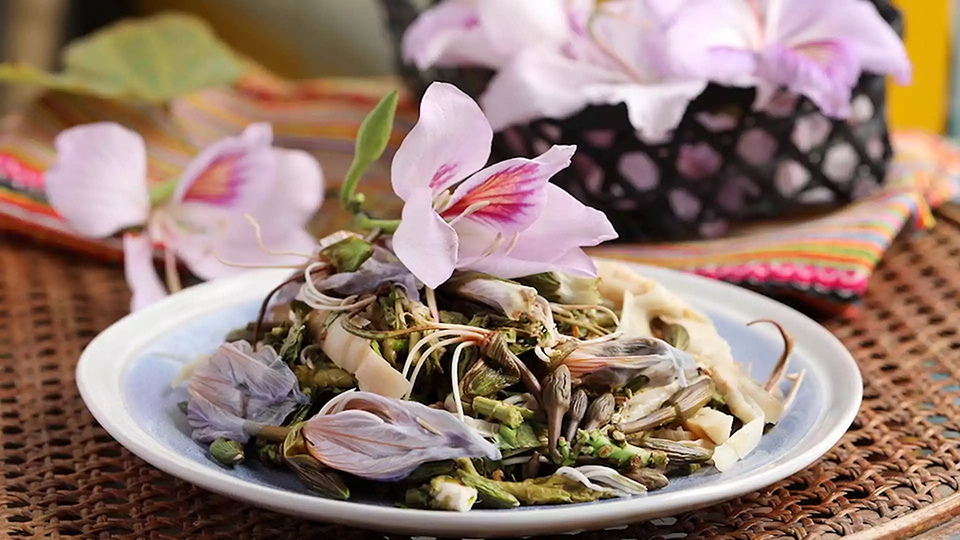
Ban flower salad, a seasonal specialty of the Thai ethnic community in Vietnam’s northwest region, is known for its blend of sour, spicy, bitter, sweet, and nutty flavors. The dish appears only once a year, when ban flowers bloom across the mountains in late February of the lunar calendar.
The salad has become one of the region’s most distinctive dishes. Although simple to prepare, it requires careful seasoning to achieve its characteristic flavor. The main ingredient of the dish is ban flowers (scientifically known as Bauhinia variegata), a symbol of the northwest that typically blooms after peach and plum blossoms fade.
The flowers are cleaned, briefly boiled, and then mixed with traditional ingredients such as ginger, galangal, young garlic, herbs, and mắc khén — a forest spice central to Thai cuisine. In some areas, cooks add young pumpkin shoots or chayote leav es to enhance the salad’s texture and aroma. After all ingredients are combined, the mixture is left to rest for 15–20 minutes so the flavors can develop.
For generations, dishes made from ban flowers have been passed down in Thai households and are now served in restaurants catering to visitors. With its short harvest season and reliance on wild blooms, ban flower salad has become a unique culinary marker of northwest Vietnam.







