As HCMC leads the BPI rankings thanks to its strengths in manufacturing, logistics and innovation, domestic firms such as Tan Hiep Phat Beverage Group are also expanding investment, building broader business ecosystems and taking a more active role in improving the business environment, reflecting rising expectations from the private sector for long-term growth and stronger national competitiveness.
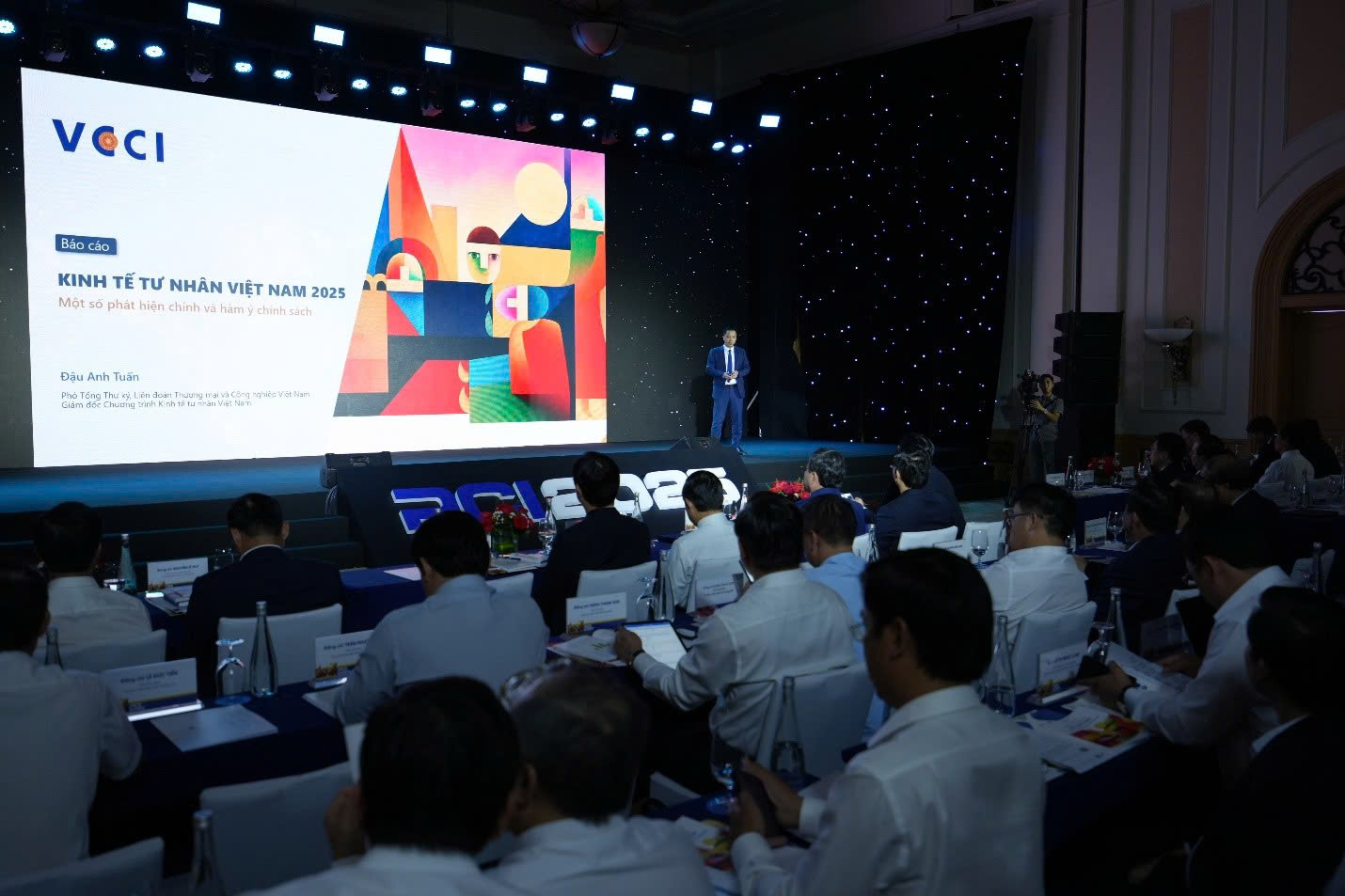
The Vietnam Chamber of Commerce and Industry (VCCI) on May 15 in Hanoi released the 2025 Vietnam Private Sector Report and the 2025 Provincial Competitiveness Index (PCI 2025). The event also marked the debut of the Business Performance Index (BPI) and the launch of PCI 2.0 after 21 years, expanding the focus from the business environment to the private sector’s growth capacity.
From “business environment” to “business vitality”
After more than 20 years as Vietnam’s benchmark for provincial economic governance, PCI 2025 marks a shift in VCCI’s approach. While PCI has traditionally measured transparency, administrative efficiency and the ease of doing business, VCCI this year introduced the Business Performance Index (BPI) to assess the private sector’s actual growth capacity and market performance.
Rather than focusing solely on whether the business environment is favorable, BPI looks deeper into how businesses grow through indicators such as expansion, operational efficiency, innovation and supply chain participation.
“A good business environment should not be measured solely by the speed of licensing procedures, but by whether businesses can survive, generate profits and move up the value chain,” VCCI Chairman Ho Sy Hung said at the report launch.
The shift comes as the private sector plays an increasingly important role in Vietnam’s economy. According to PCI 2025 data, Vietnam now has more than 1 million enterprises and about 6.1 million household businesses, generating around 26 million jobs, or more than half of total national employment.
According to the results, HCMC topped the 2025 BPI rankings with 5.67 points, followed by Hanoi and Quang Ninh. VCCI attributed the city’s advantage to the depth of its business ecosystem, where private firms show stronger participation in value chains and greater market adaptability than the national average.
HCMC also has the country’s highest business density and a more developed ecosystem in finance, logistics and technology than most other localities. Its ability to connect supply chains is particularly strong in manufacturing, trade and high value services.
Following the merger with Binh Duong and Ba Ria-Vung Tau, the city’s strengths are expected to extend beyond consumption and services, as it increasingly emerges as a larger manufacturing, industrial and logistics hub. This could create more room for private enterprises to move deeper into production and service value chains in the coming years.
Improving business environment as a shared responsibility
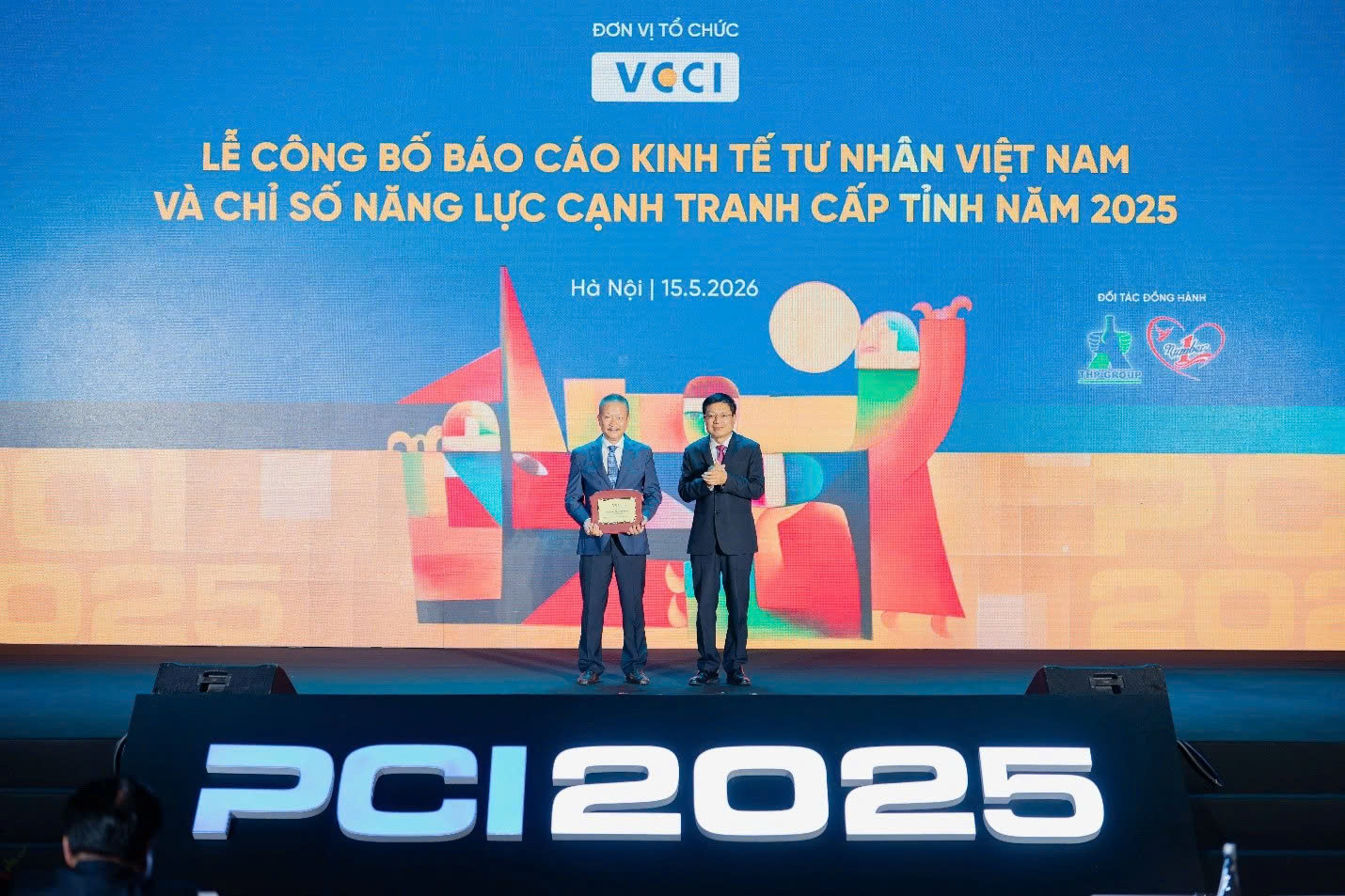
Another notable aspect of PCI 2025 was the participation of a purely Vietnamese company like Tan Hiep Phat as a partner of the program for the first time after international sponsors withdrew their funding.
According to Nguyen Duy Hung, board member of Tan Hiep Phat, the company’s involvement was not simply about supporting a research initiative, but reflected how businesses increasingly view the business environment as a matter of shared responsibility.
“When international sponsors stopped funding the Provincial Competitiveness Index report, we thought very simply: if this is a program that benefits Vietnamese businesses and Vietnam’s business environment, then Vietnamese businesses should have the responsibility to support it,” Hung said.
“That is not sponsorship. It is a responsibility rooted in self reliance and self strengthening,” he added.
As competition intensifies, factors such as policy stability, administrative efficiency and the quality of implementation are having a growing impact on businesses’ ability to invest and expand over the long term. In that context, the Vietnam Private Sector Report and PCI no longer simply reflect the state of the business environment, but also help identify bottlenecks, assess reform effectiveness and promote better governance practices across localities.
The shift also suggests that the private sector is becoming more mature, focusing not only on short term growth but increasingly on policy consistency and the long term quality of the business environment.
“Our contribution may be small, but we believe that when placed in the right context, even a small contribution can create significant value,” Hung said. “With VCCI’s experience, capacity and credibility built over the past two decades, this report can contribute meaningfully to institutional reform, administrative improvements and the development of Vietnam’s private sector.”
Tan Hiep Phat and broader role of private sector growth
One of the key messages from BPI 2025 is that the strength of Vietnam’s private sector can no longer be measured solely by the number of businesses, but by the emergence of companies capable of leading value chains and generating wider economic impact.
As competition increasingly shifts toward supply chains and business ecosystems, experts say Vietnam needs more domestic enterprises able to connect raw material regions, suppliers, logistics and distribution networks. From that perspective, Hung of Tan Hiep Phat said the true strength of a corporation lies not in its size or revenue, but in its ability to build a value chain that allows the broader ecosystem to grow together.
“There is no other way than creating enough shared value for all stakeholders to stay committed for the long term,” he said.
Based on the company’s operations, Tan Hiep Phat has built its growth model not only around expanding production and market share, but also around linking raw material regions, suppliers, logistics partners and distribution networks. According to the company, around 60–70% of its revenue is spent domestically, supporting nearly 4,000 direct jobs and tens of thousands of indirect jobs across its broader ecosystem.
After more than 30 years of development, the company has established four major production complexes nationwide and continues to reinvest to expand capacity. In 2026, Tan Hiep Phat plans to invest an additional US$100 million in new factories equipped with advanced technologies.
The investment reflects not only the company’s expansion plans, but also its ambition to strengthen linkages across raw material regions, suppliers, logistics and distribution networks, helping create new momentum for the private sector. It also signals the company’s confidence in the domestic market, the industrial potential of southern Vietnam and expectations for continued improvements in the business environment.
For such long-term investments to deliver positive results, the quality of the business environment and the effectiveness of policy implementation will become increasingly important. Businesses are more likely to commit to long-term expansion when policies are stable and predictable. Factors such as administrative efficiency, transparency and consistency in implementation across localities are playing a growing role in decisions on reinvestment and value chain expansion.
As Vietnam’s southern economic space expands following recent administrative mergers, and with continued efforts in institutional reform alongside stronger collaboration between businesses and authorities, HCMC is expected to further strengthen its role as the country’s manufacturing, logistics and innovation hub, creating more room for the private sector to grow in the years ahead.