
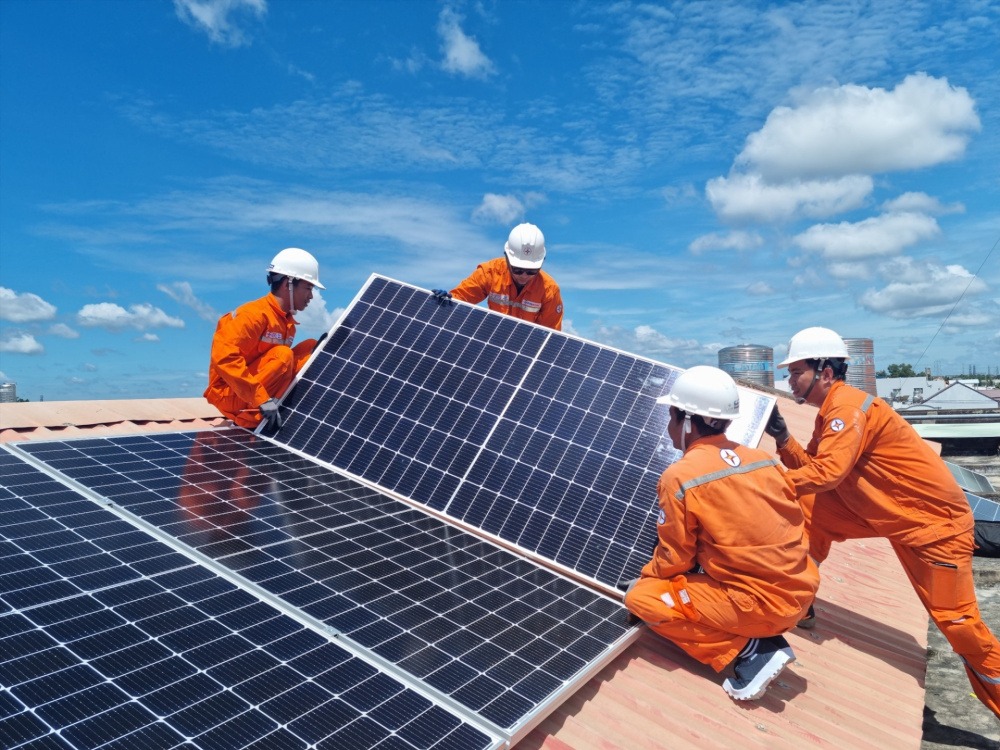
HCMC – HCMC is stepping up efforts to expand rooftop solar installations as electricity demand rises and authorities seek to reduce emissions and strengthen energy security.
In a recently approved plan, HCMC aims for around 10% of government offices and 10% of households to install self-produced, self-consumed rooftop solar systems each year. The target would account for roughly 20% of the total rooftop solar capacity planned for installation during the 2026-2030 period.
The move comes as Vietnam’s largest economic hub faces growing pressure on electricity supply, particularly during peak hot-weather periods when power consumption surges.
According to HCMC Power Corporation (EVNHCMC), the city currently has 23,669 grid-connected rooftop solar systems with a combined capacity of about 1,864.6 megawatt-peak (MWp). Most installations belong to households and individual customers, while businesses, factories and shopping centers account for the remainder.
Large retailers have emerged as key adopters of rooftop solar technology. Central Retail Vietnam said it has installed solar systems at 32 GO! and mini go! shopping centers nationwide, reducing electricity consumption by an average of 14% and supplying roughly 30% of operating power needs at each site.
MM Mega Market Vietnam has deployed rooftop solar systems at 16 centers, helping cut an estimated 5,000 to 7,000 metric tons of carbon dioxide emissions annually. Saigon Co.op estimates that rooftop solar investments could save more than VND350 billion over 25 years while reducing annual emissions by around 5,000 tons.
Nearly 1,940 rooftop systems in the city have capacities of at least 100 kilowatt-peak, mainly serving manufacturing and commercial facilities. However, EVNHCMC said current deployment remains modest relative to the city’s solar potential, with HCMC receiving around 1,400 to 1,700 hours of sunshine each year.
Although rooftop solar systems are generally considered to offer a relatively short payback period of just over four years, wider adoption continues to face challenges, including high upfront investment costs, technical requirements and limited energy storage capacity.
The HCMC Renewable Energy Association has called for stronger policy support, including value added tax incentives, green financing with interest rates of around 5% to 6% per year, and simplified investment procedures to accelerate market growth.
Energy experts have also proposed time of use electricity pricing to encourage businesses to invest in energy storage systems. Such measures could help lower operating costs while improving on site energy self sufficiency.