
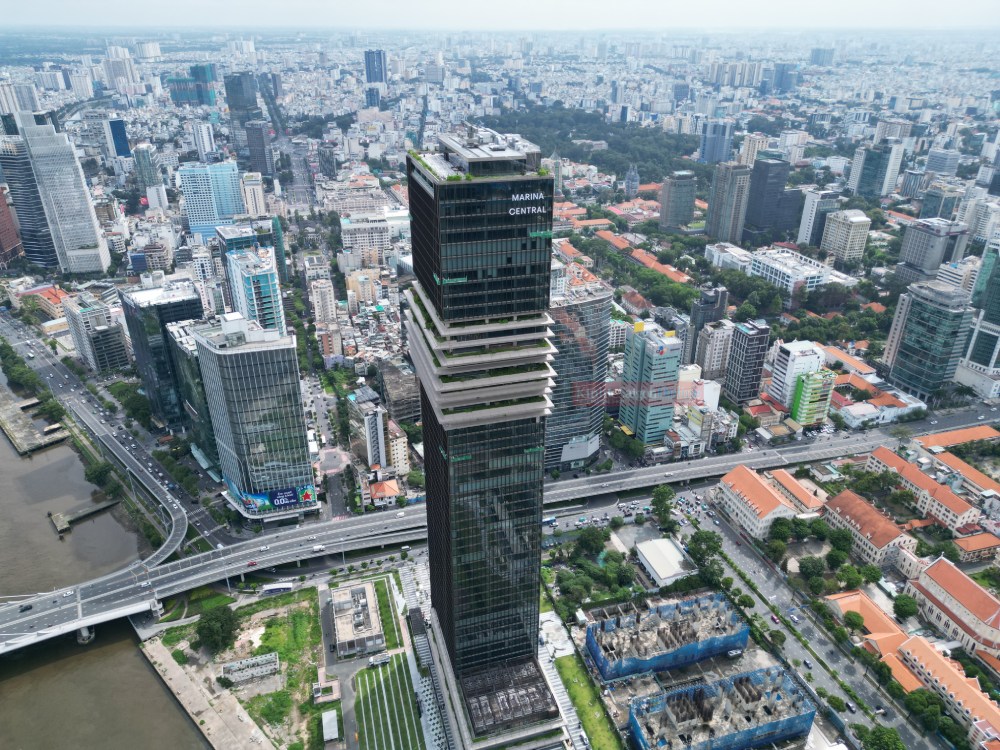
HCMC – Politburo Resolution No. 09-NQ/TW, issued on May 19, 2026, provides a comprehensive roadmap for HCMC’s development in the years ahead.
The resolution outlines broad solutions across growth reform, institutional improvement, infrastructure planning, and cultural and human development, aiming to position HCMC as a dynamic regional metropolis comparable to leading Asian cities.
Shifting toward a knowledge-based growth model
Resolution 09 positions HCMC at the forefront of transitioning to a growth model powered by the knowledge economy, digital transformation, and innovation. The private sector is described as a key growth driver, while the state sector is tasked with guiding and leading strategic industries.
The resolution prioritizes the development of the digital, green, circular, marine, and low altitude economies, with particular focus on four strategic technologies: artificial intelligence, semiconductors, biotechnology, and clean energy.
It also calls for the creation of a citywide data strategy to turn data into a core development resource, alongside plans for a next generation international financial center, a regional logistics hub, and free trade zones linked to seaports and cargo airports. In addition, the marine economy is expected to play a leading national role through investments in seaports, oil and gas, renewable energy, and high end coastal tourism.
Breakthroughs in institutional reform
One of the key priorities highlighted in the resolution is the drafting and enactment of a Special Urban Law. The document describes it as a “breakthrough of breakthroughs,” aimed at creating a superior and synchronized legal framework that would allow the city to fully unlock its potential and competitive advantages.
The resolution calls for extensive decentralization of authority to the HCMC People’s Council, People’s Committee, and the chairman of the People’s Committee in most areas, excluding defense, security, foreign affairs, and religion. It also gives the city greater autonomy to issue regulations addressing local realities, including issues not yet covered by central regulations.
In addition, HCMC would be allowed to test new policies through controlled sandbox mechanisms, introduce standards higher than national requirements, and selectively apply socialized services in certain stages of administrative procedures.
Century-long vision for climate adaptive urban development
The resolution calls for a comprehensive urban master plan with a 100-year vision based on a multi-center governance model integrating underground, green, river, marine, low altitude, and high altitude spaces, while urban development will follow a transit-oriented development (TOD) model linking the city center with riverside and coastal areas.
Infrastructure priorities under the resolution include completing the urban rail system, the Cai Mep Ha port complex, and the Can Gio international transshipment port, which is expected to enhance HCMC’s position as a key maritime gateway in the region. Major investments will also focus on large-scale flood prevention systems to tackle tidal flooding.
The city also plans to establish a regional development fund to strengthen connectivity with the Southeast, Mekong Delta, South Central Coast, and Central Highlands regions, with HCMC positioned as the central growth engine.
To support these ambitions, the resolution outlines a multi-layered resource mobilization strategy, encouraging the private sector to build nationally and regionally competitive corporations while selectively attracting foreign investment into high technology, modern governance, and projects with strong spillover effects and close linkages to the domestic economy.
HCMC will be granted greater autonomy to raise capital through municipal and infrastructure bonds, as well as more efficient use of land resources, while public private partnership models will be expanded in industrial and service infrastructure projects. The resolution also identifies remittances as a major potential source of funding that should be more systematically mobilized for socio economic development.
Enhancing quality of life
The resolution emphasizes the need to align new urban development with the renovation and upgrading of existing urban areas, particularly by accelerating the relocation of homes along canals, the renovation of old apartment buildings, and the expansion of social housing.
Green infrastructure, renewable energy, and environmentally friendly materials will be prioritized in the construction and operation of public transportation systems. The city will also invest in integrated water supply, drainage, flood control, wastewater treatment, and waste management systems in support of expanding urban green spaces and improving air quality.
The resolution affirms that cultural and human development is an inseparable foundation of sustainable growth. HCMC is expected to build a distinctive cultural identity while promoting the “Ho Chi Minh Cultural Space” in the spiritual life of residents. Cultural industries are also identified as a key economic sector with ambitions to reach regional and international markets.
In education, HCMC aims to become an internationally recognized training hub before 2030 through the development of smart schools and happy school models. The healthcare system will be modernized under a fair and multi tiered approach, with all residents entitled to free regular health checkups and the gradual establishment of lifetime electronic health records. In the longer term, the city aims to become a modern healthcare center for the ASEAN region.







