
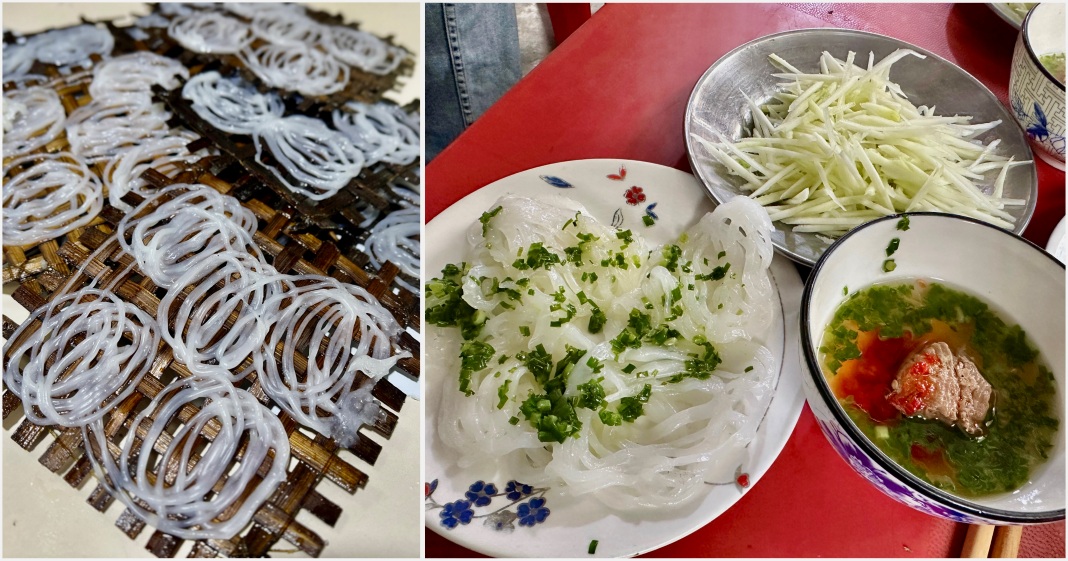
In Ninh Hoa Town, Khanh Hoa Province, bánh dây has been a part of community life for generations. However, as modern lifestyles evolve, only one household in Doc Let, a popular beach area in Ninh Hoa, continues to make the dish by hand: the family of Sau Phuong.
The name bánh dây refers to the noodle’s rope-like appearance. The dish is made from a mixture of rice flour and tapioca starch in a 2:1 ratio. The batter is thinned with water, then poured into a handmade cloth bag with small holes. The maker presses the dough through the cloth, pulling out thin strands onto bamboo trays before steaming them.
Once cooked, the cake turns a translucent white, similar to bánh canh or thick rice vermicelli. The steamed sheets are quickly lifted from the trays and placed on a plate, each brushed with scallion oil to prevent sticking.
The dish is served with a dipping sauce made from fish sauce mixed with tuna braising liquid. Thinly shredded green mango is added to offset the richness, and diners can mix in crushed chili for extra flavor.
Bánh dây is best served at room temperature when the noodles are at their perfect chewy texture. The tuna-based sauce, along with scallion oil and chili, adds depth without overpowering the simple ingredients.