In the hurried rhythm of the 21st century, people sometimes find themselves longing for a scent rather than a destination. Not the crafted notes of luxury perfume, but something warmer and more elemental — the sharp, pure scent of earth, rain and ancient forest.
That scent belongs to Tra My cinnamon, a prized botanical treasure once celebrated under the evocative title “Cao son ngoc que” (literally meaning the Jade cinnamon of the high mountains).
From legend to the living memory of the western mountains
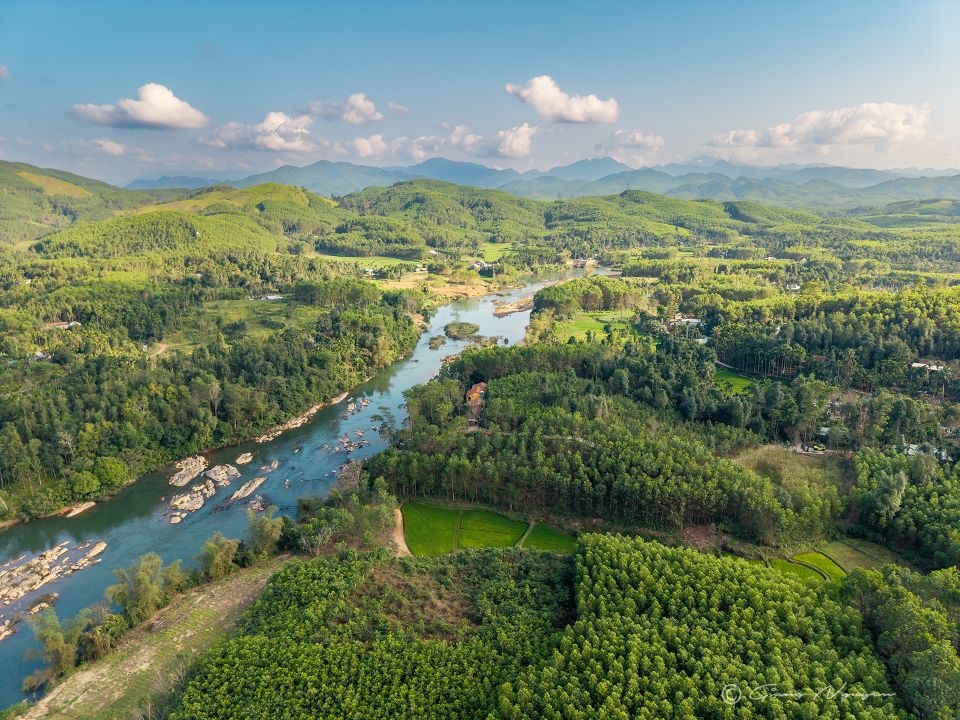
For centuries, the fragrance of Tra My cinnamon has been inseparable from life in the western uplands of Quang Nam, now part of Danang City. Here, cinnamon is more than a forest product. It has become a symbol of prosperity, resilience, and the enduring relationship between people and the land.
Among the Ca Dong, Xe Dang and M’Nong ethnic communities, cinnamon trees are regarded as a family treasure passed down through generations.
Local tradition reflects this bond in a quietly meaningful way: whenever a child is born, parents plant more cinnamon trees. Those groves grow alongside the children — becoming an inheritance, wedding gifts, future savings, and a source of stability for generations to come.
Beneath the canopy of old forests, cinnamon trees mature slowly, drawing strength from mountain soil and accumulating precious essential oils through years of rain and sunshine. Over time, they become not simply a crop, but part of a living cultural landscape.
The story of Tra My cinnamon extends far beyond the mountains.
During the 17th and 18th centuries, as Hoi An flourished as one of Southeast Asia’s most vibrant trading ports, this aromatic spice traveled on merchant vessels to overseas markets, gaining recognition far beyond central Vietnam.
Its prestige reached the imperial court as well. In 1835, Emperor Minh Mang ordered the image of the cinnamon tree to be engraved on one of the Nine Dynastic Urns (Cuu Dinh), bronze monuments that symbolize the nation’s geography, resources, and sovereignty. This inclusion elevated Tra My cinnamon beyond a regional specialty and placed it among Vietnam’s most esteemed medicinal and natural products.
The exceptional character of Tra My cinnamon begins with nature.
Growing at elevations from 500 to 1,500 meters, the trees thrive in nutrient-rich feralit soils and a mountain climate that fosters the development of intensely aromatic essential oils. Yet geography alone does not explain its reputation.
Equally important is the accumulated knowledge of local communities, including generations of experience in selecting planting areas, preserving seed quality, and cultivating cinnamon using natural methods.
Associate Professor Vo Van Minh, rector of the University of Science and Education under the University of Danang City, describes this relationship as central to the cinnamon’s identity.
“The value of Tra My cinnamon lies not only in its output but also in the cultural ecosystem built around it,” he said. “It reflects a reciprocal relationship between local communities and the forest. Preserving Tra My cinnamon means preserving a sustainable livelihood model in which indigenous knowledge remains essential to maintaining the purity of the cinnamon oil.”
That philosophy is visible in Tra Leng Commune, where residents have long avoided intensive extraction.
For local communities, forests are not simply economic assets — they are living spaces deserving of respect.
Chau Minh Nghia, chairman of the People’s Committee of Tra Leng Commune, said that cinnamon continues to serve as a link between generations.
“Maintaining seed gardens is not only about economics,” he said. “It is our way of preserving our ancestors’ legacy. Collaboration with scientists and businesses is helping local communities shift from resource extraction to value-based, sustainable development while protecting Tra My cinnamon’s unique genetic resources.”
A sustainable journey into the future
Today, Tra My cinnamon is finding new expression through hospitality, tourism and innovation.
At Furama Resort Danang, its distinctive fragrance has become part of the property’s identity over the past two decades.
Nguyen Duc Quynh, general director of Furama Resort Danang, said the idea emerged from a simple question: what scent best represents the spirit of central Vietnam?
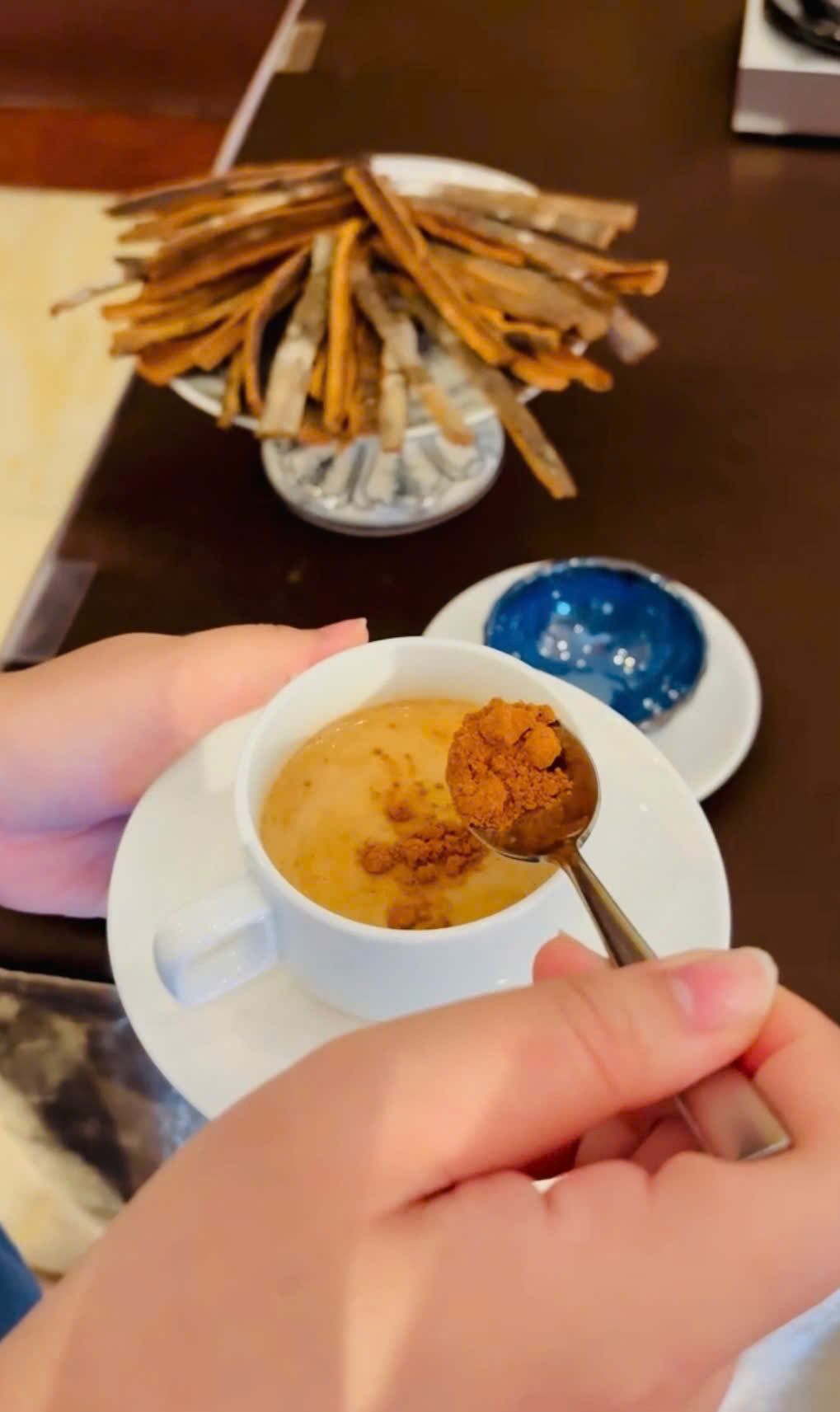
“The answer could only be Tra My cinnamon,” he said. “We wanted guests not only to smell cinnamon but to experience the heritage story behind it — from cinnamon essential oils in guestrooms and spas to details such as cinnamon sticks as coffee stirrers and opportunities for cultural immersion.”
Researchers also see broader potential in connecting tourism with heritage education.
Dr. Nguyen Thu Trang of the University of Science and Education at the University of Danang said that integrating premium hospitality with local cultural storytelling creates opportunities for deeper visitor engagement.
“When travelers understand the history and cultural significance of a fragrance, they become more than consumers — they become participants in preservation,” she said. “That is one of the core values of sustainable tourism.”
Tra My cinnamon’s future increasingly lies beyond raw bark and essential oils.
With advances in plant selection, cultivation techniques and extraction technologies, combined with experiential tourism models, the product is evolving into something larger — a living symbol of green development.
Sustainability here is not a slogan but a practice: transparent traceability, protected origins and livelihoods that allow farmers to remain rooted in tradition while benefiting from modern approaches.
Today, cinnamon gardens are becoming living laboratories and cultural spaces where visitors can experience the breath of the old forest firsthand.
Every cinnamon stick now carries more than aroma. It carries the mist of Tra Leng’s mountains, the care of local growers and the shared commitment of communities, researchers and businesses.
With its signature warmth and lingering sweetness, Tra My cinnamon embodies the spirit of central Vietnam — understated yet powerful, simple yet layered with depth.
In an increasingly uniform world, preserving a heritage fragrance like Tra My cinnamon has become a quiet statement of identity.
And like the cinnamon tree itself, which takes decades to mature, that journey demands patience, care and a long view toward the future.
So that one day Tra My cinnamon will be known not only as a treasured medicinal plant recorded in old texts but also as a living cultural legacy and a symbol of sustainable prosperity rising from the forests of the Truong Son range.