HCMC – A total of 22 provinces and cities have issued action plans under a national project on low-emission crop production for 2025–2035, with a vision to 2050 program, according to the latest update by the Ministry of Agriculture and Environment.
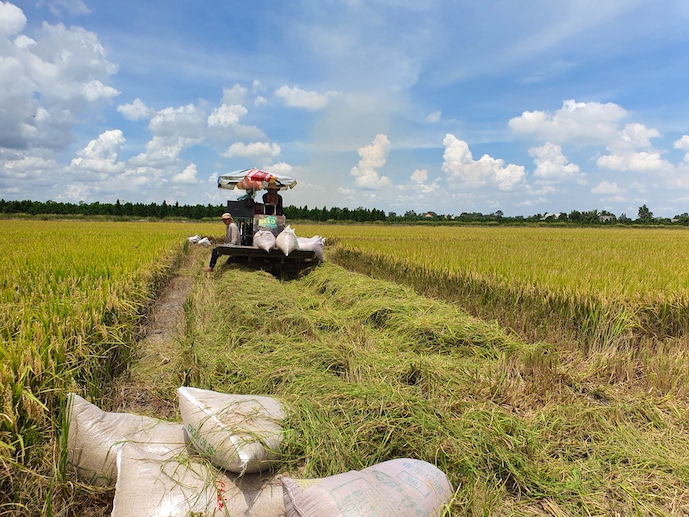
Low-emission farming models have already been introduced in several localities. Quang Tri Province, for example, has applied low-emission rice cultivation models across more than 6,000 hectares in 13 communes.
Hung Yen Province plans to deploy alternate wetting and drying (AWD) rice farming on 3,000 hectares combined with emissions monitoring equipment in 2026, while Hue City is focusing on the “three reductions, three gains” model and straw treatment.
A key focus of the program in 2026, according to the ministry, will be the completion of cultivation procedures and a nationwide measurement, reporting and verification (MRV) system for rice production, while expanding similar frameworks for corn, coffee, and durian.
Vietnamese agricultural exports have long competed mainly on price and output. However, amid rising requirements from major import markets for greener standards, product traceability, and transparent carbon footprints, emissions reduction has become essential to maintaining competitiveness.
As a result, during the 2026-2030 period, the agriculture sector plans to gradually develop criteria and branding for Vietnam low-emission agricultural products covering key export commodities such as rice, coffee, fruit and vegetables, and tea. A core feature of the program is linking low-emission production models directly with economic efficiency and lower input costs.
For rice, the sector will expand AWD irrigation techniques, reduce seed use, and improve straw management under the one-million-hectare high-quality rice project in the Mekong Delta.
For coffee-growing areas in the Central Highlands and the northern region, priority will be given to circular farming models, water-saving irrigation, and soil restoration measures.
Fruit crops such as durian, dragon fruit, and mango will also undergo standardized water management and byproduct treatment processes to meet green export standards.
To ensure low-emission products meet legal requirements for access to international markets, the ministry identified the development of a synchronized MRV system from central to local levels as a top priority through 2030.
The ministry also plans to standardize emissions measurement methods for each crop group and pilot digital platforms for emissions data management to support the country’s greenhouse gas inventory work.