
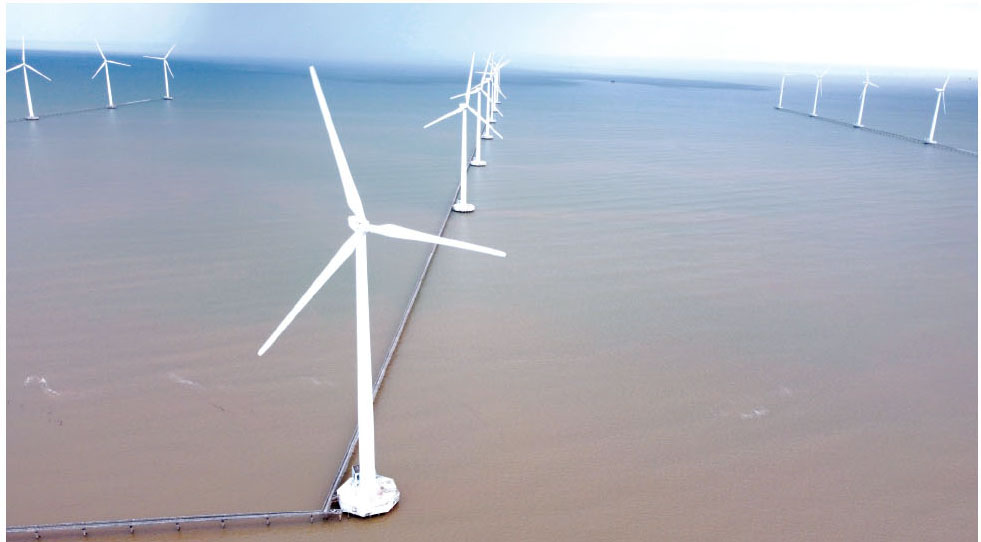
HCMC – U.S. International Development Finance Corporation (DFC) has identified Vietnam as one of its core priority destinations for expanding future capital deployment, seeing significant opportunities in strategic sectors ranging from energy transition and artificial intelligence to data centers, fintech and semiconductor supply chains.
Caroline Vik, DFC’s chief policy officer, spoke of this during a recent visit to Hanoi. DFC representatives praised Vietnam’s recent institutional reforms aimed at fostering growth and enhancing the country’s appeal to foreign investors.
Under the Vietnam-U.S. Comprehensive Strategic Partnership, the U.S. development finance agency plans to seek capable local partners with commercially viable and sustainably profitable projects for long-term financing.
As a U.S. government agency, DFC supports development through a range of financing instruments, including direct loans, equity investments, political risk insurance, loan guarantees and project preparation support.
In Vietnam, its strategic priorities extend beyond essential infrastructure projects such as seaports, airports, high-speed rail corridors and subsea fiber-optic connectivity to building resilient supply chains for critical minerals, pharmaceuticals, telecommunications equipment, semiconductors, batteries and magnets.
DFC’s decision to place Vietnam among its highest-priority markets sends a strong macro signal for the country’s efforts to attract high-quality foreign direct investment. Unlike private venture capital funds that focus primarily on short-term returns, DFC operates as a U.S. government development finance institution whose investments are subject to stringent environmental, social and governance (ESG), labor and human rights standards. Its interest in infrastructure and semiconductor-related projects reflects strategic confidence in Vietnam’s economic stability and technological absorption capacity.
However, unlocking this source of development capital will require substantial improvements in both the financial system and domestic enterprises. DFC-backed projects demand high levels of transparency and alignment with long-term sustainable development goals.
As Vietnam pursues its net-zero and digital transformation strategies, DFC financing is expected to serve as a catalyst, helping local companies gain access to advanced technologies and potentially easing funding constraints for large-scale renewable energy and data center projects.
DFC’s emphasis on commercially viable and sustainably profitable projects also offers lessons for domestic capital allocation. Rather than providing outright subsidies, the U.S. agency aims to create financial structures that generate mutual benefits for both American taxpayers and host economies. Further improvements to Vietnam’s public-private partnership framework and administrative procedures will be essential for effectively utilizing DFC’s political risk insurance and credit guarantee facilities, turning high-level diplomatic commitments into tangible green and digital infrastructure projects in the years ahead.







