
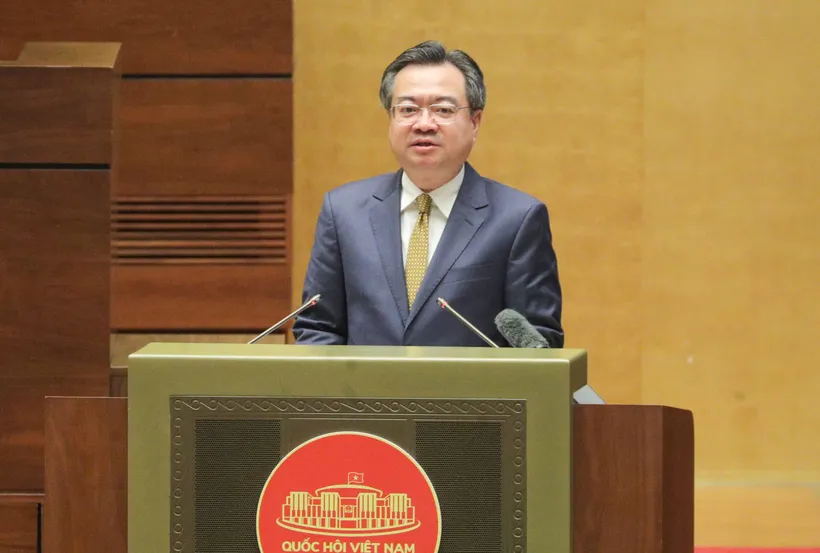
HCMC – Vietnam will prioritize developing its domestic capital market to raise an estimated VND38.5 quadrillion in long-term funds to achieve annual double-digit growth in 2026–2030, said Nguyen Thanh Nghi, Politburo member and chairman of the Party Central Committee’s Commission for Policy and Strategy.
Nguyen Thanh Nghi, who is also Secretary of the Party Central Committee, was speaking at a national hybrid conference on April 13 as he presented the key contents of the resolution adopted at the second plenum of the 14th Party Central Committee on Vietnam’s socio-economic development plan, national financial strategy, public debt management, and medium-term public investment for 2026-2030.
The total investment demand comprises about VND8.5 quadrillion from the state budget, accounting for 20–22% of total investment demand. The remaining capital is expected to come from multiple sources, reported local media.
Authorities plan to strengthen the domestic capital market to reduce reliance on bank credit. The strategy includes improving the role of international financial centers and free trade zones in attracting indirect investment and global funds. Measures also aim to maintain financial system stability and increase charter capital for state-owned commercial banks.
A comprehensive reform plan for the financial market is scheduled for completion in 2026. Plans also include modernizing the banking system, handling poor-performing banks, and introducing policies to attract international investment funds and diversify fund structures.
Fiscal targets for 2026 set a 10% increase in state budget revenue. Regular spending is to be cut by at least 10%, with an additional 5% in savings targeted. Authorities plan to issue government and local bonds, including project bonds, and mobilize official development assistance.
Efforts will focus on developing medium- and long-term capital markets and improving sovereign credit ratings and stock market classification to attract foreign portfolio investment.
Administrative reforms aim to cut processing time and compliance costs for procedures by 50% compared with 2025. At least 30% of conditional business lines are to be removed, along with unnecessary business conditions. Ministries will handle no more than 30% of administrative procedures within their sectors.
The plan calls for a legal review, expansion of effective pilot policies nationwide, and resolution of issues related to delayed projects, land use violations, and unused public assets before the 2024 Land Law takes effect.
Public investment will focus on key national projects with broad impact. The number of projects is to be reduced by at least 30% compared with the 2021–2025 period. Public investment is expected to play a leading role in attracting private capital through public-private partnerships.
Implementation across government agencies and local authorities is required to be timely, coordinated, and flexible to support the growth target.