

HCMC – A coalition of conservation organizations in Vietnam has submitted recommendations to the prime minister, proposing that the Ministry of Agriculture and Environment quickly develop a master plan to reorganize the management of the national protected area system.
The move aims to avoid mechanical mergers or fragmented pilot restructuring of management boards during the streamlining of public service units.
According to the proposal submitted by an alliance of seven conservation organizations, including People and Nature Reconciliation (PanNature), Education for Nature-Vietnam (ENV), Vietnam Wildlife Action Center (WildAct) and others, the restructuring of management systems for national parks, nature reserves, marine protected areas and wetlands should be grounded in conservation science and long-term ecological value rather than treated simply as an administrative consolidation exercise. The groups argued that protected areas are highly specialized and directly linked to national ecological security.

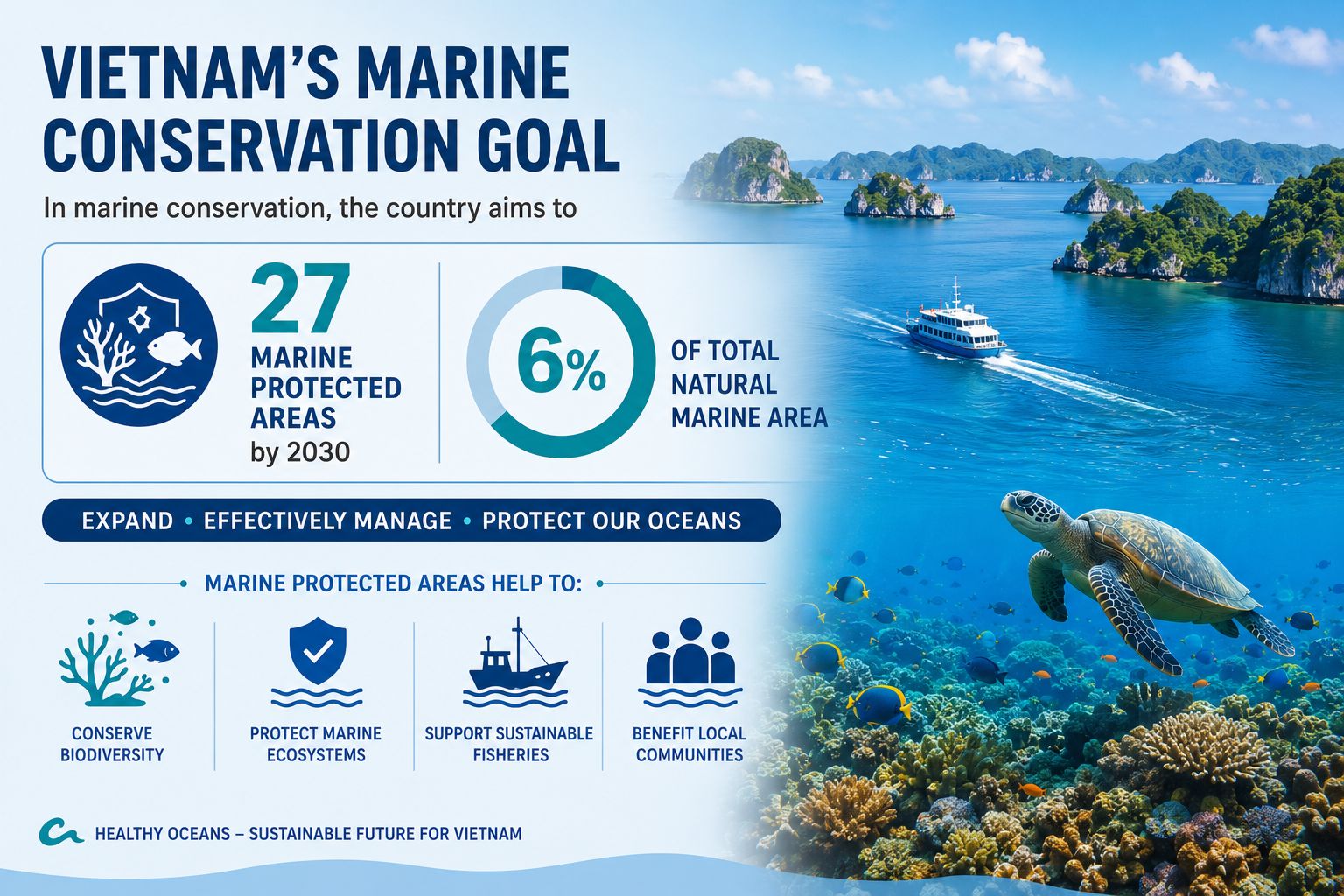
By the end of 2025, according to national forest status data, Vietnam was managing more than 14.97 million hectares of forest, including 2.25 million hectares designated as special-use forest. In marine conservation, the country aims to expand and effectively manage 27 marine protected areas by 2030, covering 6% of total natural marine area. Experts warned that mergers based solely on administrative boundaries or reduction targets could seriously undermine core conservation and biodiversity objectives.
The organizations therefore proposed that the Government adopt a governance principle based on cross-regional ecological value. Areas with direct ecological connectivity, even when spanning multiple provinces, should continue to operate as unified conservation units. They also recommended establishing a dedicated national-level authority to centrally manage the entire system of national parks, Ramsar sites, species and habitat conservation areas, instead of maintaining the current fragmented structure across specialized agencies.
The proposed governance model would maintain and strengthen the capacity of local management boards while clearly defining central and local responsibilities. Under the proposal, local governments would focus on buffer-zone management, community livelihood development, wildfire prevention and response, and handling administrative violations. Strategic decisions, including zoning, land-use conversion, forest environmental leasing, and major infrastructure investment—would remain subject to approval and direct oversight by central authorities.
To unlock resources, the organizations recommended that the Government establish a dedicated national financing mechanism for protected areas, arguing that investment in natural capital should be viewed as long-term sustainable development investment. Since restructuring would affect multiple overlapping legal frameworks, including the Forestry Law, the Biodiversity Law and the Land Law, the groups also called for a comprehensive legal review and coordinated amendments. If necessary, they suggested that the Government or National Assembly issue a dedicated resolution to ensure consistent implementation.







