
More than 400 years ago, merchant vessels bearing Japan’s red-seal permits rode the monsoon winds into the bustling port of Hoi An, opening a remarkable chapter of cultural exchange between Vietnam and Japan.
Centuries later, that historic connection has not faded. Instead, it continues to evolve through new forms of cultural dialogue. The 22nd Hoi An–Japan Cultural Exchange, held recently in the ancient town, offered fresh proof that a heritage city need not remain frozen in time. Hoi An has learned how to renew itself through creativity while preserving the soul of its past.
What made this year’s festival especially compelling was not only the lantern-lit charm of the old quarter or its traditional ceremonies, but also the natural way contemporary art was woven into the heritage setting.
Contemporary spirit and the message of “Baby Sumoko”
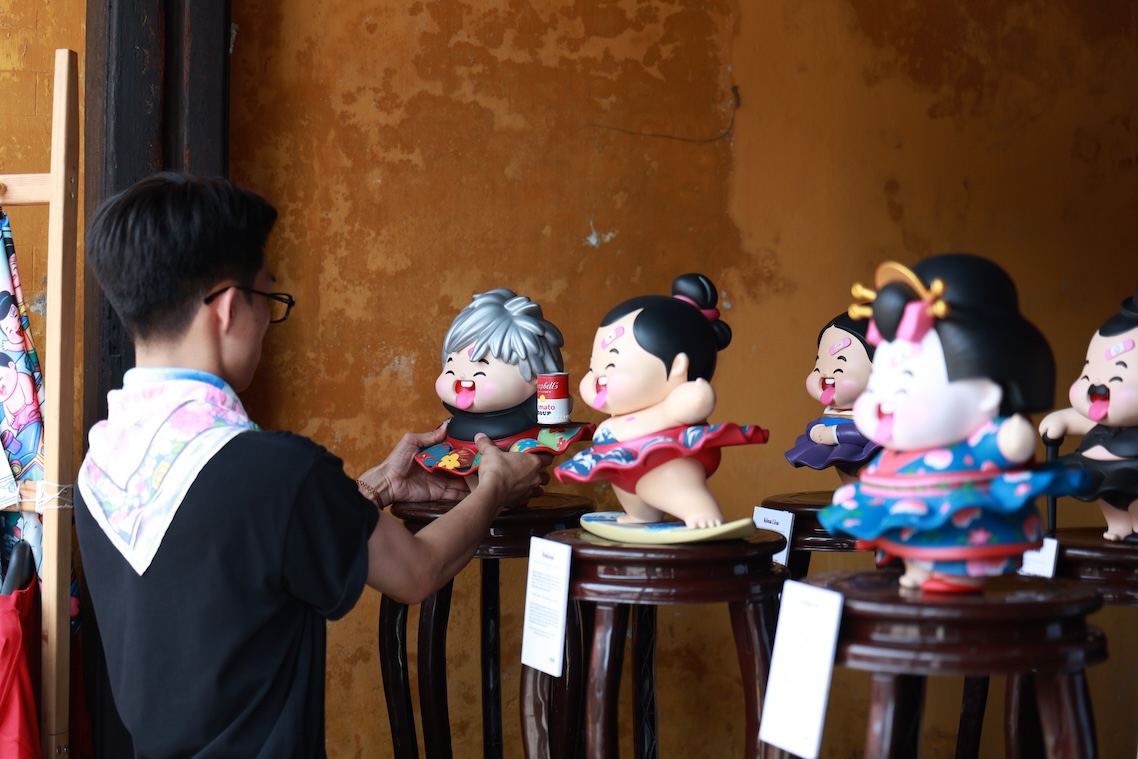
One of the festival’s most talked-about attractions was an Art Toy exhibition featuring the character “Baby Sumoko,” which drew large crowds of young visitors. The figure presents an intriguing visual contrast: a rounded, powerful sumo wrestler inspired by Japanese culture blended with the grace and softness of ballet.
Pham Dao Thanh Nhi, marketing director of the Baby Sumoko brand, said the character was created by artist Kohei through the idea of artistic contrast. According to Nhi, the project carries a broader social message: “Knock Out Body Shaming.”
“Baby Sumoko always appears cheerful and confident despite its chubby appearance,” she said. “The character encourages people to embrace themselves and overcome stereotypes about physical appearance, reflecting a positive spirit often associated with Japanese culture.”
Set against the moss-covered walls and centuries-old architecture of Hoi An, the contemporary installation felt surprisingly harmonious. Rather than disrupting the heritage atmosphere, it highlighted how Hoi An is gradually emerging as a truly creative city – one where heritage is not confined to the past but continues to be retold in the language of modern life.
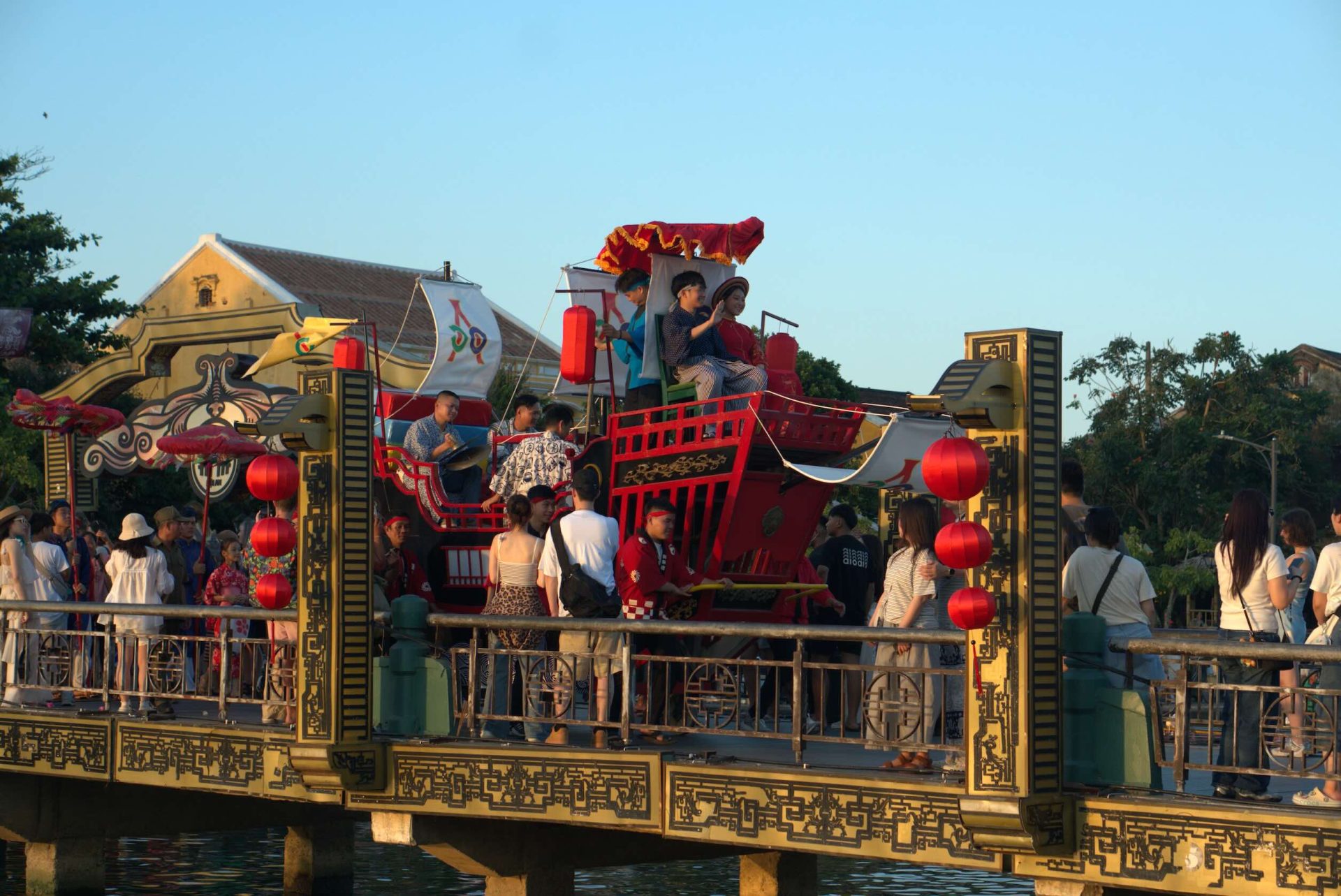
If contemporary art brought surprise and playfulness, the festival’s historical reenactments added emotional depth. During the opening ceremony, audiences once again gathered for the reenactment of the wedding procession of Princess Ngoc Hoa and Japanese merchant Araki Sotaro, one of the most enduring stories linking the two countries.
Golden memories and bridges of friendship
The elegant procession moving through lantern-lit streets resembled a living time machine, transporting spectators back to the 17th century, when Vietnam–Japan relations flourished through trade, trust, and personal connection.
Japanese Ambassador to Vietnam Ito Naoki expressed emotion after witnessing the performance, noting that the Hoi An–Japan Cultural Exchange has become widely recognized not only in Vietnam but also among Japanese people.
According to Ambassador Ito, the festival offers both nations an opportunity to reflect on more than four centuries of exchange while also promoting Hoi An and Vietnam to Japanese travelers. He said Japanese visitor arrivals to Vietnam reached a record 870,000 in 2025, with both sides aiming to raise the figure to one million in the coming years.
The ambassador also praised the efforts of Danang authorities, cultural agencies, and the Hoi An World Cultural Heritage Conservation Center for sustaining the festival over more than two decades, particularly as Danang expands its urban development. This year’s event also carried diplomatic significance as it took place shortly after Japanese Prime Minister Sanae Takaichi’s official visit to Vietnam in early May.
Speaking at the opening ceremony, Nguyen Thi Anh Thi, vice chairwoman of the Danang People’s Committee, said Japanese influence has long been deeply embedded in Hoi An’s history.
More than four centuries ago, Japanese traders arrived not only with goods but also with their culture, beliefs, and artistic traditions. Their presence left enduring traces that can still be seen today through the Japanese Covered Bridge, the former Japanese quarter, and the love story of Princess Ngoc Hoa and Araki Sotaro.
According to Thi, the restoration of the Japanese Covered Bridge with support from Japanese experts two years ago, along with the opening of the Vietnam–Japan Cultural Exchange Space in the heart of the old town, stands as a clear symbol of the enduring partnership between the two countries.
Now in its 22nd edition, the Hoi An–Japan Cultural Exchange has evolved far beyond a routine annual festival. It has become a meeting point between past and present, tradition and innovation, folk heritage and contemporary creativity.
This year’s program featured ceramic exhibitions, tea ceremonies, traditional Japanese performances, cosplay activities, and vibrant community events, creating a richly layered cultural experience united by a spirit of friendship.
First launched in 1998, the festival has grown into one of Vietnam’s most prominent international cultural exchange events.
As the final lanterns dimmed at the end of the celebration, what lingered was not only the spectacle of performances, but also the sense of a town that remains open, imaginative and deeply connected to its history. In today’s era of global integration, Hoi An is more than a heritage destination. It stands as a lasting cultural bridge between Vietnam and Japan – a place where the past is preserved through mutual respect, shared memory, and an enduring desire for connection.
The Hoi An–Japan Cultural Exchange was launched in 1998 and has been held annually for 22 years. Hoi An is part of UNESCO’s Creative Cities Network (UCCN), with a development strategy centered on cultural resources and traditional handicrafts. Together with Danang, Hoi An forms part of central Vietnam’s key tourism and economic corridor, gradually positioning itself as a “green bridge” and a peaceful, creative cultural destination in the flow of contemporary international integration.