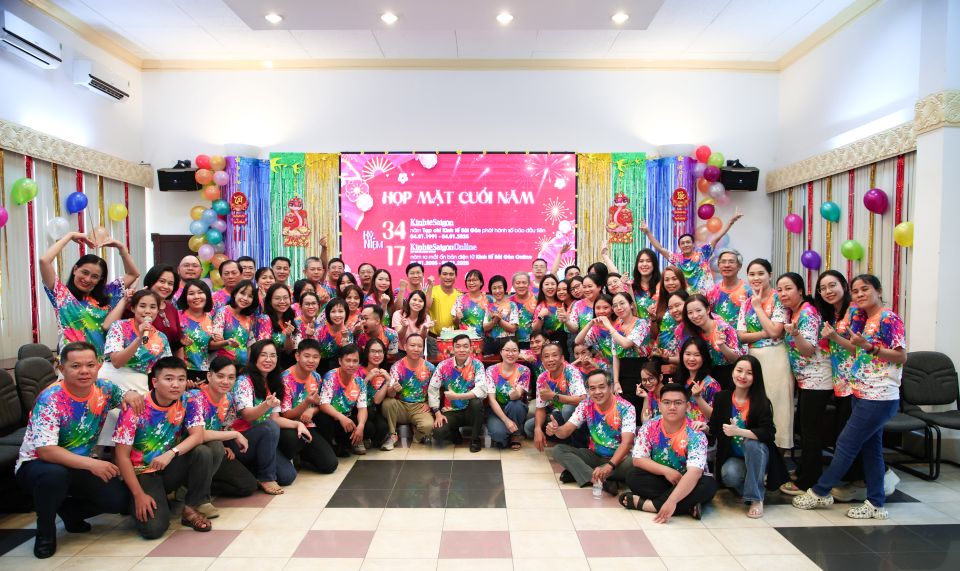
On June 30, 2026, Thời báo Kinh tế Sài Gòn will bring to a close a journey that has lasted more than 35 years.
A magazine may be founded and eventually cease publication for many organizational reasons. Yet a magazine that has lived in the hearts and minds of its readers for more than three decades cannot be understood merely through its founding date, closing date, or an administrative decision. The true life of a newspaper does not reside solely in its license, headquarters, domain name, or final issue. Its life resides in the people who have read it, trusted it, debated with it, written for it, and grown alongside it.
In that sense, the closing of Kinh tế Sài Gòn is not an ending.
It is more like a pause.
A pause long enough for many people to realize that HCMC—and indeed Vietnam—once had a magazine like this: thoughtful, composed, insightful, professional, humane, and endowed with a quality that is difficult to define yet instantly recognizable. It was the quality of a magazine that never sought attention through noise, but instead created value consistently enough to be remembered.
For more than 35 years, Kinh tế Sài Gòn was never merely a business newspaper. Had it focused on economics in the narrowest sense, it would not leave such an emotional void among both readers and contributors. What defined the newspaper was its ability to view economics as an integral part of social life, businesses as agents of reform, public policy as a space that requires critical scrutiny, and economic growth as something meaningful only when people remain at its center.
 As a result, readers did not simply encounter numbers in its pages. They discovered the realities behind those numbers—the lives of businesses, the confidence of markets, the livelihoods of ordinary citizens, the limitations of institutions, and the questions society should never shy away from asking.
Perhaps that is why, in the memories of many, Kinh tế Sài Gòn was a place that consistently made room for difficult questions. Not difficult questions designed to provoke conflict, nor those intended to dismiss everything outright. These were questions grounded in evidence, reason, and goodwill. Questions about the business environment. Questions about institutional reform. Questions about economic freedom. Questions about the quality of growth. Questions about issues that may have been accepted too quickly without sufficient examination.
A society that aspires to progress needs such questions. And genuine journalism requires newsrooms with the courage to pursue issues to their roots.
In a recent Facebook post, a former journalist of Kinh tế Sài Gòn recalled a piece of advice from former Managing Editor Nguyen Van Phu: “Why are you hesitating to write? Just write!”
I believe that was more than a simple remark—it embodied the spirit of the magazine itself.
“Just write” did not mean writing whatever one wished. Nor did it imply disregarding consequences or neglecting responsibility. On the contrary, it only carried meaning when the writer was grounded in facts, data, prudence, and a constructive purpose.
I have often reflected on that spirit while looking back on my years contributing to the magazine.
For me, submitting an article was never merely about completing a manuscript. It was a process of forcing myself to think more carefully, write more rigorously, construct stronger arguments, and show greater respect for readers. A writer could not simply state an opinion. One had to justify it. One could not merely present a conclusion. One had to explain the path leading to that conclusion. One could not write simply to be legally or economically correct. One had to write in a way that allowed readers to see how an issue related to their lives, their businesses, and the society in which they lived.
That is what I learned from Kinh tế Sài Gòn.
Ultimately, a good article is not one that immediately convinces readers to agree. A good article is one that encourages readers to think further and seek deeper answers. Kinh tế Sài Gòn achieved precisely that for many years.
The magazine never imposed views; it invited reflection.
It was not loud, yet it carried weight.
It was not extreme, yet it was never complacent.
It never avoided difficult issues, yet it never turned criticism into bitterness.
That is a rare style of journalism, and an even rarer one to sustain.
It is especially difficult in an era when information moves ever faster, attention spans grow shorter, emotions are more easily inflamed, and thoughtful content often must move at a slower pace than the crowd. Kinh tế Sài Gòn understood this reality and accepted it as part of preserving the identity and spirit envisioned by its founders.
Of course, every journey has its ups and downs.
A paper that survives for more than 35 years cannot consist solely of glorious moments. There are periods of achievement, times of difficulty, organizational changes, and decisions that may later inspire regret among those involved. Yet perhaps it is through these very fluctuations that the true character of Kinh tế Sài Gòn became even clearer.
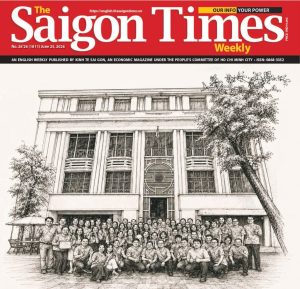
Regardless of the era, and regardless of who served as editor-in-chief, what remained most enduring was the magazine’s humanity and sense of fellowship.
Its humanity was reflected in the respect it showed to contributors, experts, businesses, and readers alike. Its sense of fellowship was reflected in the way those who once passed through its newsroom continue to speak of it—not only with professional admiration but also with genuine affection.
Perhaps that is why the announcement of the magazine’s dissolution has stirred such deep emotions.
And yet, the more I think about it, the more I realize that truly meaningful values rarely disappear as quickly as we imagine.
A newsroom may close.
A media brand may cease operations.
The final issue may eventually be published.
But the questions the newspaper raised remain.
The reform ideas it championed remain.
The writers, entrepreneurs, experts, and readers who matured alongside it remain.
And perhaps that is the ultimate measure of a newspaper—not how long it existed, but what continues to live on after it stops.
Instead of saying goodbye, I would rather say thank you.
Thank you to a magazine that chose decency as a professional principle.
Thank you to a magazine
that maintained its integrity
through different periods of its history.
Thank you to a magazine that helped build a community of people who believe in knowledge, dialogue, and reform.
On June 30, 2026, one journey will come to an end.
But the values Kinh tế Sài Gòn leaves behind will not end with that date.