
One afternoon more than thirty years ago, I walked from No. 1 Ton That Dam Street—the side entrance of the State Bank of Vietnam building, where BNP Bank had rented office space for its branch for a period and where I once worked—to the offices of Thời báo Kinh tế Sài Gòn at 35 Nam Ky Khoi Nghia Street to collect the honorarium for my first article published by the newspaper.
District 1 looked very different then. Nguyen Cong Tru Street was relatively quiet in the late afternoon, lined with old one-story and two-story French-Chinese style shop houses whose businesses seemed to operate at a leisurely pace. Cars were still scarce, and the Internet remained a distant concept for most people.
I strolled to the newsroom to perform a familiar ritual for journalists and contributors of that era: signing my name in the honorarium ledger, receiving an envelope containing cash prepared in advance by the accounting staff, and, of course, taking home a complimentary copy of the issue containing my article.
It was a charming tradition shared by many Saigon newspapers at the time. Contributors simply identified themselves by the pen name printed in the paper, signed the register, and immediately received their payment and a complimentary copy. No identification documents were required.
In fact, even before that, while studying at the University of Economics, I had already begun writing for several newspapers and had enjoyed the sweet reward of spending my modest honoraria on cups of coffee. Yet whenever I think of Thời báo Kinh tế Sài Gòn, I still recall a uniquely vivid sense of excitement and enthusiasm—the joy of seeing my work published in a prestigious newspaper, the confidence it inspired, and my genuine admiration for the paper’s veteran journalists such as Vo Nhu Lanh, Tran Ngoc Chau, Nguyen Van Phu, Quoc Vinh, and others.
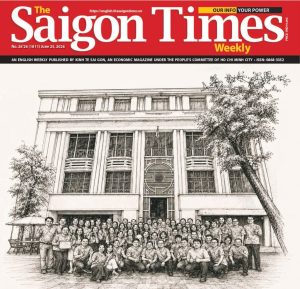
The Thời báo Kinh tế Sài Gòn newsroom also felt somewhat different from other newspaper offices in the city. Its neo-classical architecture featured a discreet entrance but a spacious and airy reception hall. The secretary’s desk was tucked away in a quiet corner rather than placed prominently at the front. A remarkable sense of calm pervaded the building, giving me the impression that I had stepped into a library rather than a newsroom.
Looking back on more than three decades of Vietnam’s economic development, Thời báo Kinh tế Sài Gòn was never merely an economic newspaper. For generations of entrepreneurs, scholars, policymakers, and readers interested in Vietnam’s economic life, it was a unique forum—a place where new ideas were heard, policy debates were nurtured, and thoughtful critiques found room to exist.
As Vietnam gradually integrated into the global economy, Thời báo Kinh tế Sài Gòn helped connect the business community, researchers, and policymakers through a journalistic approach that was serious, open-minded, and deeply responsible.
 Personally, I have always felt that Thời báo Kinh tế Sài Gòn inherited many of the finest traditions of Southern Vietnamese journalism: gentle yet candid, liberal-minded yet balanced, open but never extreme, and consistently respectful of differing viewpoints.
Perhaps that is why, over the past decade or so, despite having many publishing options, I have written almost exclusively for Thời báo Kinh tế Sài Gòn. Not because it was the largest newspaper or had the biggest readership, but simply because I felt happy seeing my work appear in its pages. More than that, I regarded it as a source of personal professional pride.
I still remember exchanging drafts with Nguyen Van Phu, Nguyen My Le, and many editors from different periods of the newspaper’s history. Sometimes our conversations revolved around a headline, a framing angle, or a seemingly minor detail. Yet behind those discussions lay something much more meaningful than wording alone: respect for the author and respect for the ideas being expressed.
Occasionally, articles touched on topics that required particularly careful editing. Even then, what I consistently felt was the newsroom’s desire to preserve the writer’s original intent and spirit as much as possible. The goal was never to make an article less meaningful or less challenging. Rather, it was to make it more rigorous, more balanced, and ultimately more persuasive to a readership that was anything but easy to satisfy.
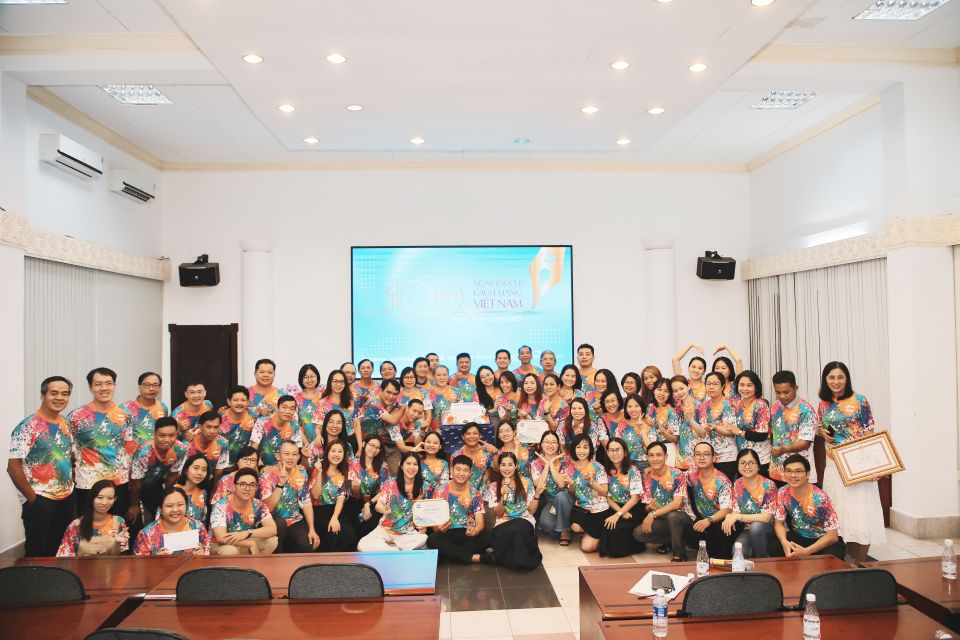
I also remember a contributors’ gathering organized by Thời báo Kinh tế Sài Gòn around the end of 2010 at Blue Ginger Restaurant. With characteristic openness and humility, the newspaper invited participants to share their thoughts on its future strategy at a time when traditional print media was facing intense competition from online news platforms.
After years of knowing one another only through articles, emails, and brief phone conversations, contributors finally had the opportunity to meet in person. Years later, what remains most vivid in my memory is not who said what that evening, but the feeling of belonging to a small community where people could engage in vigorous debates in print and still meet face-to-face with mutual respect and goodwill. That, perhaps, was part of the identity that defined Thời báo Kinh tế Sài Gòn for so many years.
In recent days, as I learned that Thời báo Kinh tế Sài Gòn is preparing to conclude its journey of more than three decades, distant memories have returned unexpectedly, gently, and vividly.
Curiously, what comes back to me are not the major articles or milestone achievements. Instead, they are small moments: afternoons spent collecting honoraria at the newsroom; a brief phone call from an editor; the anticipation of waiting for Thursday morning’s new issue; or stopping at a newsstand to flip through the pages and see whether my name appeared in print.
These were ordinary moments—so ordinary that no one imagined they would remain etched in memory for decades.
Yesterday morning, before finishing this article, I had some errands near Ben Thanh Market. Almost unconsciously, I drove along Ham Nghi Boulevard and turned onto Nam Ky Khoi Nghia Street. It has been many years since I last visited the newsroom regularly; honoraria are now transferred directly to bank accounts, and complimentary copies are mailed to contributors.
The neighborhood has changed dramatically. New office towers have risen, traffic has grown denser, and the pace of life has accelerated. As my car slowly passed No. 35, I suddenly felt both nostalgic and wistful, as though I had just reunited with an old friend only to realize we were about to part again.
The familiar building still stood beneath the same old trees. Everything seemed unchanged—except that time had moved very far ahead.
Today, as the newspaper prepares to bring its journey to a close, what remains within me is not a sense of loss, but a quiet gratitude. Gratitude for having had, for many years, a place where I could share my thoughts; a place where unfinished ideas could be heard, discussed, and refined through sincere dialogue until they became something better than they were at the beginning.