
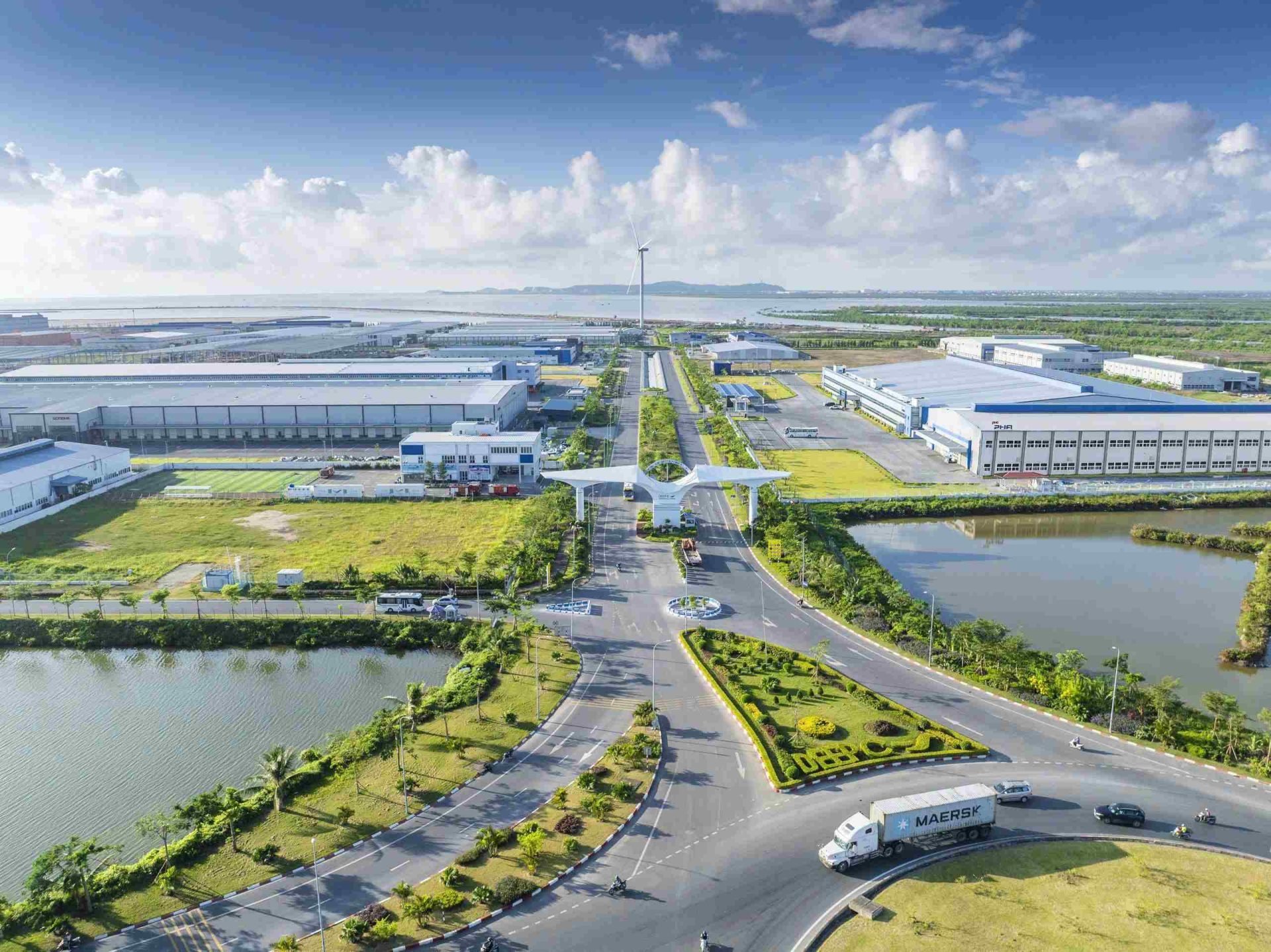
HCMC – Industrial park developers can no longer focus solely on land and infrastructure, says Mr. Koen Soenens, General Sales & Marketing Director of DEEP C Industrial Zones. As global manufacturers seek resilient supply chains, clean energy solutions and long-term sustainability, DEEP C’s role has evolved into that of an ecosystem builder supporting investors across the full industrial value chain.
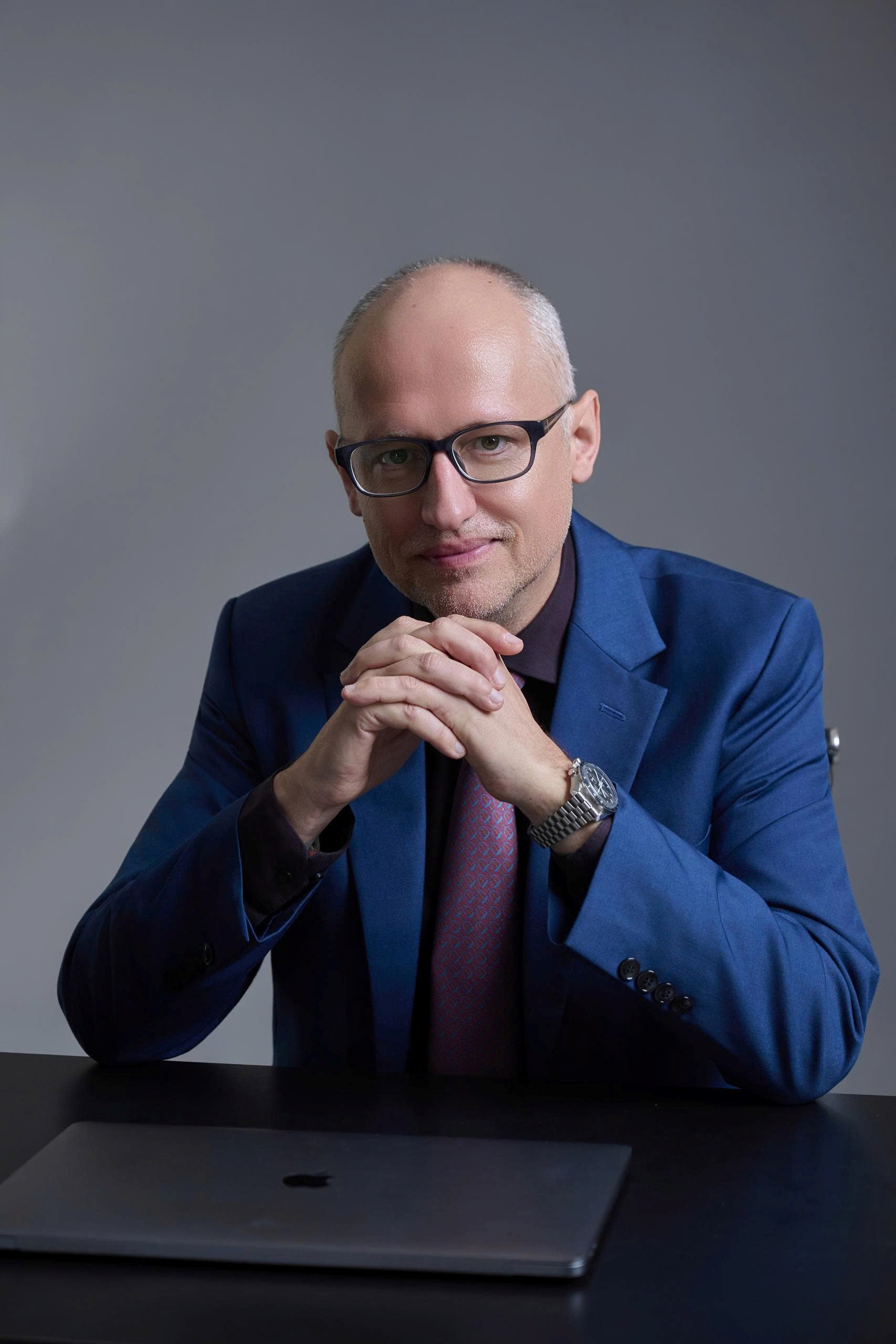
In an interview with The Saigon Times, Mr. Koen Soenens, General Sales & Marketing Director of DEEP C Industrial Zones, shared his views on the evolution of industrial parks, the prospects for free trade zones, and Vietnam’s growing role in global supply chains. Below are excerpts from the interview:
The Saigon Times: DEEP C has been present in Haiphong for nearly three decades. Looking back on that journey, how has the role of an industrial park developer evolved, and what achievement are you most proud of?
When DEEP C was established nearly thirty years ago, the role of an industrial zone developer was quite simple: supply land, infrastructure, and utilities, then attract investors. Today, that is no longer sufficient.
Manufacturers increasingly seek partners who can help them navigate complex global supply chains, energy-transition requirements, workforce development, regulatory processes, and long-term sustainability goals. As a result, DEEP C has evolved from an infrastructure provider into an ecosystem builder.
We invest not only in industrial land but also in the conditions that enable our tenants to succeed. These include reliable utilities, renewable energy solutions, wastewater treatment, logistics connectivity, industrial symbiosis initiatives, and close cooperation with local authorities and educational institutions.
What makes me particularly proud is that DEEP C has grown together with Haiphong.
When DEEP C first arrived in 1997, Haiphong was primarily known as a port city. Today, it is one of Vietnam’s most dynamic industrial and manufacturing hubs, home to world-class companies across electronics, automotive, logistics, energy, and advanced manufacturing. Among our more than 180 tenants are reputable, industry-leading companies such as Bridgestone, USI, Pegatron, Flat, LG Innotek, POSCO, and many others.
If I had to highlight one achievement, it would not be a specific project or an investment amount. It would be the trust built over decades.
Many investors, such as Shinetsu and Flat, have made multiple investments in DEEP C after their initial investment. That is perhaps the strongest validation of our work. It shows that companies have found not only infrastructure but also a stable environment that supports long-term growth.
In a world where investment destinations increasingly compete on resilience rather than cost alone, helping build confidence in Hai Phong and Vietnam is something we should be extremely proud of.
Vietnam is considering the development of free trade zones as part of its next phase of economic integration. From your perspective, what factors will determine the success of these zones, and what opportunities could they create for Haiphong?
I believe the discussion of Free Trade Zones is extremely timely.
Global supply chains are undergoing significant restructuring. Companies are seeking greater diversification, resilience, and efficiency. In this context, free trade zones (FTZs) can be powerful tools for attracting investment, facilitating trade, and integrating Vietnam more deeply into global value chains.
However, successful FTZs are not built on tax incentives alone.
If we look at successful examples in Asia and the Middle East, their real strength lies in three areas.
First, regulatory simplicity. Investors value predictability and speed more than incentives. The ability to complete procedures quickly and transparently often has a greater impact on investment decisions than financial benefits.
Second, connectivity. An FTZ must be seamlessly connected to ports, airports, logistics corridors, and industrial production centers. Hai Phong and DEEP C Industrial Zones have a significant advantage here, thanks to Lach Huyen Deep-Sea Port, its highway network, and its position within northern Vietnam’s manufacturing ecosystem.
Third, governance and institutional innovation. An FTZ should serve as a testing ground for reforms that can later be replicated nationwide. Investors are drawn to environments where processes are efficient, digitalized, and business-friendly.
In my view, Vietnam should not aim to replicate Singapore, Shenzhen, or Jebel Ali exactly. Instead, it should develop an FTZ model tailored to Vietnam’s unique strengths, including its manufacturing base, strategic location, extensive free trade agreements, and growing role in global supply chains.
If implemented effectively, Hai Phong has the potential to become one of the most competitive industrial and logistics gateways in Southeast Asia.
Some observers have raised concerns that free trade zones could compete with existing industrial parks for investment. Do you see FTZs as a challenge or an opportunity for industrial park developers such as DEEP C?
I do not see Free Trade Zones and industrial parks as competitors.
In fact, I believe they are complementary.
An FTZ creates an enabling environment for trade, logistics, and international business operations. Industrial parks provide the physical environment where manufacturing and industrial activities take place.
The most successful industrial ecosystems globally integrate both elements. For DEEP C, the development of FTZs offers substantial opportunities.
Many multinational companies are increasingly looking to integrate manufacturing, logistics, distribution, and regional supply chain management into a single ecosystem. An FTZ can enhance the attractiveness of industrial zones by making international trade more efficient and reducing operational friction.
At the same time, FTZs will raise expectations.
Investors will expect faster administrative procedures, greater digitalization, improved logistics performance, and higher service standards. Industrial developers will need to continuously innovate to remain competitive.
From DEEP C’s perspective, this challenge aligns well with our long-term strategy. We have always believed that competitiveness is built not only on infrastructure but also on continuous improvement and value creation. For these and other reasons, we recently attracted a multi-billion-dollar investment from Korean semiconductor giant LG Innotek.
Ultimately, if FTZ development makes Vietnam more attractive to global investment, both industrial parks and the broader economy will benefit.
The real competition is not between FTZs and industrial parks. It is between countries seeking to attract the next generation of global investment.
As Vietnam seeks to attract higher-quality investment and move up the global value chain, what role do you believe the media can play in supporting this process, and what message would you like to share about Vietnam’s future prospects?
The role of the media is often underestimated in discussions about attracting investment.
When investors evaluate a new market, they do more than study laws and financial data. They also try to understand the broader story of a country: its ambitions, governance, economic direction, and social stability.
For many international executives, media coverage is often one of the first windows into Vietnam.
In that sense, the press serves three important functions.
First, it informs. Investors need access to accurate, timely, and factual information.
Second, it explains. Economic reforms, infrastructure projects, and policy changes are often complex. Quality journalism helps international audiences understand not only what is happening, but also why it matters.
Third, it builds trust. Trust is one of the most important currencies in investing. Reliable media promotes transparency, which in turn strengthens investor confidence.
As Vietnam enters a new stage of development, we hope that media organizations continue to go beyond headlines and provide deeper analysis of industrial transformation, infrastructure development, the energy transition, innovation, and supply chain evolution.
International investors are increasingly sophisticated. They are looking for insight, context, and credibility.
By working together, businesses, policymakers, and media organizations can help create an information ecosystem that accurately reflects Vietnam’s opportunities while openly discussing challenges and solutions.
That balanced approach ultimately benefits everyone: investors, businesses, policymakers, and society as a whole.
Finally, I want to share some personal thoughts with you and your readers. Vietnam has arrived at a critical turning point.
The country is no longer competing primarily on low costs. It is increasingly competing on reliability, connectivity, sustainability, and its ability to integrate into the world’s most advanced supply chains.
Whether we discuss industrial parks, Free Trade Zones, infrastructure, or investment promotion, the objective remains the same: to create an environment where businesses can invest with confidence and grow over the long term.
DEEP C Industrial Zones is proud to have been part of Vietnam’s industrial journey for nearly 30 years, and we remain optimistic about the country’s next chapter. The opportunities ahead are significant, provided we continue to combine vision with execution.