

We have to acknowledge one thing: Vietnamese people are remarkably entrepreneurial. They are constantly searching for business opportunities and adapting with extraordinary speed whenever the business environment changes—often in ways that no business school or management course could ever teach.
Take a quick look around. Hundreds of thousands of shop owners now run online storefronts on Shopee, Tiki, Lazada, or Sendo—activities they could hardly have imagined a decade ago. They receive orders, package products, coordinate deliveries, and manage customer service with impressive professionalism.
Equally striking are the thousands of eateries that use tablets to receive orders through food delivery platforms such as Now or GrabFood, preparing meals according to customers’ requests while waiting for delivery persons to arrive. Tens of thousands of others use Facebook not only to advertise products but also to communicate with customers and conduct transactions. Many have mastered the art of drop-shipping, acting as intermediaries who take orders, purchase products from third parties, and deliver them to customers while earning a margin on the difference.
No school taught them how to do this.
If we fast-forward through several decades of economic activity, we see the emergence and disappearance of countless business models: from arranging gas lighter refill desks to opening stores renting VHS tapes and later DVD discs; from motorcycle taxi drivers waiting at street corners for familiar customers to ride-hailing drivers finding passengers through mobile apps. Through every change, people adapted, discovering new ways to make a living whenever old opportunities disappeared.
 No one could teach them how to do it. They learned by observing, exploring, and reinventing themselves.
One common misconception among economic journalists is the belief that entrepreneurs and businesspeople read newspapers to discover business opportunities or learn from the experiences of others. Some journalists even imagine that newspapers can show readers how to do business according to the latest trends.
That is simply not the case.
In fact, if there is one area where economic journalism has fallen short, it is in failing to fully capture the rapid transformations taking place in the business world itself.
For example, newspapers have reported that tax authorities collect billions of dong from individuals earning substantial income from platforms such as Google and Apple. But how many articles have actually profiled these individuals? What talents enabled them to earn money from global technology giants? How did they begin? What can young people learn from their journeys?
How many newspapers have explored the growing network of Vietnamese freelancers who win contracts from abroad—providing services ranging from design and translation to graphics and data entry—while working remotely for companies in Japan, the United Kingdom, Australia, the United States, and elsewhere?
So what is economic journalism for?
Journalism exists because society needs information. Economic journalism is no exception.
In the early 1990s, when Vietnam’s economic reforms began attracting foreign investors, an immediate need emerged for information that was accurate, timely, objective, reliable, and readily accessible to both domestic and international investors.
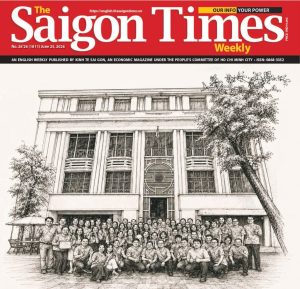
Almost by coincidence, Vietnam’s three major economic newspapers were established during that period, including Thời báo Kinh tế Sài Gòn, which celebrated its 30th anniversary in early 2021.
The journalists who founded those publications certainly did not imagine that their mission was to teach people how to do business. Quite the opposite. Journalists themselves had to learn quickly from international experiences in business management and economic development in order to pass that knowledge on to domestic investors.
At the time, both government officials and policymakers were still navigating unfamiliar territory, learning as they went. What united everyone was a common need for information. Economic journalism’s primary role was to serve as a bridge, connecting all participants in economic activity through reliable information.
During those early years, Vietnam Investment Review received dozens of money orders every day through its post office box from readers subscribing to the newspaper. CD compilations of articles published by Thời báo Kinh tế Sài Gòn sold exceptionally well.
Reuters signed agreements to purchase content from The Saigon Times Daily and The Saigon Times Weekly for inclusion in its information database—a database that major investors around the world paid to access.
Investors were hungry for information. Economic newspapers survived and flourished because they met that demand.
The 1990s, when Vietnam was transitioning from a centrally planned economy dominated by a subsidy-based mindset to a nascent market economy, was an especially fascinating period for economic journalism.
To provide information to readers, newspapers had to gather insights from multiple sources, including policymakers and feedback from investors. This naturally gave rise to a second role for the press: contributing to policy discussions and providing constructive criticism in the interests of both the broader economy and the business community.
This was often a difficult path because the logic of a market economy frequently runs counter to conventional thinking. For example, the early versions of the Enterprise Law required a minimum amount of capital to register a business. In the early years, representative offices of foreign companies were required to recruit employees through state-owned employment service agencies. There was even a time when the chairman of a provincial government ordered that only beer or cement produced within the province could be consumed locally, while products from other provinces were effectively barred.
At the macroeconomic level, economic journalism advocated for a level playing field, free from discrimination between state-owned enterprises and private businesses. It championed the right to conduct business freely and called for a reduction in excessive government intervention in commercial activities.
As a forum for public discourse, the economic press hosted debates on issues such as whether Vietnam should allow wholly foreign-owned enterprises or require joint ventures, whether exports should take priority over import substitution, whether tariffs should continue to serve as a tool for protecting domestic industries, and how far the country should open its financial markets.
To some extent, these debates—combined with practical experience—helped shape the macroeconomic policies that gradually integrated Vietnam into the global economy.
A third role of economic journalism is to connect businesses with society and encourage them to fulfill their social responsibilities.
This role goes beyond charitable programs or social initiatives such as poverty alleviation, scholarships, and vocational training. It also involves providing a platform through which society can hold businesses accountable—ensuring that they do not damage the environment, mistreat workers, neglect product quality, or fail to meet their responsibilities to customers.
Today, as virtually all economic activities are being digitized, businesspeople are certainly not short of information. Yet this does not diminish the importance of economic journalism.
If the 1990s marked our tentative entry into a market economy after decades of state subsidies, today we are entering a new phase in which many of the old assumptions no longer hold true.
Is the sharing economy beneficial to society, or does it ultimately extract every ounce of labor from participants while depriving them of benefits that employers would otherwise be required to provide?
Do the monopolistic positions of large technology companies deliver free products to consumers, or do they suppress competition and turn users themselves into products to be sold?
Should the concept of fairness be expanded so that businesses generating revenue in Vietnam—such as Netflix, Facebook, or Airbnb—and even drivers working through platforms like Grab, contribute taxes on an equal basis?
Are cryptocurrencies merely speculative schemes, or do they represent the future of national currencies?
Information alone is not enough to answer these questions.
Only a forum where debates can be pursued thoroughly, where individuals are free to express their views, and where every opinion is presented responsibly can help society find answers to the challenges posed by a transforming economy.
And it is journalism—particularly economic journalism—not social media, that can provide such a forum.
Life constantly presents new problems that require solutions. Thirty years ago, the questions were different. Thirty years from now, they will be different again. In 2020, for example, the unexpected challenge was how to cope with the Covid-19 pandemic.
What remains unchanged is the partnership among journalists, businesspeople, and policymakers in working together to solve the defining challenges of their time.