
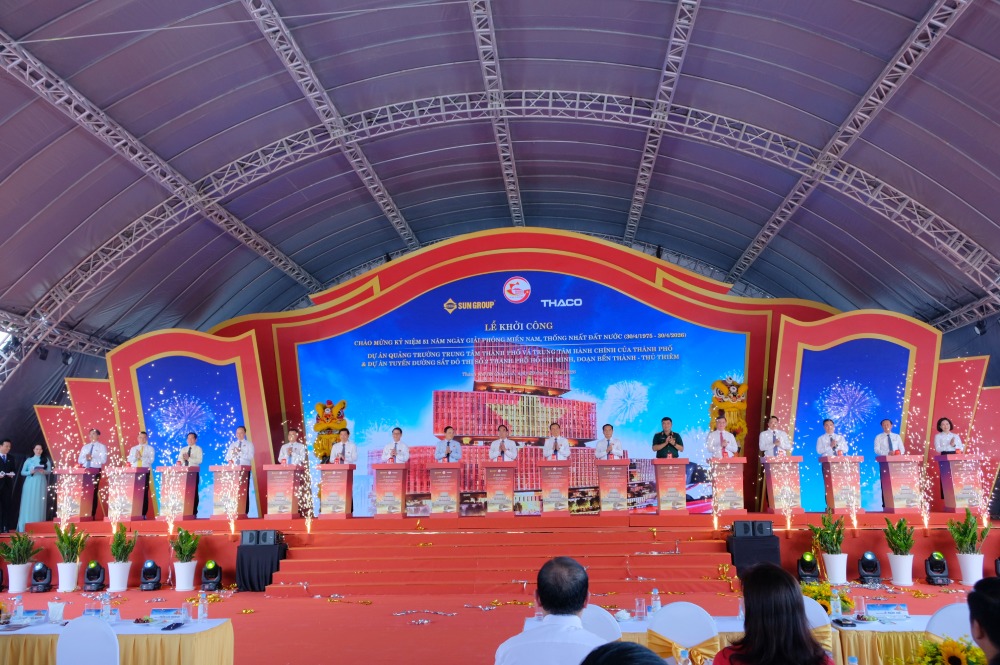
HCMC – Ho Chi Minh City on April 29 began work on a series of major infrastructure and urban development projects worth a combined VND142 trillion (about US$5.6 billion), marking the 51st anniversary of the liberation of the south and the reunification of the country on April 30.
The projects will be developed under public-private partnership (PPP), build-transfer (BT), and private funding models, with no state budget involved.
The initiatives include the central square and administrative center in Thu Thiem New Urban Area, the Ben Thanh–Thu Thiem metro line, the International University Urban Area, and the Ben Nha Rong–Khanh Hoi waterfront park project. Authorities also awarded approval for investors in the Can Gio International Transshipment Port project.
Central square, administrative hub in Thu Thiem
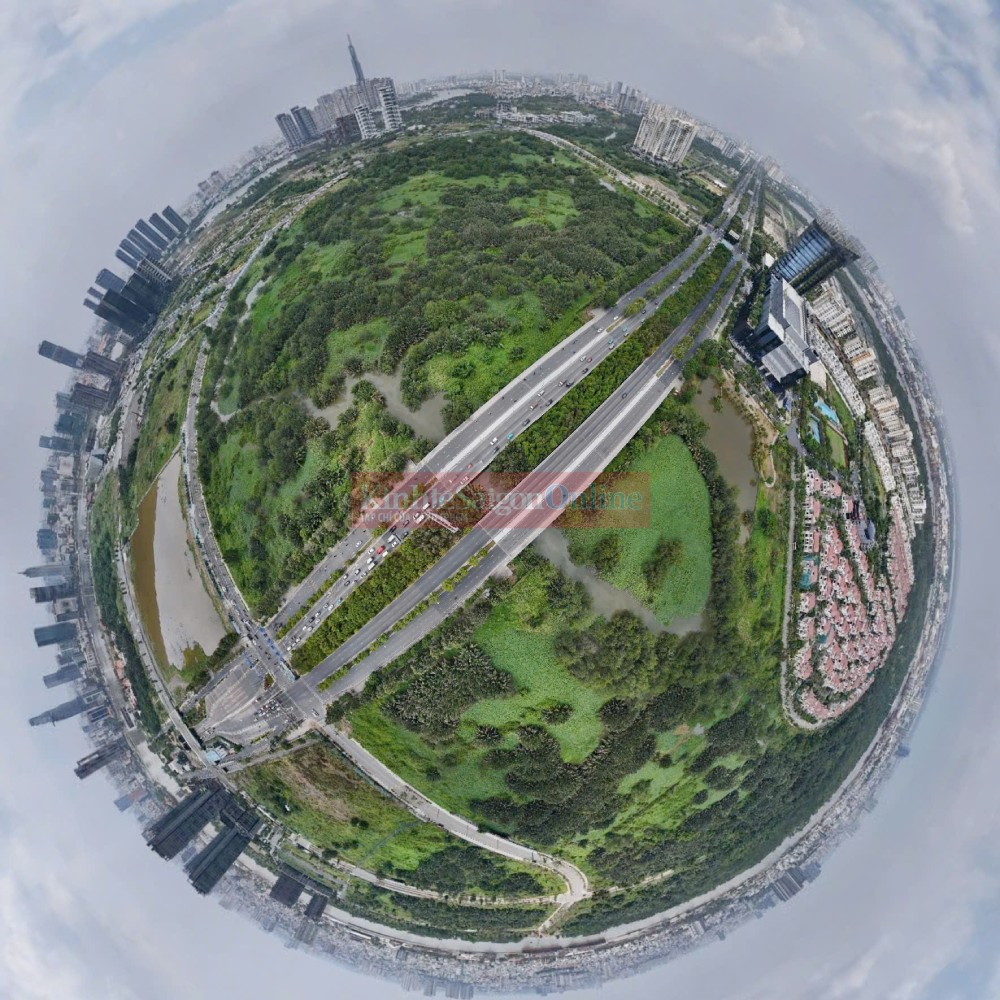
The Thu Thiem core area continues to draw attention as construction begins on the city’s central square and new administrative center, alongside rapidly improving transport infrastructure.
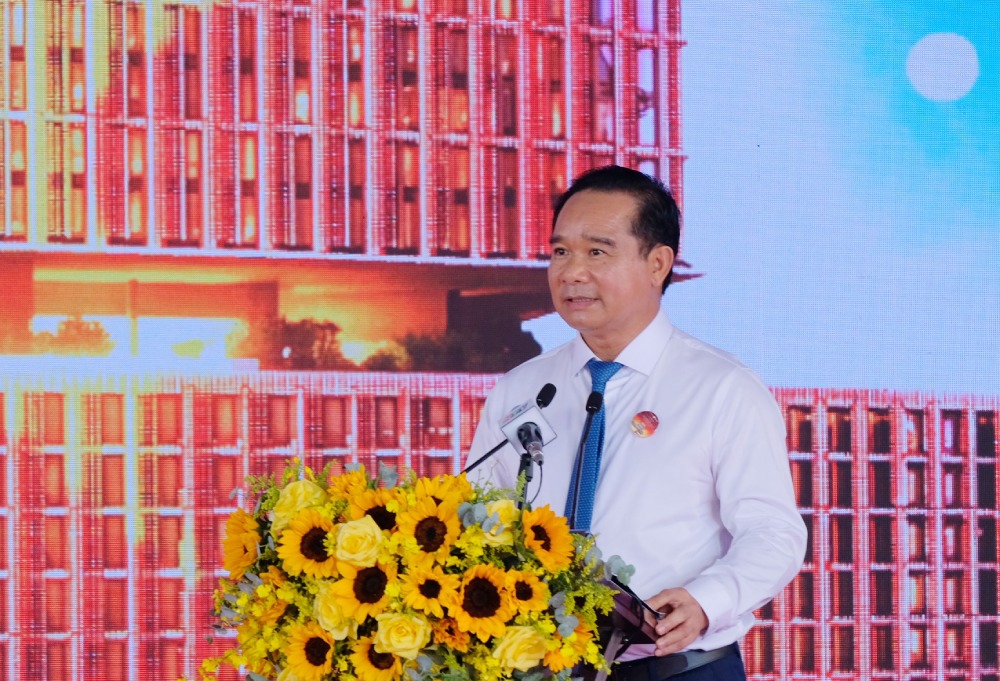
Speaking at the ceremony, Chairman of the HCMC People’s Committee Nguyen Van Duoc said the projects would help shape a megacity of regional and international stature.
“These developments will not only create modern urban spaces but also strengthen public transport connectivity and establish cultural institutions that harmonize contemporary and historical values,” he said.
He stressed that the groundbreaking marks only the beginning and urged investors to ensure progress, quality, and aesthetics so each project becomes a symbol of the city. The city pledged to remove bottlenecks and streamline administrative procedures to avoid delays.
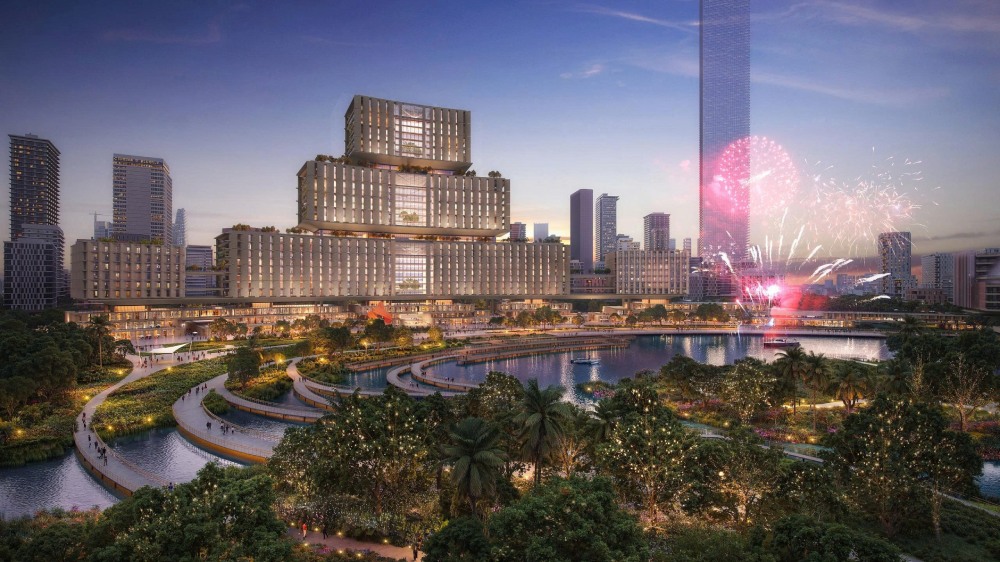
The project is being developed by Saigon Sun Investment and Development Co., Ltd. (a member of Sun Group under a BT contract, with completion targeted for 2028.
With an estimated cost of VND30 trillion, the complex will include four main components: technical infrastructure and underground parking, the administrative center, a conference and performance center, and a central square.
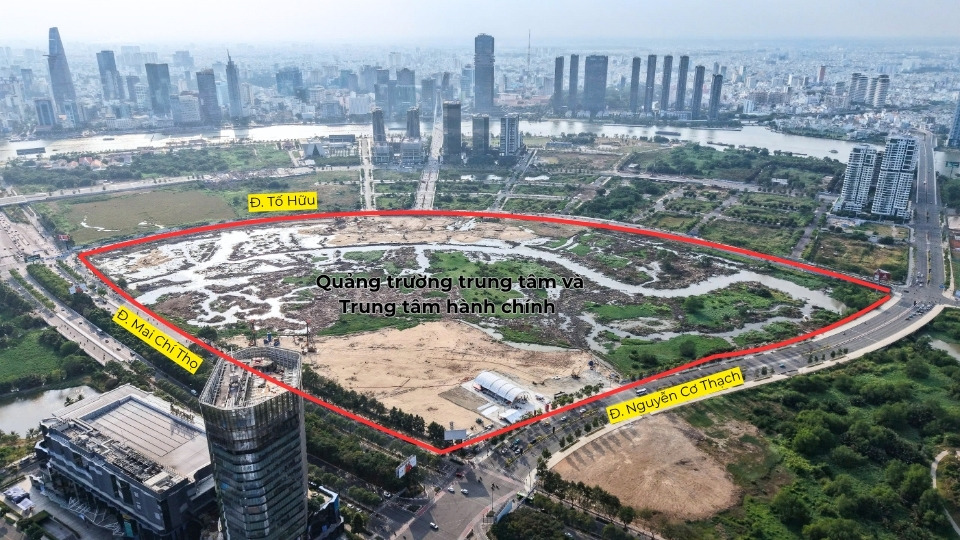
The administrative center will have a total floor area of around 272,000 square meters, accommodating about 8,000 officials and serving 1,500–2,000 citizens and businesses daily through a single-window system. A 2,000-seat conference and performance venue will also be integrated.
Ben Thanh–Thu Thiem metro section
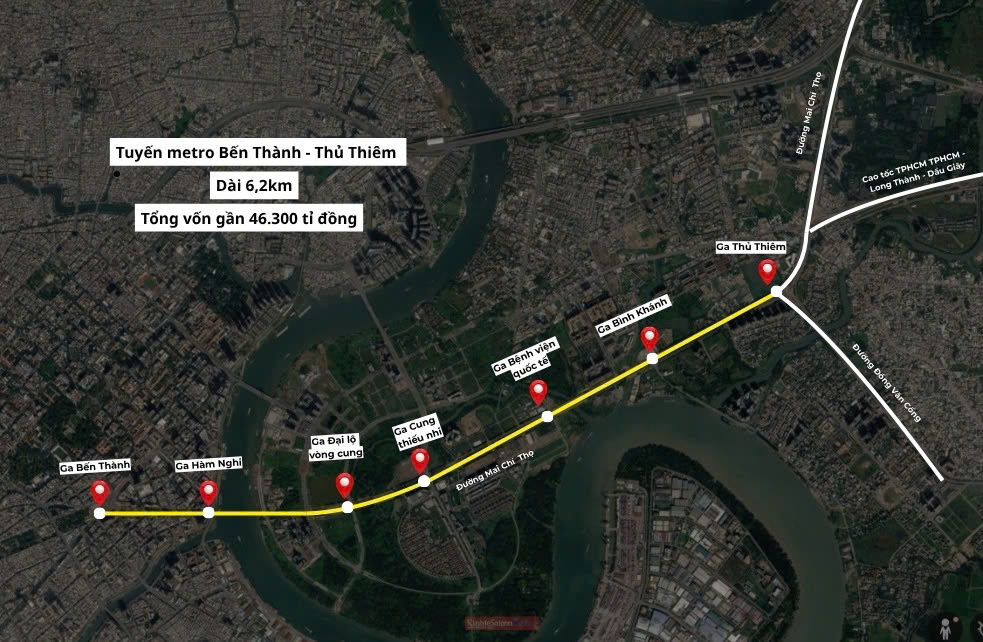
The city also broke ground on the Ben Thanh–Thu Thiem section of Metro Line 2, with total investment of nearly VND46.3 trillion.
The six-kilometer underground line will run from Ben Thanh Station along Ham Nghi Boulevard, cross the Saigon River to Thu Thiem, and continue along Mai Chi Tho Street.
This section forms part of the broader Metro Line 2, which spans more than 62 kilometers from Ben Thanh to Tham Luong in former District 12 and will eventually extend to the Cu Chi Northwest urban area. The Ben Thanh–Tham Luong section began construction in January 2026 and is scheduled for completion by 2030, with the Thu Thiem section expected to follow the same timeline.
The project has been assigned to Dai Quang Minh Real Estate Investment Corp. under a BT contract.
Ben Nha Rong heritage site renovation
On the same day, the city launched a renovation project for the Ho Chi Minh Museum at Nha Rong Wharf as part of a broader cultural park development in the Ben Nha Rong–Khanh Hoi area.
The 1.4-hectare project will be completed within 120 days, in time for National Day on September 2. It is being carried out by Sun Group. The project aims to preserve and promote the site’s historical, architectural, and cultural value while boosting tourism and showcasing Vietnam’s image.
International University Urban Area
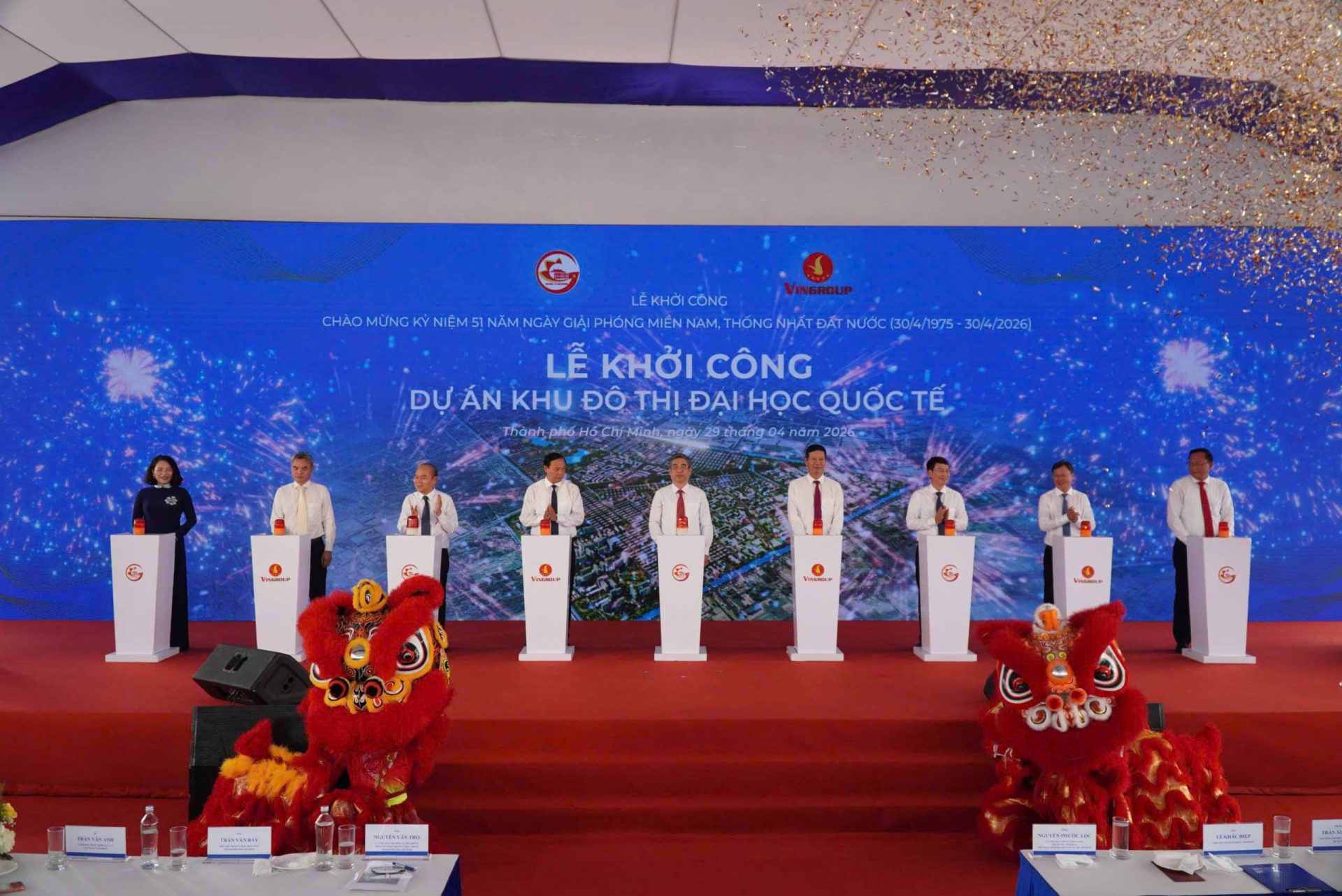
In the city’s northwest, construction began on the International University Urban Area, developed by Berjaya Vietnam International University City JSC.
The project has an investment of around VND59 trillion (over US$2 billion) and spans 880 hectares in Xuan Thoi Son Commune. It is designed to accommodate 135,000 residents and around 60,000 students, with full operations expected by 2035.
The master plan includes 117 hectares of green space and water, 436 hectares for residential use, 150 hectares for services, education and research, and land allocated for healthcare and high school facilities.
Can Gio transshipment port
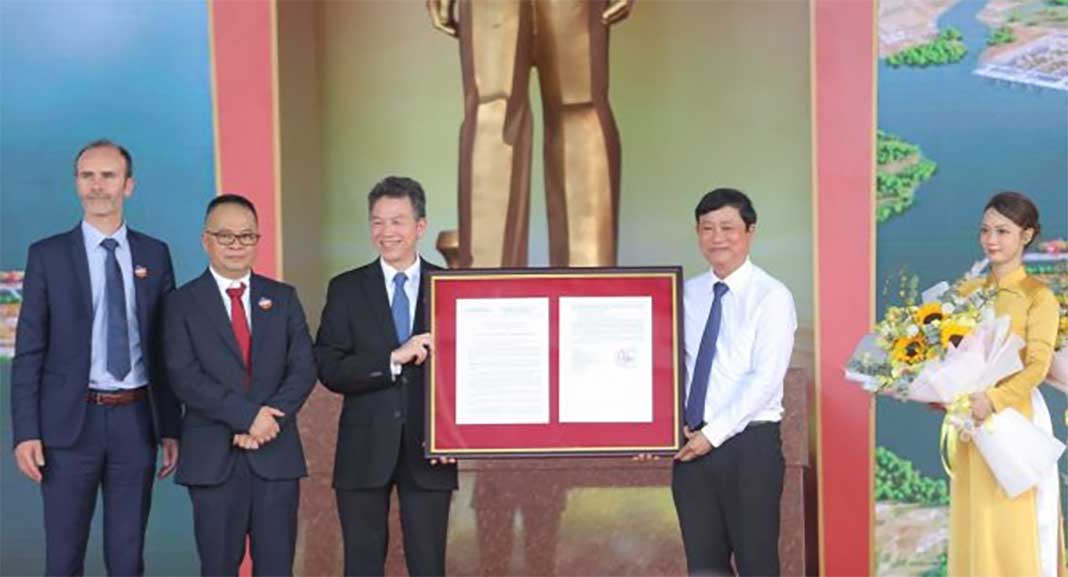
This morning, city authorities also approved investors for the Can Gio international transshipment port project, a consortium comprising Vietnam Maritime Corporation, Saigon Port JSC, and Terminal Investment Limited Holding S.A.
The project has a total investment of VND128.9 trillion (about US$5 billion) and will cover 571 hectares, with a main berth system stretching about 7.5 kilometers.
Designed capacity is expected to reach 4.8 million TEUs by 2030 and 16.9 million TEUs by 2047. Phase 1, through 2030, will include at least two berths. The full project is expected to be completed within 20 years from land handover. Once operational, the port is expected to drive breakthroughs in Vietnam’s seaport system and strengthen the country’s position in global logistics.







